- Key Takeaways
- Part 1. What is a 36V battery?
- Part 2. Inside a 36V lithium battery: cells, pack design, and BMS
- Part 3. 36V battery types
- Part 4. 36V lithium vs lead-acid: the difference in daily use
- Part 5. How long does a 36V lithium battery last?
- Part 6. Why two 36V batteries age very differently
- Part 7. 36V vs 48V battery: which one makes sense?
- Part 8. Understanding 36V battery capacity (Ah)
- Part 9. Where 36V batteries perform best
- Part 10. Common myths about 36V batteries
- Part 11. FAQs
If you’re looking into a 36V battery, chances are you’re not just browsing out of curiosity.
You may be upgrading an electric bike, replacing a golf cart battery, or figuring out whether lithium is finally worth the switch.
And at some point, everyone asks the same questions:
- What exactly is a 36V battery?
- How long does a 36V lithium battery really last?
- Is 36V enough, or should you jump to 48V?
Let’s walk through this step by step.
Key Takeaways
- A 36V lithium battery offers one of the best balances between power, efficiency, and system simplicity.
- Battery lifespan depends more on how you use and charge it than on the label itself.
- Compared with lead-acid, 36 volt lithium batteries deliver more usable energy and last several times longer.
- 36V systems are ideal for e-bikes, golf carts, marine motors, and mid-power energy storage.
- Choosing the right capacity (Ah) is just as important as choosing the voltage.
Part 1. What is a 36V battery?
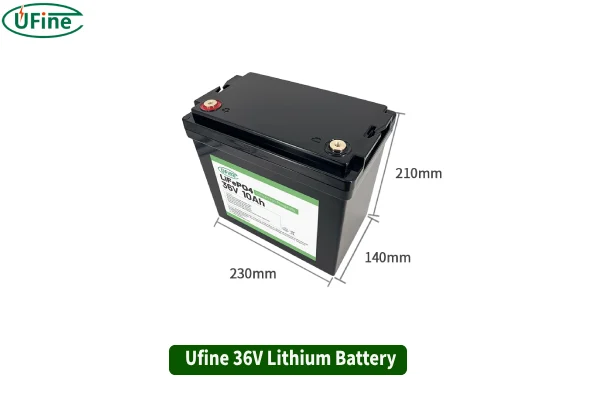
A 36V battery refers to a battery system with a nominal voltage of around 36 volts.
However, that number alone doesn’t tell the whole story.
In most lithium systems, a 36V battery is built using 10 cells in series (10S). That means:
- Fully charged voltage: ~42V
- Nominal operating voltage: ~36–37V
- Discharge cut-off voltage: ~30V
This voltage range is one of the reasons 36V batteries feel so “balanced” in practice. You get strong output without excessive heat, wiring complexity, or controller stress that often comes with higher-voltage systems.
Part 2. Inside a 36V lithium battery: cells, pack design, and BMS
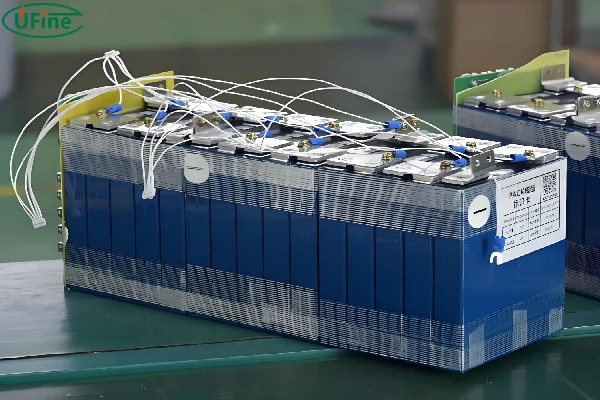
Two batteries can both say 36V 20Ah—and perform completely differently.
Here’s why.
A quality 36V lithium battery isn’t just about voltage and capacity. It’s about how the system is built:
Cell configuration
Higher-capacity batteries usually rely on parallel cell groups (for example, 10S2P or 10S3P), not larger individual cells. This improves current sharing and reduces stress on each cell.
Battery Management System (BMS)
The BMS controls over-charge, over-discharge, current limits, and temperature protection.
This is especially critical for 36 volt lithium marine batteries and golf carts that operate under vibration, moisture, or sustained load.
Thermal and mechanical design
Proper spacing, insulation, and enclosure design directly affect lifespan—something spec sheets rarely show.
In short, voltage tells you what class the battery belongs to.
Design tells you how long it will actually last.
Part 3. 36V battery types
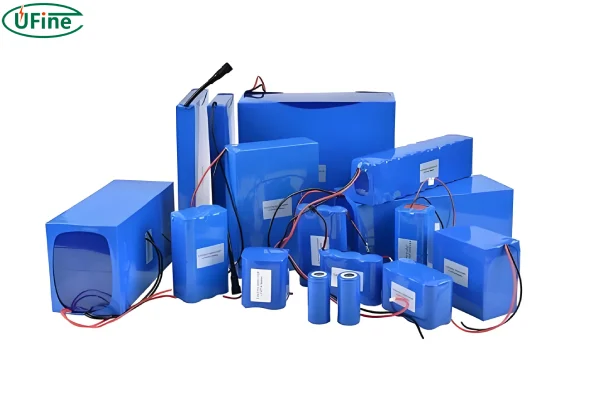
You’ll still see different chemistries marketed as 36V systems, but their real-world behavior varies a lot.
| Battery Type | Practical Experience | Typical Use |
|---|---|---|
| Lithium-ion / LiFePO₄ | Lightweight, stable voltage, long cycle life | E-bikes, golf carts, marine, solar |
| NiMH | Heavier, older technology | Legacy systems |
| Sealed Lead-Acid (SLA) | Heavy, voltage sag, short lifespan | Budget or stationary setups |
This explains why 36 volt lithium golf cart batteries have largely replaced traditional lead-acid packs. You get consistent performance from full charge down to near empty—something lead-acid simply can’t deliver.
For a deeper comparison of battery technologies, check out our guide on AGM vs lithium vs lead-acid battery to see how each type stacks up in real applications.
Part 4. 36V lithium vs lead-acid: the difference in daily use
On paper, both may be labeled “36V.”
In daily use, they behave very differently.
| Feature | 36V Lithium Battery | 36V Lead-Acid Battery |
|---|---|---|
| Typical cycle life | 2,000–3,000 cycles | 300–500 cycles |
| Usable capacity | ~80–90% | ~50% |
| Weight | Up to 60% lighter | Very heavy |
| Charging time | 1–3 hours | 8–12 hours |
| Monthly self-discharge | 2–5% | 10–15% |
That’s why many users feel their lithium upgrade “transforms” the system—even when voltage stays the same.
Part 5. How long does a 36V lithium battery last?
This is one of the most searched questions for a reason.
A high-quality 36V lithium battery typically lasts:
- 5–7 years
- Or 2,000–3,000 full charge cycles
But here’s the engineering reality:
How you use the battery matters more than the spec itself.
Batteries that are:
- Regularly discharged to 0%
- Stored at full charge for months
- Charged with mismatched chargers
- Exposed to extreme heat or cold
…will age much faster.
Part 6. Why two 36V batteries age very differently
Many failures blamed on “bad batteries” are actually usage-related:
- Repeated high-current discharge without adequate cooling
- No low-temperature charging protection in winter
- BMS limits that don’t match the application
- Oversized motors paired with undersized packs
Understanding these factors is key to estimating how long a 36 volt battery lasts in real-world use.
Part 7. 36V vs 48V battery: which one makes sense?
This decision comes up constantly—and higher voltage isn’t always better.
| Scenario | 36V Battery | 48V Battery |
|---|---|---|
| Daily commuting | Ideal | Often unnecessary |
| Moderate hills & loads | Works well | More power than needed |
| System cost | Lower | Higher |
| Controller compatibility | Very wide | More limited |
If your application doesn’t require sustained high power, a 36V system often delivers better efficiency with fewer trade-offs.
Part 8. Understanding 36V battery capacity (Ah)
Voltage defines how hard a battery can push.
Capacity (Ah) defines how long it can keep pushing.
A simple rule of thumb:
Energy (Wh) = Voltage × Capacity (Ah)
Battery SizeTypical Experience36V 10AhShort rides, light duty36V 20AhDaily use, moderate load36V 50Ah+Golf carts, marine motors
Choosing capacity based on your actual load profile is far more effective than simply buying “the biggest one available.”
If you want to get even clearer on what capacity really means for runtime, our article on Li-ion battery capacity goes into practical details and examples.
Part 9. Where 36V batteries perform best
Rather than listing products, it helps to think in scenarios:
- Electric bikes & scooters: Smooth torque, manageable heat, efficient cruising
- Golf carts: Longer range, less maintenance, consistent speed
- Marine applications: Stable thrust, reduced weight, better balance
- Solar & backup systems: Efficient mid-voltage storage with simpler wiring
Part 10. Common myths about 36V batteries
“36V isn’t powerful enough.”
In many systems, it’s the most efficient choice.
“Bigger Ah is always better.”
Only if your load can actually use it.
“Lithium batteries don’t need protection.”
Without a proper BMS, lifespan drops dramatically.
Part 11. FAQs
Can I replace a 36V lead-acid battery with a 36V lithium battery directly?
In most cases, yes—but only if voltage compatibility and charger specifications are correct.Lithium batteries require different charging profiles, so using a lead-acid charger can reduce lifespan or trigger BMS protection.
Can I connect two 36V batteries together?
It depends on the configuration. Parallel connections may be possible if the batteries are identical in chemistry, capacity, and state of charge. Series connections are generally not recommended unless designed for that purpose.
How does temperature affect a 36V lithium battery?
High heat accelerates aging, while extreme cold reduces available capacity. Many modern 36V batteries include low-temperature charge protection to prevent damage in winter conditions.
Is a higher Ah 36V battery always better?
Not necessarily. A higher Ah battery increases runtime but also adds cost and weight. The best choice depends on your actual load and daily usage pattern, not just maximum capacity.
Related Tags:

More Articles

JST vs Molex: The Right Battery Connector Choice
JST or Molex for your battery? Learn how connector selection affects current, voltage drop, reliability, and device performance.
Custom Battery Pricing: Costs Manufacturers Don’t Mention
A low battery quote may not be the final cost. Discover common hidden expenses that affect custom lithium battery projects.
Battery Wire Length: Hidden Cause of Power Loss
A longer battery wire can cause voltage drop, power loss, and unstable operation. Learn how wire length affects battery performance.
How Device Sleep Modes Affect Battery Life
Think sleep mode extends battery life? Learn why devices still drain power and how firmware, hardware, and batteries affect runtime.
LiPo Battery and PCB Design: Clearance, Insulation, and Placement
Learn how to optimize LiPo battery PCB clearance, insulation, placement, wiring, and thermal design—and avoid common integration mistakes.