
- Key Takeaways
- Part 1. Understanding RC car battery types
- Part 2. RC car battery voltages
- Part 3. Battery capacity (mAh) and runtime
- Part 4. What capacity battery should my RC car use?
- Part 5. How to choose RC car battery connectors?
- Part 6. How to choose a suitable RC car battery charger?
- Part 7. How long does an RC car battery last?
- Part 8. Choosing batteries for different RC cars
- Part 9. Troubleshooting common battery problems
- Part 10. Advanced tips for RC enthusiasts
- Part 11. FAQs
Key Takeaways
- Battery choice affects speed, runtime, handling, and lifespan.
- LiPo batteries dominate for high-performance RC cars, but NiMH is still good for beginners.
- Voltage, mAh, and C-rating determine speed, runtime, and motor stress.
- Proper connectors, chargers, and battery care can extend life and prevent safety hazards.
Part 1. Understanding RC car battery types
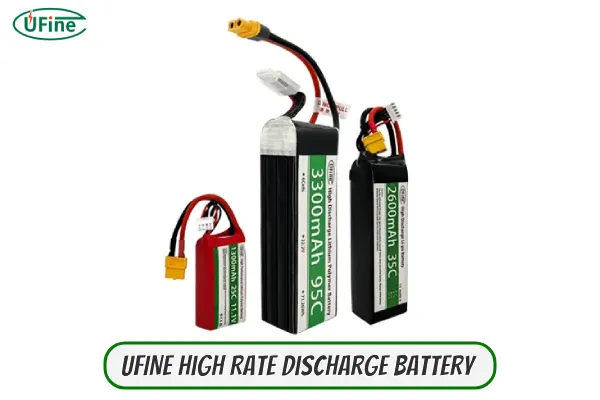
Not all batteries are created equal. Here’s what you need to know:
| Battery Type | Pros | Cons | Ideal For |
|---|---|---|---|
| NiCd | Durable, inexpensive | Heavy, memory effect, high self-discharge | Vintage RC cars or beginners on a budget |
| NiMH | Better energy density, lighter than NiCd | Slower discharge than LiPo, moderate lifespan | Entry-level RC cars, casual play |
| LiPo | High power-to-weight, fast charging, longer runtime | Sensitive, requires special chargers | High-performance RC cars, racing, off-road |
Deep Dive:
- NiCd: Once the standard, NiCd suffers from memory effect—if you repeatedly recharge without fully discharging, its capacity shrinks. It also self-discharges quickly, so you can’t store it long without losing charge.
- NiMH: Lighter and more efficient than NiCd, but performance lags behind LiPo. Still a solid choice for casual users who want more runtime without worrying about safety as much.
- LiPo: The go-to choice for pros and enthusiasts. Lightweight, packs a lot of power, and handles high-current draws, perfect for brushless motors and high-speed buggies. But caution: never puncture, overcharge, or leave unattended while charging.
Pro Tip: Always check the battery’s discharge rating (C-rating). Higher C means it can safely supply more amps to your motor, translating to better acceleration and torque.
Part 2. RC car battery voltages
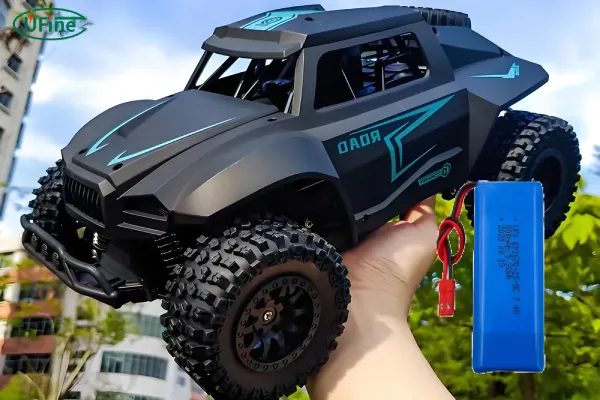
Voltage directly impacts your car’s top speed and motor stress. Choosing the right voltage prevents burnt-out motors and ensures a smooth ride.
| Voltage | Description | Best For |
|---|---|---|
| 7.4V | Small-scale, entry-level cars | Beginners, indoor tracks |
| 11.1V | Balanced performance and runtime | Hobby-grade cars, casual racing |
| 14.8V+ | High-performance, fast acceleration | Competitive racing, off-road buggies |
Extra Insight: Using a higher voltage than your ESC/motor is rated for may temporarily boost speed, but it risks overheating or permanent damage. Always match voltage specs carefully.
Ufine Battery is a famous Chinese custom lithium battery manufacturer. We can customize batteries of different sizes, shapes, voltages and capacities for your RC cars. Contact us now to customize batteries!
Part 3. Battery capacity (mAh) and runtime
Battery capacity controls how long your car can run per charge.
- Higher mAh = longer runtime, but more weight, which may affect handling.
- Lower mAh = lighter car, but shorter driving sessions.
Example:
| Battery | Capacity (mAh) | Approx. Runtime |
|---|---|---|
| LiPo 7.4V 2200mAh | 2200 | 15–20 mins |
| LiPo 11.1V 5000mAh | 5000 | 30–40 mins |
| NiMH 3000mAh | 3000 | 20–25 mins |
Pro Tip: For racing, you might sacrifice runtime for lighter weight. For casual driving or off-roading, prioritize higher capacity.
Part 4. What capacity battery should my RC car use?
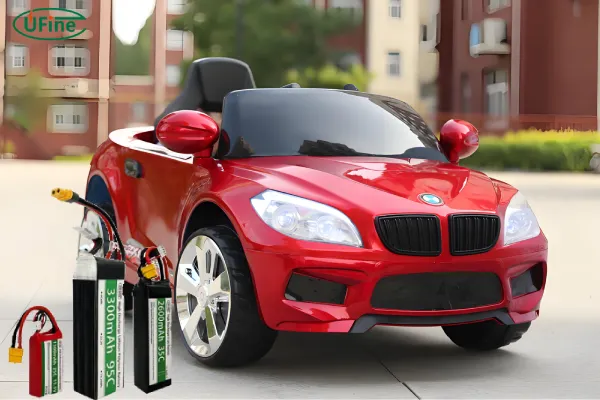
Selecting the optimal battery capacity involves considering several factors:
-
Vehicle type and size: Larger, more powerful vehicles typically require higher capacity batteries.
-
Driving style: Aggressive driving styles that demand sustained high power output benefit from higher capacity batteries.
-
Terrain: Off-road conditions often necessitate higher capacity batteries to handle the increased power demands.
-
Desired runtime: Determine how long you want to drive between charges and select a battery capacity accordingly.
It’s essential to find a balance between capacity and weight. A larger battery might provide longer runtime but can negatively impact the vehicle’s handling and performance.
High C-Rating RC Batteries: Power or Peril?
Part 5. How to choose RC car battery connectors?
1 Types of RC Car battery connectors
RC car battery connectors serve as the crucial link between your battery and the car’s electronic speed controller (ESC). They allow for efficient power transfer and easy battery swapping. Here are some of the most common types:
Deans/T-Plug:
- Characteristics: A classic choice, known for its T-shaped design. Offers good current handling and a secure connection.
- Pros: Durable, widely available, and relatively affordable.
- Cons: Can be a bit difficult to solder, and counterfeits are common.
XT60:
- Characteristics: Popular for its balance of size, current capacity, and ease of use. Features a simple, keyed design to prevent reverse polarity.
- Pros: Easy to solder, handles high currents well, and offers a secure connection.
- Cons: May not be ideal for extremely high-power setups.
XT90:
- Characteristics: Designed for higher current applications than XT60. Larger and more robust.
- Pros: Excellent for high-power setups, handles large currents efficiently.
- Cons: Can be bulkier, may not be necessary for all RC cars.
EC3/EC5:
- Characteristics: Another popular option, known for its “bullet” style connectors that provide a large contact area. EC3 is for lower current, EC5 for higher.
- Pros: Good current handling, reliable connection.
- Cons: Can be slightly more challenging to solder than XT60.
Traxxas:
- Characteristics: Used exclusively on Traxxas vehicles. Features a unique design with small pins.
- Pros: Secure connection, designed for Traxxas vehicles.
- Cons: Only compatible with Traxxas, soldering can be tricky.
Tamiya:
- Characteristics: Once common, now less popular due to lower current capacity.
- Pros: Simple and inexpensive.
- Cons: Not suitable for high-power setups, can overheat and melt.
2 Choosing the Right Connector
Here’s a guide to help you select the best connector for your RC car:
Consider your car’s power requirements:
- Lower power (e.g., brushed motors, smaller scale cars): XT60, Deans, or EC3 might be sufficient.
- Higher power (e.g., brushless motors, larger scale cars): XT90, EC5, or high-quality Deans are recommended.
Think about ease of use:
- Ease of soldering: XT60 is generally considered the easiest to solder.
- Ease of connection/disconnection: All the listed connectors are relatively easy to use, but some may prefer the keyed design of XT60.
Compatibility:
- Battery and ESC: Ensure the connector you choose is compatible with both your battery and ESC. If they have different connectors, you may need an adapter.
- Existing equipment: If you have multiple RC cars, it might be convenient to use the same connector type across all of them.
Quality:
Genuine connectors: Always opt for genuine connectors from reputable brands to ensure quality and safety. Counterfeit connectors can have poor conductivity and may even be a fire hazard.
3 Key Considerations
- Soldering skills: If you’re not comfortable with soldering, consider having a hobby shop or experienced friend do it for you. Proper soldering is crucial for a reliable connection.
- Safety: Always prioritize safety when working with RC batteries and connectors. Double-check polarity before connecting, and use heat shrink tubing to insulate connections.
- Future-proofing: If you plan to upgrade your RC car in the future, consider choosing a connector that can handle higher power levels to avoid having to switch later.
Part 6. How to choose a suitable RC car battery charger?
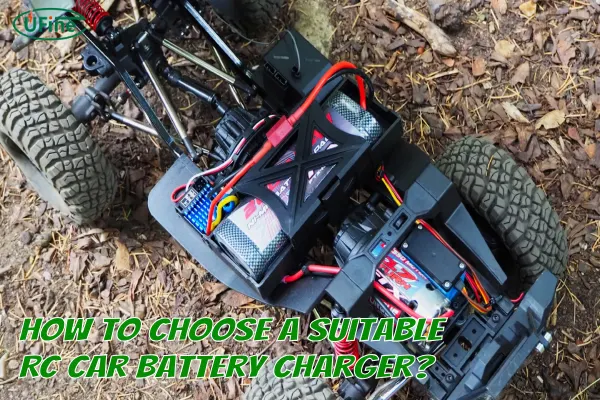
A quality charger protects your investment. Bad charging habits can shorten battery life or even cause fires.
- LiPo balance chargers are essential for multi-cell packs to ensure each cell charges evenly.
- Safety features like overcharge and temperature monitoring are non-negotiable.
- Avoid cheap chargers—they’re a false economy.
Part 7. How long does an RC car battery last?
Battery lifespan depends on chemistry, handling, and storage.
Tips:
- Charge at the recommended rate; never leave unattended.
- Store partially charged (~50%) in a cool, dry place.
- Avoid deep discharges or extreme temperatures.
- Rotate batteries for long sessions to prevent overheating.
With proper care, a LiPo can last 300–500 cycles.
Part 8. Choosing batteries for different RC cars
Not all cars are built the same. A small 1/24-scale car won’t need the same battery as a 1/8-scale off-road monster. Consider the following:
- Entry-level cars and indoor racers: NiMH 2000–3000mAh or small LiPo packs around 7.4V. Affordable and easy to maintain.
- Hobby-grade buggies and trucks: LiPo 11.1V with mid-range capacity (3000–5000mAh). Balance speed and runtime.
- High-performance off-road or racing rigs: LiPo 14.8V+, high capacity, high C-rating. Fast, responsive, but heavier, so optimize suspension and handling.
Remember, the best battery is the one that matches your vehicle, terrain, and driving style. Bigger isn’t always better—sometimes a slightly smaller, lighter battery gives more control and better cornering.
Part 9. Troubleshooting common battery problems
Even with the best battery, issues happen. Common problems include swelling, voltage sag, or overheating.
- Swelling: Usually caused by overcharging, over-discharging, or physical damage. Stop using the battery immediately.
- Voltage sag: The car slows down under load. May indicate a worn battery or too low C-rating for your motor.
- Overheating: Often caused by high discharge rates exceeding battery limits or poor ventilation in the car.
Tip: Invest in a small LiPo voltage checker or alarm—it alerts you before damage occurs.
Part 10. Advanced tips for RC enthusiasts
- High C-rating LiPos: Better for brushless motors, racing, and off-roading. Don’t confuse high mAh with high C—they’re different.
- Parallel vs. series connections: Running batteries in parallel increases runtime without boosting voltage; series increases voltage, so be cautious.
- Monitoring tools: Use voltage alarms or LiPo safes to prevent over-discharge or swelling.
Part 11. FAQs
Can I mix battery types in the same RC car?
No. Mixing NiMH and LiPo, or different voltages, can damage electronics, reduce performance, and void warranties. Always use matching battery types.
How does battery weight affect RC car handling?
Heavier batteries can lower top speed and slow cornering but provide stability. Lighter batteries improve agility but may reduce traction on rough terrain.
What is a safe charging rate for LiPo batteries?
A safe charging rate is typically 1C (where C = battery capacity in Ah). For example, a 2200mAh battery should be charged at 2.2A or lower unless the battery specifies higher.
Are aftermarket chargers reliable for LiPo batteries?
Not always. Only use chargers from reputable brands with balance charging and overcharge protection. Cheap chargers risk fire and damage.
Can I upgrade my RC car to higher voltage safely?
Yes, if your ESC and motor support it. Increasing voltage beyond rated limits can boost speed but may overheat components and shorten lifespan.
Do temperature extremes affect battery performance?
Yes. High heat can cause swelling and shorten lifespan, while extreme cold reduces effective runtime. Store and use batteries at moderate temperatures.
Related Tags:

More Articles

JST vs Molex: The Right Battery Connector Choice
JST or Molex for your battery? Learn how connector selection affects current, voltage drop, reliability, and device performance.
Custom Battery Pricing: Costs Manufacturers Don’t Mention
A low battery quote may not be the final cost. Discover common hidden expenses that affect custom lithium battery projects.
Battery Wire Length: Hidden Cause of Power Loss
A longer battery wire can cause voltage drop, power loss, and unstable operation. Learn how wire length affects battery performance.
How Device Sleep Modes Affect Battery Life
Think sleep mode extends battery life? Learn why devices still drain power and how firmware, hardware, and batteries affect runtime.
LiPo Battery and PCB Design: Clearance, Insulation, and Placement
Learn how to optimize LiPo battery PCB clearance, insulation, placement, wiring, and thermal design—and avoid common integration mistakes.


