
- Part 1. How to test battery capacity?
- Part 2. How to test different battery types?
- Part 3. Method 1- Using a battery capacity tester
- Part 4. Method 2 - Using a charger with capacity testing function
- Part 5. Method 3 - Using a multimeter and controlled load
- Part 6. How to calculate battery capacity?
- Part 7. Factors that affect battery capacity test results
- Part 8. Common mistakes when testing battery capacity
- Part 9. Why doesn’t a new battery match its advertised mAh?
- Part 10. Why does an old battery show lower capacity?
- Part 11. How to check battery capacity without tools?
- Part 12. FAQs
Battery capacity is one of the most important specifications when selecting or evaluating a battery. However, the capacity printed on a battery label does not always represent its real-world performance. Factors such as battery age, discharge current, temperature, and manufacturing quality can affect the actual energy a battery can deliver.
If you want to know whether a battery really provides 3000mAh, 5000mAh, or another rated capacity, you need to perform a battery capacity test. A proper test can help you determine battery capacity, identify degraded batteries, compare different battery models, and verify whether a rechargeable battery meets its specifications.
This guide explains how to test battery capacity, how to use a battery capacity tester, how to check mAh of a battery, and what factors can influence your measurement results.
Key takeaways
- A battery capacity test measures how much energy a battery can actually deliver during discharge.
- The most accurate way to test battery capacity is by using a dedicated battery capacity tester with controlled charging and discharging.
- You cannot directly measure battery capacity with a standard multimeter because capacity depends on current output over time.
- The basic formula for calculating capacity is: Capacity (mAh) = Discharge current (mA) × Discharge time (hours).
- The actual capacity of a battery may be lower than its rated value due to aging, temperature, discharge conditions, and battery quality.
Part 1. How to test battery capacity?
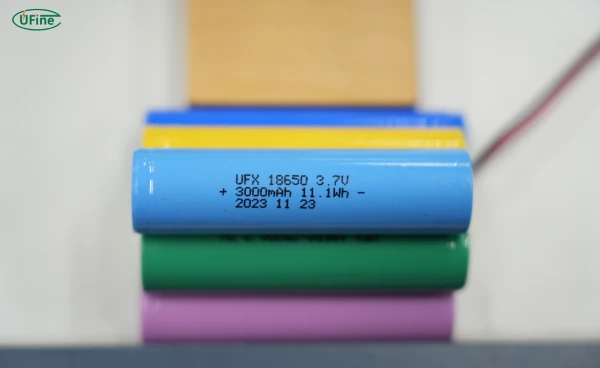
There are several ways to test battery capacity depending on the accuracy you need. The most reliable method is using a dedicated battery capacity tester, but simpler approaches can also provide useful results.
The basic testing process includes:
- Fully charging the battery
- Discharging the battery at a controlled current
- Measuring how long the discharge process takes
- Calculating the total capacity delivered
The following table compares common battery capacity testing methods.
| Testing method | Accuracy | Suitable for |
|---|---|---|
| Battery capacity tester | High | Professional testing, battery verification, manufacturing |
| Charger with capacity measurement function | Medium | DIY users and basic battery checks |
| Multimeter + controlled load | Medium to low | Simple capacity estimation |
| Battery label inspection | Low | Quick capacity reference only |
Part 2. How to test different battery types?
Different battery chemistries require different testing approaches. Here’s how to test various battery types accurately.
2.1. Lithium-Ion (Li-ion) and Lithium Polymer (LiPo) Batteries
✔ Use a battery analyzer or electronic load tester for best results.
✔ Always test within safe voltage limits (e.g., 4.2V max, 2.5V min for Li-ion).
✔ Avoid full discharge, as it can permanently degrade the battery.
2.2. LiFePO4 Batteries
✔ Requires a battery tester with a 2.5V cut-off voltage per cell.
✔ LiFePO4 batteries have a flatter discharge curve, so readings may appear different from Li-ion.
2.3. 18650 & Cylindrical Batteries
✔ Perform a constant-current discharge test to obtain reliable mAh values.
✔ Many cheap 18650 batteries have fake capacities, so always verify before use.
2.4. Lead-Acid Batteries
✔ Use a discharge test at a 0.05C – 0.1C load.
✔ These batteries are typically rated in Ah over a 10-hour or 20-hour discharge period.
Part 3. Method 1- Using a battery capacity tester
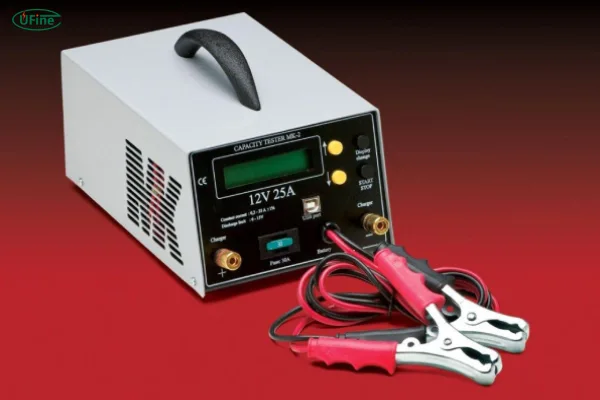
The most accurate way to perform a battery capacity test is by using a dedicated battery capacity tester.
A battery capacity tester is designed to charge and discharge batteries under controlled conditions while recording important data, including:
- Discharge current
- Voltage changes
- Discharge time
- Delivered capacity (mAh)
- Energy output (Wh)
This type of equipment is widely used in battery laboratories, quality control departments, and battery manufacturing facilities.
Steps to test battery capacity with a tester
Step 1: Fully charge the battery
Before testing, the battery should be fully charged according to its charging specifications.
For lithium batteries, this usually means charging to the recommended voltage:
- 4.2V for standard lithium-ion batteries
- 4.35V for some high-voltage lithium batteries
- Different voltages for specific lithium chemistries
Using an incorrect charging voltage can affect test results and may damage the battery.
Step 2: Connect the battery to the tester
Connect the battery to the capacity tester according to the correct polarity.
The tester will monitor:
- Starting voltage
- Discharge current
- Remaining capacity
- Final cut-off voltage
Step 3: Set the discharge conditions
The discharge current has a major impact on measured capacity.
For example:
A battery tested at 0.2C may show higher capacity than the same battery tested at 2C because lower discharge rates create less voltage drop.
Professional testing usually follows specific standards and conditions to ensure consistent results.
Step 4: Start the discharge test
The tester gradually discharges the battery while recording data.
When the battery reaches its cut-off voltage, the test stops automatically.
The final result shows the actual capacity.
For example:
| Battery specification | Tested capacity | Result |
|---|---|---|
| 3.7V 5000mAh LiPo battery | 4850mAh | About 97% capacity |
| 3.7V 3000mAh Li-ion battery | 2600mAh | Reduced capacity |
A result close to the rated capacity usually indicates good battery performance. A significantly lower result may indicate battery aging, poor quality, or unsuitable testing conditions.
Part 4. Method 2 – Using a charger with capacity testing function
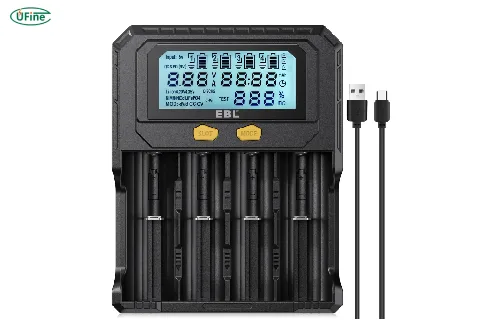
If you do not have a professional battery capacity tester, some advanced battery chargers can also measure battery capacity.
Many modern chargers designed for lithium batteries include discharge testing functions. They can charge a battery, discharge it at a selected current, and calculate the delivered capacity in mAh.
This method is commonly used by hobbyists, electronics enthusiasts, and DIY battery builders who want to know the approximate condition of their rechargeable batteries.
The basic process is:
- Insert or connect the rechargeable battery to the charger.
- Select the capacity test or discharge test mode.
- Set the discharge current.
- Allow the charger to complete the test cycle.
- Check the measured capacity value.
For example, if a charger shows that a battery rated at 3000mAh only delivers 1800mAh, the battery may have experienced significant aging or damage.
However, compared with professional battery capacity testing equipment, consumer chargers may have limitations:
- Lower measurement accuracy
- Limited discharge current options
- Less detailed test data
- Different testing algorithms between brands
For basic battery checks, this method is useful. For product development and quality verification, a dedicated battery capacity tester is recommended.
Part 5. Method 3 – Using a multimeter and controlled load
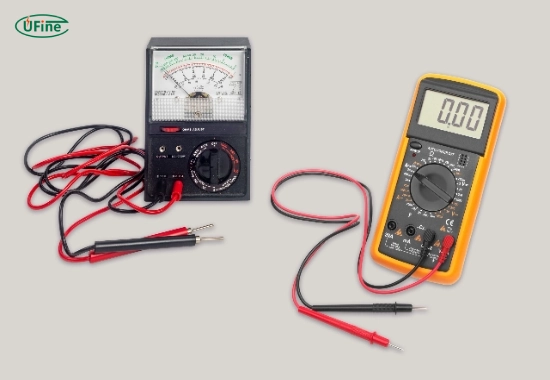
Many people ask for how to measure battery capacity with a multimeter. However, a standard multimeter cannot directly measure battery capacity.
A multimeter can measure:
- Voltage
- Current
- Resistance
But battery capacity depends on how much current a battery can provide over time.
To estimate capacity, you need:
- A multimeter
- A known load
- A timer
- A way to maintain a stable discharge current
The calculation method is:
Battery capacity (mAh) = Discharge current (mA) × Discharge time (hours)
For example:
A battery provides a constant 500mA current for 6 hours.
Capacity:
500mA × 6h = 3000mAh
Although this method can help you estimate capacity, it is less accurate because:
- The discharge current may not remain constant
- Voltage changes during discharge
- Manual measurements may introduce errors
- Battery cut-off voltage may not be controlled accurately
For this reason, engineers usually use dedicated testing equipment when accurate capacity data is required.
Part 6. How to calculate battery capacity?
Understanding the calculation behind capacity testing helps you interpret test results correctly.
The basic formula is:
Capacity (mAh) = Current (mA) × Time (hours)
For example:
A battery is discharged at:
- Current: 1000mA
- Discharge time: 4 hours
The calculated capacity is:
1000mA × 4h = 4000mAh
However, real battery testing is slightly more complicated because lithium batteries do not provide a perfectly constant voltage during discharge.
Professional battery analyzers measure capacity by continuously recording:
- Current output
- Voltage change
- Time
- Temperature
They then calculate the total energy delivered throughout the discharge process.
The following table shows how different test conditions can affect measured capacity.
| Testing condition | Expected impact on measured capacity |
|---|---|
| Lower discharge current | Usually higher measured capacity |
| Higher discharge current | Capacity may appear lower |
| Low temperature | Reduced available capacity |
| Battery aging | Lower usable capacity |
| Incorrect cut-off voltage | Inaccurate results |
Part 7. Factors that affect battery capacity test results
A battery capacity test does not only depend on the battery itself. The testing environment and conditions can also influence the result.
Discharge current
Discharge rate is one of the most important factors.
A battery tested at a low discharge rate usually delivers more capacity because the internal resistance has less impact.
For example:
A battery may provide close to its rated capacity at 0.2C discharge but show a lower result at a high-rate discharge.
This is why manufacturers specify testing conditions when publishing battery capacity data.
Temperature
Temperature has a significant effect on lithium battery performance.
Low temperatures can reduce:
- Chemical reaction speed
- Ion movement
- Available capacity
A battery tested at room temperature may show better performance than the same battery tested in cold conditions.
For reliable comparison, battery tests should be performed under controlled temperature conditions.
Battery age and cycle count
Rechargeable batteries gradually lose capacity as they age.
Factors that accelerate capacity loss include:
- Frequent deep discharge
- High charging temperature
- Overcharging
- Long-term storage at high voltage
A battery capacity test can help determine whether an old battery still meets application requirements.
Internal resistance
Internal resistance increases as a battery ages.
Higher internal resistance causes:
- Greater voltage drop during operation
- Reduced available energy
- Lower performance under high loads
Although capacity testing measures available charge, combining it with internal resistance testing provides a more complete view of battery health.
Part 8. Common mistakes when testing battery capacity
Although battery capacity testing seems straightforward, incorrect testing methods can lead to inaccurate results.
Here are some common mistakes to avoid.
Testing a partially charged battery
A battery must be fully charged before testing.
Starting a test with a partially charged battery will result in a lower capacity reading because the tester only measures the remaining energy.
Using an incorrect discharge current
The discharge current directly affects the measured capacity.
A very high discharge current may make the battery appear to have lower capacity because of increased voltage drop and heat generation.
For accurate comparison, always use the recommended testing conditions.
Ignoring battery temperature
Testing batteries in extreme temperatures can produce unreliable results.
For most lithium batteries, room temperature testing provides more consistent data.
Assuming rated capacity equals actual capacity
A common misunderstanding is that a 5000mAh battery will always deliver exactly 5000mAh.
In reality, rated capacity is measured under specific laboratory conditions. The actual usable capacity depends on:
- Discharge rate
- Temperature
- Battery age
- Cut-off voltage
- Testing equipment accuracy
Part 9. Why doesn’t a new battery match its advertised mAh?
It’s common for new batteries to test below their advertised mAh. Here’s why:
🔹 Some manufacturers test at low discharge rates to inflate numbers.
🔹 Temperature and testing conditions impact results.
🔹 Counterfeit or falsely labeled batteries are widespread.
Part 10. Why does an old battery show lower capacity?
As batteries age, their usable capacity declines due to:
✔ Higher internal resistance → Reduces efficiency.
✔ Charge/discharge cycles → Every cycle reduces mAh capacity.
✔ Improper storage → Heat and prolonged full charge shorten lifespan.
🔹 Li-ion batteries lose ~20% capacity after 500 cycles, while LiFePO4 can last over 2000 cycles.
Part 11. How to check battery capacity without tools?
✔ Compare runtime → See how long the battery lasts in a device.
✔ Weight test → Fake high-mAh batteries are often lighter than real ones.
✔ Brand credibility → Avoid unknown brands with exaggerated claims.
Part 12. FAQs
1. Why does my battery drain faster than expected?
Possible reasons include battery aging, poor quality, or incorrect usage.
2. Can I use a multimeter to measure mAh?
No, a multimeter can check voltage and current, but not capacity.
3. How do I know if my 18650 battery is fake?
Fake 18650s often weigh less and have inflated mAh claims.
4. Can a power bank have fake mAh ratings?
Yes! Many cheap power banks claim 10,000mAh but actually hold 5,000-7,000mAh.
5. How can I extend my battery’s lifespan?
Avoid overcharging, deep discharging, and extreme temperatures.
Related Tags:

More Articles

Best 24V Lithium Battery: Top 10 Compared
Discover the top 24V lithium batteries. We compare capacity, price, cycle life, safety features, and the best options for different applications.
Top LFP Cell Manufacturers in China You Should Know
Looking for reliable LiFePO4 cells? Explore China's top LFP battery manufacturers, key technologies, production capabilities, and supplier selection tips.
Check If Your Charger Works: Simple Test Guide
Think your battery charger's broken? Quick tests can show you for sure. See if it’s the charger or the battery that's causing issues. Read more.
Best Camera Batteries: 7 Brands Compared & Tested
Looking for the best camera battery? Compare 7 top brands, including OEM and third-party options, to find the right battery for your camera.
What You Need to Know About Portable Fan Batteries
Discover the best portable electric fan battery, its types, lifespan, and maintenance tips. Learn how to choose the right one and keep it running longer.


