- Part 1. Why does a charged battery weigh more?
- Part 2. How much heavier does a battery become?
- Part 3. What affects lithium battery weight?
- Part 4. The relationship between capacity and weight: energy density as the key
- Part 5. How to calculate battery capacity by battery weight?
- Part 6. Do lithium batteries get heavier when charged?
- Part 7. Do different battery types gain different weight?
- Part 8. Does an electric car become heavier after charging?
- Part 9. Why lithium batteries are lightweight compared to other batteries
- Part 10. FAQs
You plug in your phone at night, charge your EV before work, or top off a drone battery before a flight. But here’s a strange question most people never think about:
Does a fully charged battery actually weigh more than an empty one?
Surprisingly, the answer is yes.
A charged battery is technically slightly heavier because storing energy increases the total mass of the battery system. The effect is incredibly small — so small that even highly sensitive household scales cannot detect it — but the physics behind it is real.
Key takeaways
- A fully charged battery is technically heavier than a discharged battery.
- The weight increase comes from stored energy, not added material.
- The change is extremely tiny and impossible to notice in daily life.
- Lithium-ion batteries follow the same physics principles as all other rechargeable batteries.
- Even large EV battery packs only gain a microscopic amount of mass after charging.
- Battery weight still matters greatly in real-world applications such as drones, robotics, medical devices, and electric vehicles.
Part 1. Why does a charged battery weigh more?
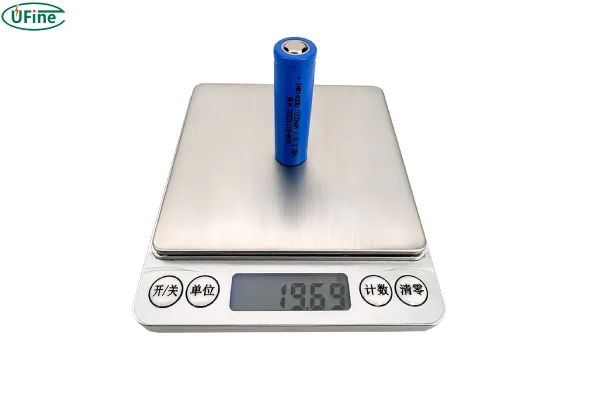
At first glance, the idea sounds impossible. After all, nothing is physically added to the battery during charging except electrical energy.
However, modern physics tells us that energy itself has mass.
According to Einstein’s famous equation:
E = mc²
This equation describes the relationship between energy and mass. In simple terms, whenever energy is stored inside a system, the system’s mass increases slightly as well.
Inside a lithium-ion battery, charging moves lithium ions between electrodes and stores electrochemical energy. That stored energy contributes a tiny amount of additional mass.
So technically speaking, a charged battery does weigh more than a discharged battery.
The important word here is technically. The increase is so unbelievably small that you would never feel it in your hand.
To better understand the science behind energy storage, you can also read our guide on how batteries work.
Part 2. How much heavier does a battery become?
This is where things become almost humorous.
Even though the mass increase is real, it is microscopic. For most batteries, the difference is measured in micrograms, nanograms, or even smaller units.
Here’s a simplified comparison:
| Battery type | Approximate weight increase when fully charged |
|---|---|
| Smartphone lithium battery | Far smaller than a grain of dust |
| AA rechargeable battery | Nearly impossible to measure |
| Laptop battery | Microscopic increase |
| Electric vehicle battery pack | Tiny fraction of a gram |
To put it another way, fingerprints, humidity, or tiny particles in the air can affect a scale more than the actual charging process.
So while the answer to “does a charged battery weigh more?” is scientifically yes, the effect has no noticeable impact in everyday life.
Part 3. What affects lithium battery weight?

The weight of a lithium-ion battery is determined by a combination of material properties and design choices:
-
Cell Chemistry and Material Density: The inherent density of the materials used in the cathode, anode, and electrolyte directly impacts the overall weight. For instance, lead-acid batteries are significantly heavier than LIBs due to the high density of lead. Even within lithium-ion batteries, different chemistries exhibit varying densities. LiFePO4 (lithium iron phosphate) batteries, while offering excellent safety and cycle life, tend to be denser than NMC or NCA batteries.
-
Cell Size and Volume: Larger cells, designed to accommodate more active material and achieve higher capacities, inherently weigh more. This is a straightforward relationship: larger volume equates to higher mass.
-
Packaging and Casing: The type of casing material – whether it’s aluminum, steel, or plastic – contributes to the overall weight. Lightweight, yet robust, casing materials are crucial for portable applications.
-
Supporting Components: Additional components such as terminals, protection circuits (PCBs), and insulation materials add to the overall weight. Minimizing the weight of these components without compromising safety and performance is an ongoing engineering challenge.
Part 4. The relationship between capacity and weight: energy density as the key
The relationship between capacity and weight is best understood through the concept of energy density. Energy density is defined as the amount of energy stored per unit of mass (Wh/kg) or volume (Wh/L). A higher energy density indicates a battery that can store more energy for a given weight or volume. Therefore, advancements in lithium-ion battery technology primarily focus on increasing energy density to achieve higher capacity without a proportional increase in weight.
The energy density of a lithium-ion battery is affected by all the factors discussed above. Improved electrode materials, optimized cell design, and advanced manufacturing techniques all contribute to higher energy density. Consequently, a battery with higher energy density will have a higher capacity for a given weight, or conversely, a lower weight for a given capacity.
Part 5. How to calculate battery capacity by battery weight?
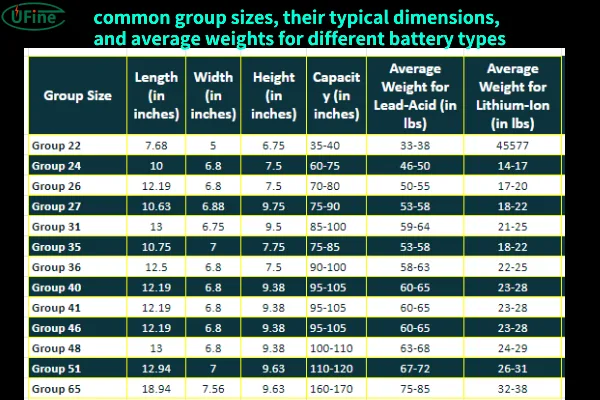
While not exact, it is possible to estimate battery capacity based on weight using the concept of specific energy. Specific energy, measured in watt-hours per kilogram (Wh/kg), indicates how much energy a battery can store relative to its weight.
The basic formula for this calculation is:
Capacity (Wh) = Specific Energy (Wh/kg) × Weight (kg)
However, it’s crucial to note that specific energy varies depending on battery chemistry and design. For lithium-ion batteries, it typically ranges from 100 to 265 Wh/kg. This calculation provides a theoretical capacity, and real-world factors such as depth of discharge and battery age must be considered for practical applications.
Part 6. Do lithium batteries get heavier when charged?
Yes, lithium batteries do get heavier when charged, although the increase is extremely small.
In a lithium-ion battery, charging causes lithium ions to move from the cathode to the anode through the electrolyte. Electrons simultaneously move through the external circuit, storing energy in the battery’s electrochemical structure.
The process changes the battery’s internal energy state, which slightly changes its mass.
This often surprises people because lithium batteries are already known for being lightweight. Compared to lead-acid batteries, lithium-ion cells provide much higher energy density while remaining compact and portable.
That is one reason lithium batteries dominate industries such as:
- electric vehicles
- drones
- portable electronics
- medical equipment
- robotics
A lighter battery that stores more energy is a massive advantage in real-world engineering.
Part 7. Do different battery types gain different weight?
Technically, all rechargeable batteries gain a tiny amount of mass when charged because all stored energy contributes to total system mass.
However, different battery chemistries store energy in different ways and at different energy densities.
| Battery chemistry | Relative energy density | Weight change when charged |
|---|---|---|
| Lead-acid | Low | Extremely tiny |
| Nickel-metal hydride (NiMH) | Moderate | Extremely tiny |
| Lithium-ion | High | Extremely tiny |
| Solid-state battery | Very high (future potential) | Extremely tiny |
Lithium-ion batteries generally store more energy per kilogram, which is why they are preferred in lightweight applications.
Still, regardless of chemistry, the actual mass increase remains far too small for normal users to detect.
If you’re comparing battery technologies, this breakdown of AGM vs lithium batteries explains the key differences in weight, efficiency, and performance.
Part 8. Does an electric car become heavier after charging?
Technically, yes.
A fully charged electric vehicle is slightly heavier than the same vehicle with a depleted battery.
This sounds dramatic at first. After all, EV battery packs can store enormous amounts of energy. Some modern electric cars store more than 100 kWh of energy, which is enough to power a home for days.
Yet even then, the actual increase in mass is incredibly small.
For example, charging a large EV battery pack may only increase its weight by a microscopic fraction of a gram. The added mass is nowhere near enough to affect handling, acceleration, tire wear, or driving feel.
Still, the concept creates an interesting mental image: your car literally becomes heavier after charging.
The U.S. Department of Energy’s Alternative Fuels Data Center explains how EV batteries store and use electrical energy, although the resulting mass increase is too small to matter in transportation engineering.
Part 9. Why lithium batteries are lightweight compared to other batteries
Although charging barely changes battery weight, overall battery weight still matters enormously in modern technology.
This is where lithium batteries shine.
Lithium-ion batteries have much higher energy density than traditional battery chemistries. In simple terms, they can store more energy while using less mass.
Engineers often think in terms of energy density:
Energy Density=Energy/Mass
Higher energy density means:
- longer runtime
- lower overall device weight
- better portability
- improved efficiency
This matters everywhere.
A heavy battery reduces drone flight time. In medical devices, extra weight hurts portability and user comfort. In electric vehicles, battery weight directly affects efficiency and driving range.
That is why lithium polymer and lithium-ion batteries have become essential for modern electronics and transportation systems.
Part 10. FAQs
Can a dead battery weigh less than a new battery?
Yes, but the difference is incredibly small. A discharged battery contains less stored energy, so its total mass is technically slightly lower than when fully charged.
Do non-rechargeable batteries also change weight?
Primary batteries like alkaline cells can also experience tiny mass changes during chemical reactions, although the effect is still extremely difficult to measure.
Does charging speed affect battery weight?
Fast charging does not significantly change the final battery mass. The stored energy matters more than how quickly the energy enters the battery.
Related Tags:

More Articles

Comparative Analysis: 14500 Battery Vs. 18650 Battery
Compare 14500 vs 18650 batteries by size, voltage, capacity, runtime, discharge current, charging, safety, and applications to choose the right cell.
12V Lithium-Ion What Voltage at Fully Charged and Why Your Battery Might Not Reach It
Check the 12V lithium battery voltage chart for 3S Li-ion and 4S LiFePO4. Learn full charge, resting voltage, charger limits, and fault checks.
LiFePO4 Voltage Chart Guide: Everything You Need to Know
Check the LiFePO4 voltage chart for 3.2V, 12V, 24V and 51.2V batteries. Compare SOC, charging voltage, cutoff limits and internal resistance.
Lithium Ion Cell Sizes: A Comprehensive Guide
Compare lithium ion cell sizes with a chart of dimensions, capacity ranges, cell types, applications, and key factors for selecting the right battery.
6 Volt Tractor Battery vs 12 Volt: Which One Fits Your Farm Equipment Best?
Compare 6V and 12V tractor batteries. Learn which voltage fits vintage or modern tractors, which specifications matter, and how to convert safely.