- Key takeaways
- Part 1. Cylindrical cell naming rules
- Part 2. Cylindrical cell type
- Part 3. Cylindrical cell chemistry
- Part 4. Cylindrical cell structure
- Part 5. Cylindrical cell production
- Part 6. Performance parameters and applications
- Part 7. Cylindrical cell selection guide
- Part 8. Safety and maintenance tips
- Part 9. Emerging trends
- Part 10. FAQs
If you’ve ever wondered why your laptop, electric vehicle, or power tool uses cylindrical cells instead of flat or pouch cells, you’re not alone. Cylindrical cells are everywhere because they strike a balance between performance, safety, and manufacturability.
In this guide, you’ll explore everything from the inner structure to naming rules, chemistry, types, production process, applications, and practical usage tips. By the end, you’ll know not just how these batteries work, but how to select, maintain, and optimize them for real-world applications.
Key takeaways
- Cylindrical cells are widely used in electric vehicles, consumer electronics, and energy storage systems due to their stability and mature manufacturing process.
- Understanding naming rules, types, chemistry, and practical considerations helps you choose the right battery for your needs.
- Performance parameters, cost, safety, and thermal management are all crucial factors when selecting a battery for long-term use.
Part 1. Cylindrical cell naming rules
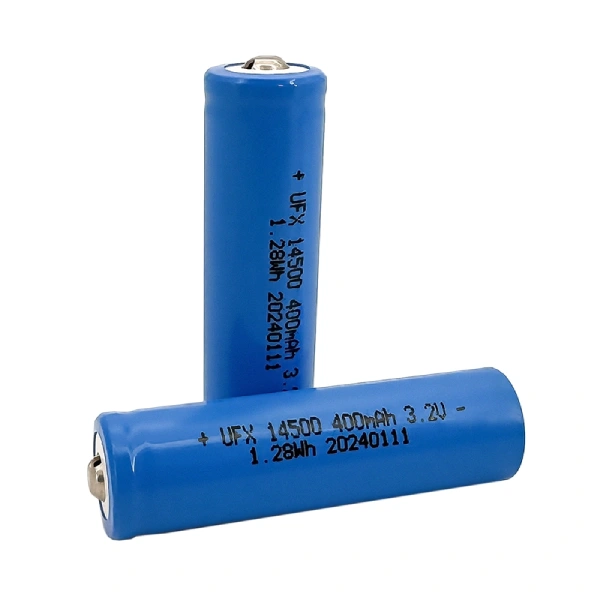
Before diving into types and chemistry, it’s important to understand how cylindrical cells are named. The names aren’t random—they convey the physical size of the battery.
For example, the popular 18650 battery:
- “18” stands for the diameter in millimeters (18mm)
- “65” represents the length in millimeters (65mm)
- “0” indicates a cylindrical shape
Similarly, 21700 and 26650 follow the same rule. Understanding this makes it easier to compare performance characteristics and pick the right battery.
Even if two batteries have the same chemistry, their size will affect energy density, thermal management, and overall application suitability.
Not sure whether to choose 21700 or 18650 cells? Read our 21700 vs 18650 battery guide to see which fits your needs best.
Part 2. Cylindrical cell type
Practical examples illustrate why selecting the right cylindrical cell matters:
- Tesla Model 3 switched from 18650 to 21700 cells to achieve higher capacity per cell, fewer total cells, and better thermal management across the pack.
- Home energy storage systems often rely on LFP cylindrical cells because they reduce replacement frequency and improve long-term safety.
- DIY drones and flashlights tend to use 18650 cells, balancing compactness and moderate power requirements.
These examples show that the best choice isn’t universal—it depends heavily on your device’s requirements, expected usage, and environmental conditions.
Cylindrical cells are more diverse than most people realize. They are generally classified by size and application, and sometimes by their performance characteristics:
- Standard consumer cells – e.g., 18650, 21700, commonly used in laptops, flashlights, and e-bikes.
- High-power cells – optimized for higher discharge rates, often found in power tools and high-performance EV battery packs.
- High-capacity cells – designed for longer runtime, ideal for energy storage and some EV applications.
Each type balances capacity, discharge rate, and thermal management, so it’s not just about picking the largest number. Think about your use case: do you need high current output or long-lasting energy?
To compare different chemistries, explore our NMC vs LFP vs LTO guide for detailed performance and safety insights.
Part 3. Cylindrical cell chemistry
The chemistry inside a cylindrical cell largely defines its performance, longevity, and safety. Here’s a breakdown of common chemistries:
| Chemistry | Typical Voltage | Advantages | Drawbacks |
|---|---|---|---|
| Li-ion (NMC/NCA) | 3.6–3.7V | High energy density, widely used in EVs | Thermal management required |
| LiFePO4 (LFP) | 3.2–3.3V | Excellent cycle life, very safe | Lower energy density, larger volume |
| LiCoO2 (LCO) | 3.6–3.7V | High energy density | Expensive, shorter lifespan, less stable |
| NiMH | 1.2V | Safer, environmentally friendly | Lower voltage, heavy |
Notice how chemistry affects not only voltage and capacity but also cycle life and thermal tolerance. If you care about long-term reliability, LFP might be your best bet, whereas for compact high-energy applications, NMC cells shine.
Part 4. Cylindrical cell structure
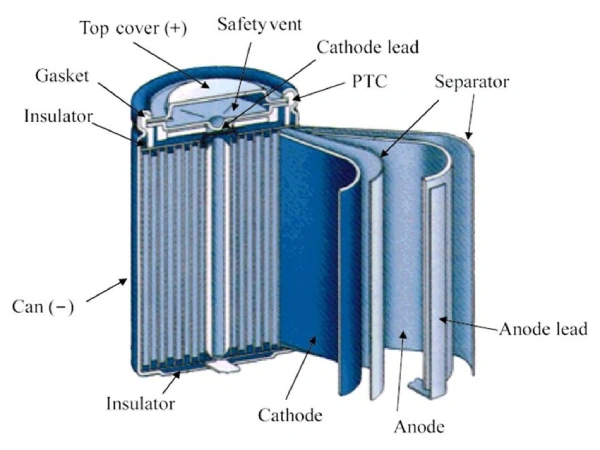
Inside a cylindrical cell, you’ll find a surprisingly elegant design:
- Outer shell: usually steel, providing mechanical strength.
- Electrodes: a rolled “jelly roll” of anode and cathode separated by a thin, porous separator.
- Electrolyte: enables lithium-ion movement.
This compact roll allows excellent thermal distribution and makes mass production relatively straightforward. Unlike pouch cells, cylindrical cells are self-contained, which contributes to their safety under mechanical stress.
The famous Tesla 21700 battery uses this structure for optimized energy density and thermal performance.
Part 5. Cylindrical cell production
Manufacturing cylindrical cells combines precision and automation. A typical production flow includes:
- Electrode preparation (mixing, coating, drying)
- Cutting and winding (forming the jelly roll)
- Assembly (inserting the roll into the metal casing)
- Electrolyte filling and sealing
- Formation and aging (charging cycles to stabilize the cell)
- Quality testing (capacity, impedance, safety tests)
Every step affects performance. That’s why reputable manufacturers like Panasonic, LG Chem, and CATL have extremely tight process controls.
If you want to understand how cylindrical cells are made, check out our battery production process page for a step-by-step overview.
Part 6. Performance parameters and applications
Understanding a cell’s performance will help you make smarter decisions. Key metrics include:
- Capacity (Ah): How much charge the battery can store
- Voltage (V): Determines energy delivery
- Cycle life: How many full charge/discharge cycles it can endure
- Discharge rate (C-rate): How fast you can safely draw energy
SizeTypical CapacityTypical Use186502,500–3,500 mAhLaptops, power tools, small EVs217004,000–5,000 mAhEVs, energy storage, higher power applications
Applications range from laptops and cameras to electric vehicles and home storage systems. By choosing the right type and chemistry, you can balance runtime, safety, and cost.
Part 7. Cylindrical cell selection guide
Choosing the right cell isn’t just about size or chemistry. Always match the cell type with your device’s thermal limits and expected load profile.
Here’s a practical approach:
- Consumer electronics: prioritize high energy density and moderate discharge (e.g., 18650 NMC).
- Electric vehicles: focus on high-capacity, high-cycle, high-power cells (e.g., 21700 NMC or LFP).
- Energy storage: choose LFP for longevity and safety; consider system voltage compatibility.
Users often ask: “Which battery is more cost-effective over time?”
- Consider cycle life: a cheaper battery with half the cycles may cost more in the long run.
- Energy density vs number of cells: higher-capacity cells reduce pack complexity but may cost more upfront.
- Example: 18650 vs 21700 in EV packs
- Fewer 21700 cells → lower wiring and management complexity
- Higher upfront cost, but reduced maintenance and replacements
Part 8. Safety and maintenance tips
Cylindrical cells naturally dissipate heat better than pouch cells because of their sturdy metal casing. However, in high-power setups like EV battery packs or power tools, active thermal management—whether air or liquid cooling—is often necessary to keep cells performing optimally.
To protect your investment and ensure safety:
- Avoid overcharging or deep discharging
- Keep batteries within recommended temperature ranges (15–35°C for most Li-ion)
- Store partially charged for long-term storage
- Regularly check for swelling or leakage
Small habits can dramatically extend battery life and prevent safety hazards.
Temperature extremes also affect performance. Cold environments slow down the chemical reactions inside the battery, reducing available energy, while excessive heat accelerates degradation. Thoughtful thermal design not only ensures safety but also preserves efficiency, which is why engineers spend a lot of time modeling airflow and heat distribution in battery packs.
Part 9. Emerging trends
The world of cylindrical cells is evolving rapidly. Solid-state cylindrical cells are on the horizon, promising higher energy density and improved safety, while lithium-metal cylindrical cells offer faster charging capabilities. Researchers are also experimenting with advanced thermal coatings and new electrolyte formulations to extend cycle life.
Keeping an eye on these trends is valuable, whether you’re designing your next EV, home storage system, or even a DIY electronics project. It gives you a glimpse of where performance, safety, and efficiency are headed in the coming years.
Part 10. FAQs
Can cylindrical batteries handle high-drain applications like RC cars or drones?
Yes, but ensure the cell’s C-rate meets the device’s maximum current draw to avoid overheating or rapid degradation.
How do different chemistries affect charging speed?
NMC cells typically allow faster charging than LFP due to lower internal resistance, while LFP prioritizes longevity over speed.
Do cylindrical cells self-discharge when not in use?
Yes, all Li-ion cells lose a small percentage of charge per month. Storage temperature strongly affects self-discharge rate.
Can you mix cylindrical cells of different brands in the same pack?
It’s not recommended; variations in internal resistance and capacity can cause imbalance and reduce overall pack performance.
How does ambient temperature impact cylindrical battery lifespan?
High temperatures accelerate chemical degradation, while extremely low temperatures reduce effective capacity. Keeping cells near room temperature maximizes lifespan.
Related Tags:

More Articles
Buck vs. Boost vs. Buck-Boost Converter: Which Is Best for Battery?
Not sure which converter your battery-powered device needs? Compare Buck, Boost, and Buck-Boost designs and discover what affects voltage stability and runtime.
How to Match 18650 Cells for a Reliable Battery Pack?
Building an 18650 battery pack? Learn how to compare cell capacity, voltage, and internal resistance to avoid mismatches and improve reliability.
Why Do 18650 Battery Packs Get Hot During Discharge?
Is your 18650 battery pack overheating under load? Learn what causes excess heat, how to spot dangerous symptoms, and what to do next.
18650 Battery BMS: How to Get the Specs Right
Learn how to choose a BMS for an 18650 battery pack. Compare voltage, current ratings, protection features, and balancing before you buy.
Why Does My Ring Camera Battery Drain So Fast or Stop Charging?
Is your Ring camera battery draining fast or not charging? Discover common causes, practical fixes, and when to replace the battery.