
- Part 1. What is a big square battery?
- Part 2. How big square batteries are used in solar systems?
- Part 3. Big square battery applications in UPS systems
- Part 4. Which industrial equipment uses big square batteries?
- Part 5. Advantages of big square batteries for off-grid use
- Part 6. Are big square batteries safe for long-term operation?
- Part 7. Big square battery vs cylindrical and pouch cells
- Part 8. How to choose the right big square battery?
- Part 9. Real-world examples of big square battery use
- Part 10. How big square batteries scale for commercial applications?
- Part 11. FAQs – Big square battery focused
Why Big Square Batteries Matter
Selecting the right battery for solar systems, industrial machinery, or backup power can be challenging. Big square batteries provide high capacity, stable output, and long service life, making them ideal for energy-intensive applications. This guide explores practical applications, technical advantages, and scalable solutions to help you make informed decisions for your energy needs.
Part 1. What is a big square battery?
Big square batteries are large-format energy storage units, typically rectangular or square, designed for high-demand applications. They deliver consistent power over long durations and are built to withstand harsh conditions.
Key Features:
- High energy density and long cycle life
- Deep discharge capability
- Thermal and voltage stability
- Durable construction for industrial and outdoor use
Common technologies include LiFePO4, lithium-ion, and advanced lead-acid.
Part 2. How big square batteries are used in solar systems?
Solar energy generation fluctuates throughout the day, and storing excess energy for night or cloudy periods is crucial for reliable operation. Big square batteries offer:
- Reliable energy storage for off-grid or hybrid systems
- Load balancing to smooth voltage fluctuations
- Backup power during grid outages
These batteries are suitable for residential, commercial, and utility-scale solar setups.
Ufine Product Example: For solar storage, High-Power 3.2V 160Ah LiFePO4 Battery and 3.2 V 295Ah LiFePO4 Battery provide stable, long-lasting performance.
Part 3. Big square battery applications in UPS systems
Data centers, hospitals, and telecom facilities require uninterrupted power. Big square batteries act as the primary backup energy source, providing instant power during outages and smooth transitions to generators.
Benefits:
- Fast response and high discharge rates
- Reliable protection for sensitive equipment
- Ensures continuous operation of servers, medical devices, and communication systems
Part 4. Which industrial equipment uses big square batteries?
Heavy-duty machinery and remote equipment often operate in locations without reliable grid access. Big square batteries are used in:
- Warehouses: Forklifts and AGVs benefit from long runtime and stable power
- Mining operations: Remote machinery can operate in harsh conditions
- Telecom towers: Ensure uptime in areas with unstable grids
- Construction sites: Battery-powered tools and lighting systems need extended runtime
Ufine Product Example: For industrial projects requiring high capacity, the 3.2 V 295Ah LiFePO4 Battery delivers the reliability and durability needed for continuous operations.
Part 5. Advantages of big square batteries for off-grid use
Remote homes, research stations, and mobile clinics require power independence. Big square batteries provide:
- Extended autonomy without relying on the grid
- High energy reserves for long-duration use
- Low maintenance and remote monitoring options
- Compatibility with solar, wind, and hybrid inverters
These features make them ideal for rural electrification and mobile applications.
Part 6. Are big square batteries safe for long-term operation?
LiFePO4 big square batteries are chemically stable, fire-resistant, and equipped with BMS (Battery Management Systems). Proper installation and monitoring can extend service life to 5–10 years with minimal risk.
Part 7. Big square battery vs cylindrical and pouch cells
| Feature | Big Square Battery | Cylindrical Cell | Pouch Cell |
|---|---|---|---|
| Capacity | High | Medium | Medium |
| Application | Stationary systems, solar, UPS | EVs, tools | Phones, laptops |
| Durability | Excellent | Good | Moderate |
| Cost per kWh | Lower over lifecycle | Higher | Higher |
Big square batteries excel in stationary high-demand applications, providing better long-term value and durability than consumer-oriented cells.
Artikel Terkait: Big Square Battery vs Cylindrical Battery
Part 8. How to choose the right big square battery?
Consider these factors before choosing a battery:
- Voltage and capacity: Match your inverter or equipment requirements
- Cycle life: Higher values reduce long-term costs
- Charge/discharge rate: Must handle peak loads
- Environmental resistance: For outdoor or mobile applications
- Warranty and certifications: UL, CE, IEC
Custom solutions allow precise voltage and capacity configurations, ensuring optimal performance for your specific system.
Part 9. Real-world examples of big square battery use
- Solar-Powered Warehouse: Big square batteries store solar energy for lighting, HVAC, and charging equipment.
- Data Center UPS: Provides 30+ minutes of backup to ensure smooth transition to generators.
- Off-Grid Rural School: Solar panels paired with batteries power lights, fans, and computer labs reliably.
Part 10. How big square batteries scale for commercial applications?
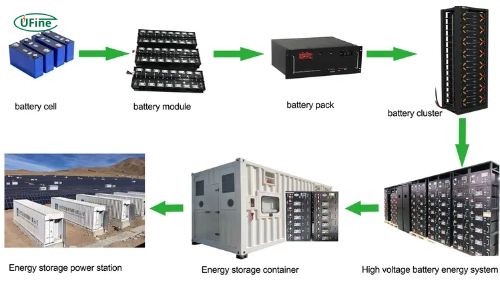
Big square batteries are modular and can be connected in series or parallel, supporting:
- Energy storage farms
- Microgrids and peak shaving systems
- EV charging stations
Rack-mountable designs and smart BMS make them easy to integrate and monitor, supporting growing commercial needs.
Part 11. FAQs – Big square battery focused
What is a big square battery
A high-capacity, rectangular battery used in solar, industrial, and backup power systems.
Can I use a big square battery for my solar system
Yes, they provide reliable energy storage and long lifecycle. For scalable solar setups, LiFePO4 options like Ufine’s 160Ah or 295Ah batteries are suitable.
Big square battery vs lead-acid: which is better
LiFePO4 big square batteries last longer, charge faster, and are safer than traditional lead-acid types.
How to choose the right big square battery for my inverter
Match voltage, current rating, and communication protocol. Custom solutions optimize compatibility and performance.
Are big square batteries safe for long-term use
Yes, especially LiFePO4 models with BMS, providing chemical stability, fire resistance, and overcharge protection.
Related Tags:

More Articles

고방전 배터리는 높은 전류와 발열로 배터리수명이 줄어듭니다. 구조적 한계, 사용 패턴, 충전 습관 등 실제 수명 단축 요인을 체계적으로 분석했습니다.
Capacitor vs Battery: What is the Difference?
Capacitor vs battery explained in detail. Learn the difference between capacitor and battery in energy storage, charging speed, lifespan, and real applications.
18650 Battery vs AA: Which Is Better for Your Device?
Compare 18650 vs AA batteries in capacity, voltage, rechargeability, and applications. Learn which battery type fits high-drain or everyday devices.
What is the Difference Between Battery Cell, Battery Control Module, and Battery Pack?
Compare battery cells, modules, and packs. Learn functions, design differences, control modules, and selection tips for EV, ESS, and industrial use.
How to Prevent LiPo Battery Explosion?
Can LiPo batteries explode or catch fire? Learn key causes of LiPo battery fires and proven charging, storage, and handling tips to reduce explosion risk.


