- Part 1. What is a battery for car audio systems?
- Part 2. Why isn't your stock battery enough for robust sound systems?
- Part 3. Lead-acid vs. lithium: What's the real difference?
- Part 4. How lithium batteries improve car audio performance
- Part 5. How much battery power do you need for car audio?
- Part 6. Can you use a lithium battery as a secondary battery?
- Part 7. Best lithium batteries for car audio: Brand comparison
- Part 8. Charging and managing lithium batteries
- Part 9. Common myths about lithium batteries for car audio
- Part 10. Tips for maximizing lithium battery performance
- FAQs
What is the best battery for car audio systems? A car audio battery is a specialized power source that provides steady, high-output electricity to amplifiers, subwoofers, and other components in a car audio system. Unlike standard starter batteries, these are engineered for deep cycling and consistent voltage delivery to prevent dimming lights, distortion, or power dropouts.
This guide will help you understand how lithium batteries outperform traditional options and how to choose the best one for your setup. It will also include an in-depth comparison of top brands like Ufine, Limitless Lithium, and XS Power.
Part 1. What is a battery for car audio systems?
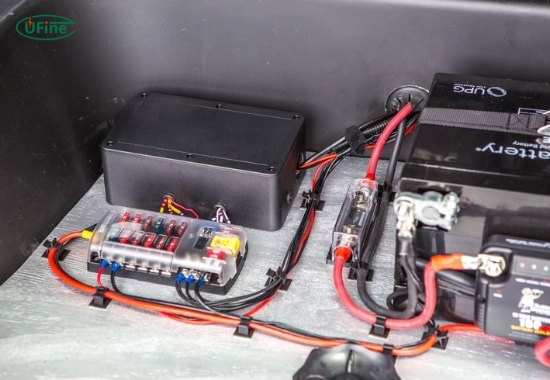
A car audio battery ensures your sound system gets uninterrupted, high-quality power. It supports your system when the engine is off and supplements the alternator when the power demand spikes.
Unlike regular starter batteries, car audio batteries are:
- Deep cycle capable: they can discharge more energy without damage.
- Built for quick recharge: essential for continuous music playback.
- Engineered for high current output: perfect for amplifiers and subwoofers.
A dedicated audio battery is necessary if running anything beyond an essential speaker upgrade.
Part 2. Why isn’t your stock battery enough for robust sound systems?
Most stock car batteries are designed to start the engine, not to handle continuous power drains from a multi-amp setup. Here’s what can go wrong:
- Voltage drops during heavy bass hits
- Headlights dimming while the music plays
- Amplifier clipping or shutting down
- Reduced battery lifespan due to deep discharge
To avoid these issues, you need a specialized audio battery — and, more often than not, a lithium one.
Part 3. Lead-acid vs. lithium: What’s the real difference?
Before we discuss brand comparisons, let’s examine the core differences between lead-acid and lithium batteries for car audio.
Chemistry & Design
Lead-acid batteries use lead plates and sulfuric acid. They’re heavier, slower to charge, and degrade faster with deep use.
Lithium batteries, especially LiFePO₄ (Lithium Iron Phosphate), are lighter, more efficient, and much longer lasting.
Performance Differences
- Voltage stability: Lithium holds voltage better under load.
- Lifespan: Lithium can last 10x longer than some lead-acid batteries.
- Charge time: Lithium charges 3–5x faster.
- Discharge rate: Lithium can handle rapid power draws without voltage sag.
Real-World Comparison Table
| Feature | Lead-Acid Battery | Lithium Battery (LiFePO₄) |
|---|---|---|
| Weight (Ah per 100Ah) | 25–30 kg | 10–12 kg |
| Energy Density (Wh/kg) | 30–50 Wh/kg | 90–160 Wh/kg |
| Voltage Range | 12.0V–13.2V | 12.8V–14.6V |
| Lifespan (Cycles) | 300–500 | 2000–5000 |
| Charging Time (to 100%) | 6–12 hours | 1–3 hours |
| Cost | $100–$200 | $300–$1000+ |
| Maintenance | Occasional water top-ups | Maintenance-free |
Lithium batteries are more expensive but deliver far better performance, making them ideal for power-hungry car audio systems.
Part 4. How lithium batteries improve car audio performance
Here’s how a lithium battery transforms your system:
- Zero voltage drop during bass peaks
- Faster charging from an alternator or charger
- Longer play Time, even with the engine off
- Lighter weight = less stress on your vehicle
- Cleaner power = better sound quality
If you’re serious about car audio, lithium is no longer optional — it’s essential.
Part 5. How much battery power do you need for car audio?
To figure out your battery size, calculate your RMS wattage (not peak) and use this rule:
Every 1000 watts RMS ≈ 60Ah lithium or 100Ah lead-acid
| System Power | Lithium Battery Size | Lead-Acid Equivalent |
|---|---|---|
| 1000W RMS | 60Ah | 100Ah |
| 3000W RMS | 180Ah | 300Ah |
| 5000W RMS | 300Ah+ | 500Ah+ |
Don’t forget to factor in your alternator output and whether you’ll use a secondary battery.
Part 6. Can you use a lithium battery as a secondary battery?
Yes, and you should. A secondary lithium battery is often installed near the trunk amps. It works as a buffer for your main battery and alternator.
Benefits of a secondary lithium battery:
- Reduces strain on alternator
- Keeps voltage stable near amps
- Allows longer playtime with the engine off
- More straightforward wiring for significant three upgrades or dual battery setups
Ensure both batteries are compatible (don’t mix lead acid with lithium), and use an isolator or relay if needed.
Part 7. Best lithium batteries for car audio: Brand comparison
Let’s compare four top brands, including Ufine Battery, to help you pick the right one.
1. Ufine Battery
Type: LiFePO₄
Pros:
- Excellent value for money
- High discharge rate (up to 200A/250A BMS options)
- Built-in BMS with Bluetooth monitoring
- Compact and lightweight
- Custom OEM/ODM options
Cons:
- Less known than U.S. brands
- Limited retail availability outside Asia
2. Limitless Lithium
Type: LiFePO₄
Pros:
- Designed specifically for car audio
- Extremely high discharge (400A+)
- Trusted by SPL competitors
Cons:
- Premium pricing
- It may require custom installation
3. XS Power Lithium
Type: Lithium Titanate (LTO) / LiFePO₄
Pros:
- Well-known and reliable
- Wide range of sizes
- Designed for both starting and audio
Cons:
- Expensive
- Some models lack Bluetooth monitoring
4. Cmax Lithium (DIY cells)
Type: LiFePO₄ cells (DIY kits)
Pros:
- Affordable for high-capacity
- Highly customizable
Cons:
- Requires technical knowledge
- No warranty or support unless built by a shop
Recommendation: For high performance on a budget, the Ufine battery offers impressive specs and reliability. For competition-level power, Limitless Lithium leads the pack.
Part 8. Charging and managing lithium batteries
How do you charge a lithium battery for car audio?
- Alternator charging: Works fine if your alternator is >150A
- Onboard DC-DC charger: Ideal for dual battery setups
- Smart charger: Use a LiFePO₄-compatible charger with 14.6V output
Pro Tips:
- Never exceed 14.6V
- Use voltage monitors to avoid over-discharge
- Install a fuse on both positive and negative leads
Part 9. Common myths about lithium batteries for car audio
| Myth | Truth |
|---|---|
| Lithium batteries explode | LiFePO₄ is extremely stable and safe |
| Lithium requires special alternators | Most 12V alternators are compatible |
| You can mix lithium with lead-acid | Never mix battery types in one system |
| Lithium is too expensive | Long-term, it’s more cost-efficient than lead-acid |
Don’t let misinformation stop you from upgrading your system.
Part 10. Tips for maximizing lithium battery performance
- Keep voltage between 12.5V–14.4V
- Avoid draining below 11.5V
- Use an app to monitor Bluetooth-enabled BMS
- Secure the battery properly during installation
- Check terminals monthly for corrosion or looseness
FAQs
Can I replace my starter battery with a lithium battery?
Yes, but make sure it provides enough Cold-Cranking Amps (CCA). Some lithium batteries are designed for starting, while others are audio-only.
Is Ufine Battery a good choice for car audio?
Yes. Ufine Battery offers affordable, high-performance lithium batteries with built-in BMS, fast discharge, and compact design — ideal for most car audio systems.
How long does a lithium battery last in-car audio?
With proper care, a lithium battery can last 7 to 10 years or 2000–5000 cycles, much longer than lead-acid batteries.
What happens if my lithium battery dies while playing?
If the voltage drops too low, your amp may shut off. You can avoid this with voltage monitors and secondary batteries.
Can I install a lithium battery myself?
Yes, if you’re comfortable with car wiring. Use 1/0 AWG cables, fuse both ends and monitor voltage during testing.
Related Tags:

More Articles

How to Prevent LiPo Battery Explosion?
Can LiPo batteries explode or catch fire? Learn key causes of LiPo battery fires and proven charging, storage, and handling tips to reduce explosion risk.
Aluminium Ion Battery vs Lithium-Ion: A Detailed Comparison
Compare aluminium ion battery vs lithium-ion battery in energy density, charging speed, safety, cost, and uses. A practical guide for engineers and buyers.
C vs D vs AA Battery: Size, Voltage, Capacity & Key Differences Explained
Compare AA, C, and D batteries by size, voltage, capacity, and lifespan. Learn the real difference between C and D batteries and which one you should use.
What is a battery MSDS? Learn what a lithium battery MSDS certificate includes, why it’s required for shipping and compliance, and how to read it correctly.
NiMH Battery vs Li-Ion Battery vs NiCad Battery: How are They Different?
Compare NiMH, Li-Ion, and NiCd rechargeable batteries by energy density, lifespan, cost, safety, and applications. Selection guide for engineers and buyers.