As battery technology evolves beyond traditional chemistries, aluminium ion batteries are increasingly discussed as a potential alternative to lithium-ion batteries. Engineers and system designers often ask: Is aluminium-ion really better, or is lithium-ion still the only practical choice?
This article provides a technical, application-oriented comparison of aluminium ion battery vs lithium-ion battery, focusing on performance limits, safety characteristics, commercialization status, and real-world use cases.
Key Takeaways (Quick Summary)
- Aluminium ion batteries offer extremely fast charging and long cycle life, but remain largely pre-commercial.
- Lithium-ion batteries dominate today due to high practical energy density and mature supply chains.
- Theoretical energy density of aluminium-ion is high, but cell-level performance is still limited by voltage and cathode materials.
- For applications prioritizing safety, fast charge, and durability, aluminium-ion shows long-term promise.
- For EVs, consumer electronics, and industrial systems today, lithium-ion remains the most viable option.
Part 1. What is an aluminium ion battery?
An aluminium ion battery is a rechargeable battery that uses Al³⁺ ions as charge carriers instead of lithium ions. Each aluminium ion can transfer three electrons, which is the core reason this chemistry attracts attention.
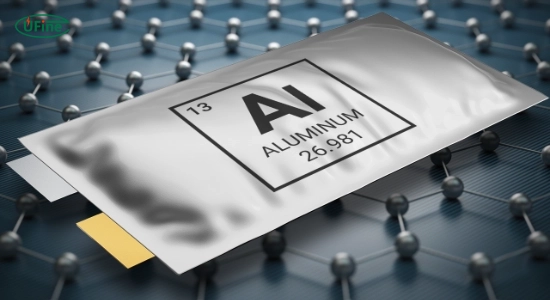
1 Core components
- Anode: Aluminium metal
- Cathode: Typically graphite or carbon-based materials
- Electrolyte: Ionic liquid enabling Al³⁺ transport
In theory, multi-electron transfer enables high power density and fast kinetics, which explains the exceptionally short charging times demonstrated in lab prototypes.
2 How aluminium ion batteries work
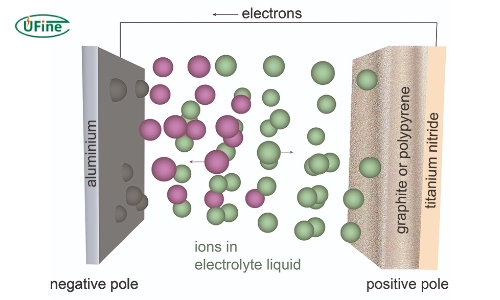
Discharge: Aluminium at the anode oxidizes, releasing Al³⁺ ions into the electrolyte while electrons flow through the external circuit.
Charge: Al³⁺ ions migrate back and are reduced to aluminium metal at the anode.
This process enables:
- Ultra-fast charging (minutes or less in labs)
- Very long cycle life (10,000–20,000+ cycles reported)
However, these results are mostly achieved in small-format experimental cells, not commercial packs.
Part 2. What is a lithium-ion battery?
A lithium-ion battery uses Li⁺ ions that shuttle between an anode and cathode through reversible intercalation. This technology underpins modern electronics, EVs, and energy storage systems.
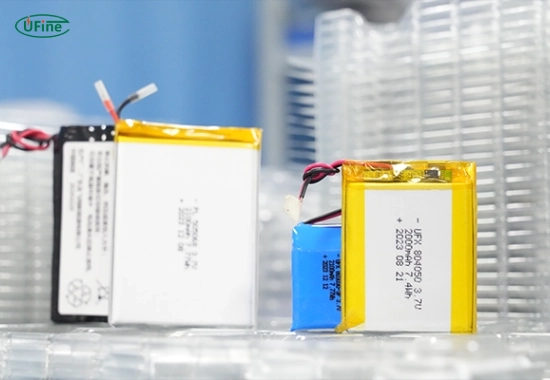
1 Core components
- Anode: Graphite (sometimes silicon-enhanced)
- Cathode: Lithium metal oxides (NMC, LFP, LCO, etc.)
- Electrolyte: Organic solvent with lithium salts
Lithium-ion batteries are valued for their high gravimetric energy density, scalable manufacturing, and well-understood degradation behavior.
2 How lithium-ion batteries work
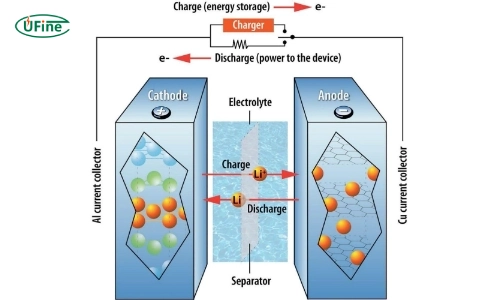
Discharge: Li⁺ ions move from anode to cathode, releasing electrical energy.
Charge: External power drives Li⁺ ions back into the anode structure.
While efficient, lithium-ion systems require strict thermal and voltage management to avoid degradation or safety events.
Part 3. Aluminium ion battery vs lithium-ion: key differences
1 Technical comparison overview
| Feature | Aluminium Ion Battery | Lithium-Ion Battery |
|---|---|---|
| Charge carrier | Al³⁺ | Li⁺ |
| Electrons per ion | 3 | 1 |
| Cell voltage | ~2.0–2.7 V | ~3.2–4.2 V |
| Theoretical energy density | Very high (theoretical) | High (commercially achieved) |
| Cycle life | 10,000–20,000+ (lab) | 500–3,000 |
| Charging speed | Extremely fast | Moderate |
| Safety | Non-flammable materials | Thermal runaway risk |
| Commercial maturity | R&D / pilot stage | Fully commercial |
2 Advantages of aluminium ion batteries
- Ultra-fast charging: Multi-electron transfer enables very high power rates.
- Exceptional cycle life: Minimal structural stress during cycling.
- Improved safety: No lithium dendrites; non-flammable aluminium.
- Material abundance: Aluminium is inexpensive and widely available.
- Environmental profile: Easier recycling compared to lithium systems.
3 Advantages of lithium-ion batteries
- High practical energy density: Proven at pack level.
- Mature manufacturing ecosystem: Gigafactory-scale production.
- Design flexibility: Cylindrical, prismatic, pouch formats.
- Established standards: Well-defined safety, transport, and certification frameworks.
👉 Related internal reading: Lithium-ion battery types and applications
4 Aluminium-ion battery disadvantages (current reality)
Despite strong theoretical advantages, aluminium-ion batteries face major hurdles:
- Low operating voltage: Reduces usable energy at system level.
- Cathode limitations: Few materials support stable Al³⁺ intercalation.
- Electrolyte constraints: Ionic liquids increase cost and complexity.
- No mass production: No standardized commercial supply chain.
These factors explain why aluminum ion battery vs lithium ion comparisons remain largely academic today.
5 Lithium-ion battery disadvantages
- Thermal runaway risk: Requires complex BMS and cooling.
- Resource constraints: Lithium mining has environmental and geopolitical issues.
- Cycle aging: Capacity fade over time is unavoidable.
- Charging limitations: Fast charging accelerates degradation.
Part 4. Application scenarios: which battery fits best?
1 Aluminium ion battery applications (emerging)
- Grid-scale storage with frequent cycling
- High-power buffering systems
- Environments with strict fire safety requirements
- Research-stage fast-charge mobility concepts
2 Lithium-ion battery applications (current standard)
- Electric vehicles
- Consumer electronics
- Industrial equipment
- Renewable energy storage systems
Part 5. FAQs about Aluminium ion battery vs lithium-ion
Aluminium ion battery vs lithium-ion: which is better?
It depends on the application. Aluminium-ion excels in safety and cycle life, while lithium-ion dominates in energy density and availability.
Are aluminium ion batteries commercially available?
No. Most aluminium-ion batteries remain at laboratory or pilot scale.
What are the main aluminum-ion battery disadvantages?
Low voltage, immature cathode materials, and lack of large-scale manufacturing.
Can aluminium-ion replace lithium-ion in EVs?
Not in the near term. Voltage and energy density limitations prevent direct replacement.
Why is aluminium-ion considered safer?
It avoids lithium dendrites and flammable electrolytes, reducing fire risk.
Related Tags:

More Articles
What is a 9V Battery? A Comprehensive Guide
Complete 9V battery guide: internal structure, alkaline vs lithium vs rechargeable, lifespan, applications, testing, and safe disposal. Updated for 2026.
Lead Acid vs. Lithium Ion Batteries: A Complete Comparison
Compare lead acid vs lithium-ion batteries in safety, cost per kWh, energy density, size, lifespan, and applications. Selection guide for engineers and buyers.
Learn how to charge a drone battery correctly. This guide covers battery types, chargers, safe charging steps, and best practices to extend battery life.
Capacitor vs Battery: What is the Difference?
Capacitor vs battery explained in detail. Learn the difference between capacitor and battery in energy storage, charging speed, lifespan, and real applications.
18650 Battery vs AA: Which Is Better for Your Device?
Compare 18650 vs AA batteries in capacity, voltage, rechargeability, and applications. Learn which battery type fits high-drain or everyday devices.