
- Part 1. Why AED battery quality can determine survival
- Part 2. AED battery types
- Part 3. How long do AED batteries last?
- Part 4. AED battery regulations and standards
- Part 5. What makes an AED battery different from ordinary batteries?
- Part 6. Does your AED need a backup battery?
- Part 7. AED battery disposal — Safe and legal methods
- Part 8. How to choose the right AED battery (Simple checklist)
- Part 9. Common myths & mistakes about AED batteries
- Part 10. Ufine Battery AED solutions (OEM/ODM)
- Part 11. Conclusion
Part 1. Why AED battery quality can determine survival
AEDs (Automated External Defibrillators) are life-saving devices, and their reliability depends heavily on a single component: the battery.
Studies show that over 60% of AED failures are caused by battery issues, not hardware defects. A dead or weak AED battery means the device cannot deliver the shock energy required to restart the heart — resulting in preventable fatalities.
This guide gives you a complete understanding of AED batteries from both a user perspective and an engineering perspective:
Part 2. AED battery types
AED batteries are not regular consumer lithium batteries. They are engineered for long standby life, high safety, and instant high-pulse discharge.
1 Lithium Manganese Dioxide (Li-MnO₂) — Most Common
- Non-rechargeable, long shelf life (4–7 years)
- Very low self-discharge
- Excellent cold-temperature performance
- Often used in public AEDs
2 LiFePO4 Rechargeable Packs — For Professional Use
- Widely used in EMS, ambulances, hospitals
- High cycle life
- Excellent thermal stability
- High discharge capability
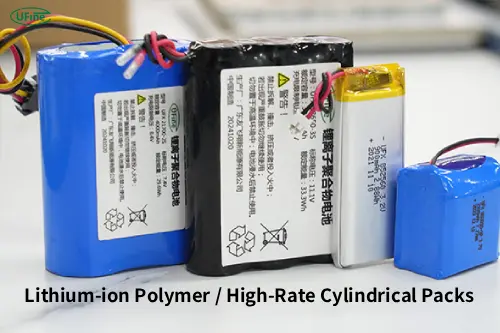
3 Lithium-ion Polymer / High-Rate Cylindrical Packs
- Used in compact AED modules or portable AED concepts
- Flexible form factors
- High discharge rate options available
Engineering Trade-offs:
| Type | Standby Life | Pulse Performance | Rechargeable | Safety | Cost |
|---|---|---|---|---|---|
| Li-MnO₂ | ★★★★★ | ★★★ | No | ★★★★★ | Medium |
| LiFePO4 | ★★★★ | ★★★★★ | Yes | ★★★★★ | Higher |
| Li-ion/Polymer | ★★★ | ★★★★ | Yes | ★★★★ | Medium |
Part 3. How long do AED batteries last?
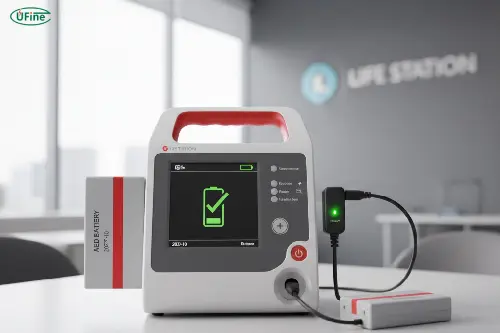
AED manufacturers usually specify two lifetimes:
1 Standby Life (Most Important)
The period an AED can stay installed without being used — typically 4–5 years.
2 Use Life
Based on the number of shocks:
Most AED batteries support 100–300 shocks during actual emergencies.
3 Why AED Batteries Last Longer Than Normal Lithium Batteries
- Optimized for ultra-low self-discharge
- Chemistries designed for predictable long-term stability
- Built-in supervisory circuits and self-test compatibility
- Higher internal safety margins
Signs your AED battery is failing:
- AED shows “low battery” indicator
- Failed self-test
- Shelf life past expiry
- Slow or unstable boot-up
Part 4. AED battery regulations and standards
AED batteries are regulated under medical device standards, not consumer electronics.
Key global standards include:
1 UL1642 / UL2054 – Lithium Battery Safety
Requirements for:
- Overcharge protection
- Thermal stability
- Short-circuit response
- Venting safety
2 IEC62133 – International Safety Standard for Rechargeable Cells
Covers drop tests, thermal abuse, vibration, and mechanical safety.
3 UN38.3 – Mandatory for Shipping
All AED batteries must pass:
- Altitude test
- Thermal cycling
- Vibration
- Shock
- External short-circuit
- Impact and crush
- Overcharge
4 CE / FDA / KC / PSE Compliance
Depending on the market:
- EU: CE
- US: FDA guidelines for AED system safety
- Korea: KC
- Japan: PSE
Why this matters:
Many “compatible AED batteries” online do NOT meet medical standards, leading to dangerous failures — especially during high-pulse discharge.
Part 5. What makes an AED battery different from ordinary batteries?
AEDs require a high-pulse discharge capability that most batteries cannot provide.
What Happens During Defibrillation?
The AED must instantly deliver 120–200 Joules of energy.
This requires:
- Very low internal resistance
- Stable voltage output under high current
- High-rate pulse discharge capability
- Thermal safety during high stress
Why High-Rate Lithium Batteries Are Crucial
Unlike a phone battery, AED batteries must perform perfectly after years of storage and then suddenly deliver a massive burst of current.
This is why AEDs use specialized lithium cells designed for:
- Low impedance
- Consistent discharge curves
- Medical-grade quality
Part 6. Does your AED need a backup battery?
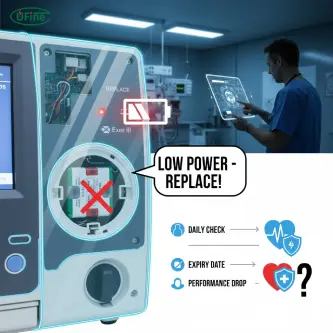
In many cases, yes, especially in professional or high-traffic environments.
When You MUST Have a Backup Battery
✔ Ambulances / EMS units
✔ Hospitals & clinics
✔ Outdoor AED installations
✔ Industrial facilities
✔ Areas with extreme temperatures
✔ AEDs that perform daily/weekly self-tests
Why?
- AED self-tests consume battery gradually
- Low temperatures reduce effective capacity
- AEDs in public areas can be triggered accidentally
- Emergencies may require multiple shocks
A backup battery ensures:
- Zero downtime
- Instant readiness
- Higher reliability in critical environments
Recommendation:
Public facilities should replace or maintain backup AED batteries every 3–4 years, regardless of usage.
Part 7. AED battery disposal — Safe and legal methods
AED batteries contain lithium, which is classified as hazardous waste.
Never do the following:
✘ Do not throw AED batteries in household trash
✘ Do not puncture or crush
✘ Do not expose to fire
✘ Do not store discharged batteries together (risk of short-circuit)
Proper disposal methods:
✔ Return to a certified battery recycling center
✔ Dispose through medical waste facilities
✔ Follow local hazardous waste regulations
✔ Use manufacturer’s recycling program (if available)
For organizations:
- Maintain a battery recycling log
- Use UN-approved disposal containers
Part 8. How to choose the right AED battery (Simple checklist)
When buying a replacement or custom AED battery pack, check:
Checklist
- Voltage & connector compatibility
- Chemistry and discharge capability
- Standby life (4–7 years recommended)
- Shock capacity (number of discharges)
- Compliance: UL, IEC, UN38.3, CE/KC/FDA
- Operating temperature range
- Seller’s medical battery experience
- Long-term supply capability
- Batch consistency documentation
If any of these are missing → don’t buy it.
Part 9. Common myths & mistakes about AED batteries
Myth 1: “If the AED turns on, the battery is OK.”
Wrong — startup requires minimal power; defibrillation requires huge pulse power.
Myth 2: “Rechargeable AED batteries last longer.”
Not always. For standby life, primary lithium batteries last much longer.
Myth 3: “Any compatible battery works the same.”
False — pulse performance varies significantly between suppliers.
Myth 4: “Temperature doesn’t affect AED batteries.”
Extreme heat or cold dramatically impacts performance and shelf life.
Part 10. Ufine Battery AED solutions (OEM/ODM)
Ufine Battery is a custom lithium battery manufacturer in China, providing:
- Lithium Polymer
- LiFePO4 battery packs
- High-rate cylindrical cells (18650, 21700, etc.)
- Ultra-thin batteries
- High/low temperature batteries
- High discharge-rate batteries
- Custom voltage, capacity, connectors, and BMS
AED-Specific Capabilities
- High-pulse discharge lithium packs
- Long standby design (4–7 years)
- UL/IEC/UN38.3 compliance
- Medical-grade manufacturing
- Support small batch prototypes & mass production
If you need a custom AED battery pack, we support complete OEM/ODM projects.
Part 11. Conclusion
AED batteries must stay functional for years and perform perfectly in emergencies.
Choosing a high-quality battery — and replacing it on time — can directly impact survival outcomes.
For AED manufacturers, distributors, or organizations planning to replace or design AED batteries:
👉 Ufine Battery provides custom AED battery solutions, long-term supply, and engineering support.
👉 Contact us for free consultation or to request custom samples.
Related Tags:

More Articles

Lithium Manganese Batteries: A Comprehensive Guide
Learn how lithium manganese oxide (LMO) batteries work, their advantages, applications, lifespan, and how they compare with LFP and NMC batteries.
Battery Tab: Types, Manufacturing Processes, and Applications
What is a battery tab? Learn about battery tab materials, lithium battery tabs, welding methods, manufacturing processes, and common applications.
Watts to Amps: Complete Guide with Formulas, Calculations, and Common Mistakes
Learn how to convert watts to amps using DC, AC, and three-phase formulas. Includes conversion examples, charts, power factor tips, and common mistakes.
What is an RC Battery? A Comprehensive Guide
Learn what an RC battery is, RC battery types, voltage, mAh, C rating, charging, safety tips, and how to choose the right battery for RC vehicles.
Lithium-Ion Batteries: The Difference Between Voltage and Amperage
Learn the difference between voltage and amperage in lithium-ion batteries. Discover how volts and amps affect battery performance, charging, power, and safety.


