

- Part 1. Industry challenges: Why power tool batteries are unique
- Part 2. Our power tool battery solution overview
- Part 3. Why 18650 batteries are widely used in power tools
- Part 4. What defines the best 18650 battery for power tools
- Part 5. Recommended battery chemistries & configurations by tool type
- Part 6. Certifications & compliance
- Part 7. Custom power tool battery
Part 1. Industry challenges: Why power tool batteries are unique
Power tools demand more from batteries than ordinary devices. Unlike consumer electronics, power tools operate under high current loads, frequent charge–discharge cycles, and continuous heavy-duty usage, often generating significant heat. Key challenges include:
- High Discharge Currents – To deliver consistent torque and performance, batteries must sustain large continuous currents without voltage drops.
- Thermal Management – Heat accumulation can reduce cycle life and cause safety issues.
- Long Cycle Life – Tools are expected to last years with minimal battery degradation.
- Compact Design Constraints – Batteries must fit ergonomic handles or portable packs while maintaining energy density.
- Safety & Compliance Requirements – Meeting UN38.3, IEC62133, UL, CE, and other standards is critical for industrial and professional-grade tools.
Understanding these challenges is the first step to selecting or designing the right battery solution.
Part 2. Our power tool battery solution overview
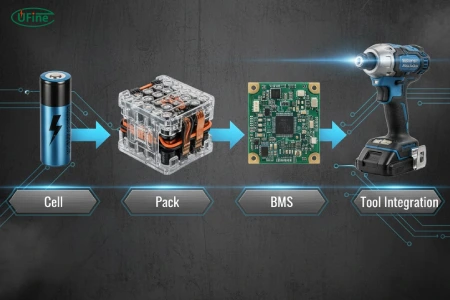
Ufine Battery provides a complete power tool battery solution ecosystem, covering cells, packs, and system-level design. Our offerings include:
- High-Performance Lithium-Ion Cells – 18650 and 21700 formats optimized for high-current applications.
- Custom Battery Packs – Configurations in series and parallel for 12V, 18V, and 20V platforms.
- Battery Management Systems (BMS) – Ensuring safe operation, balancing cells, and monitoring performance.
- Thermal and Mechanical Protection – Specialized housing, heat dissipation, and vibration resistance for harsh conditions.
- Scalable Solutions – From prototype development to volume production.
See how Ufine Battery designs and assembles high-performance power tool batteries in our state-of-the-art production facility.
Part 3. Why 18650 batteries are widely used in power tools
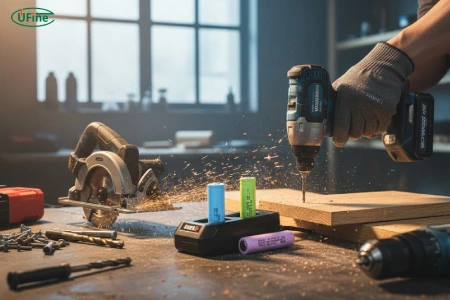
18650 lithium-ion cells have become the standard choice for many power tools due to:
- Balanced Energy Density and Power Output – High energy for long runtime while supporting high discharge currents.
- Proven Reliability – Decades of industrial use provide consistent performance and availability.
- Ease of Pack Assembly – Standardized sizes simplify series/parallel configuration and BMS integration.
Expert Insight: Selecting the right 18650 isn’t just about voltage and capacity—it’s about discharge rate, cycle life, and thermal performance under real-world conditions.
Part 4. What defines the best 18650 battery for power tools
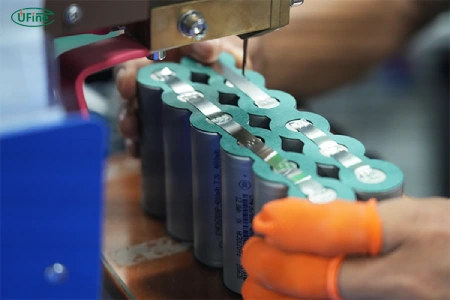
Choosing the best 18650 battery requires evaluating multiple technical factors:
- High Continuous Discharge Capability – Ensures consistent torque and performance under load.
- Long Cycle Life – Maintains capacity over thousands of cycles, even under heavy-duty use.
- Low Internal Resistance – Reduces heat generation and improves efficiency.
- Thermal Stability – Prevents overheating during prolonged operation.
- Cell Quality and Matching – Essential for multi-cell packs to avoid imbalance and premature failure.
- Certification & Traceability – Ensures compliance with UN38.3, UL, IEC62133, and CE standards.
Industry Data Insight: Tests show high-rate 18650 cells maintaining 20–25A continuous discharge for over 500 cycles provide optimal performance for most cordless drills and impact drivers.
Power tools require batteries that match their energy and power demands. The table below shows a range of high-quality 18650 Li-ion cells we provide, including capacities optimized for different tool types and usage patterns.
| Battery Type | Nominal Capacity | Typical Tool Application | Key Feature |
|---|---|---|---|
| Li-ion 18650 Battery | Standard | Light-duty drills & DIY tools | Reliable, compact |
| 18650 Battery 2000mAh | 2000 mAh | Small drills, mini impact drivers | Lightweight, portable |
| 18650 Battery 2200mAh | 2200 mAh | DIY drills, small saws | Balanced runtime & power |
| 18650 Battery 2600mAh | 2600 mAh | Medium-duty tools | High discharge stability |
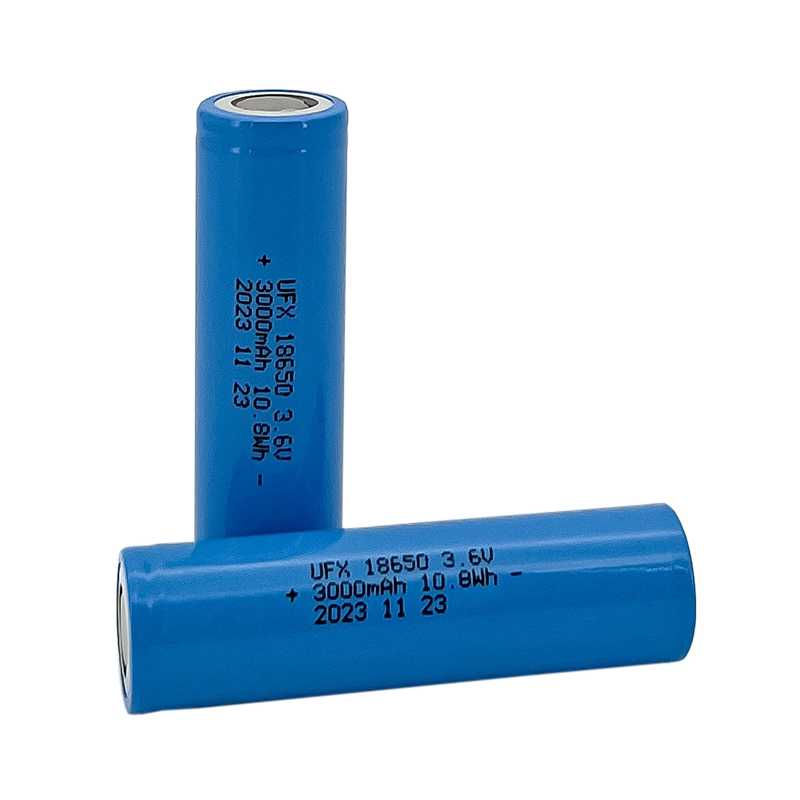
| 18650 Battery 3000mAh | 3000 mAh | Professional drills, impact drivers | Long runtime, high current |
| 18650 Battery 3500mAh | 3500 mAh | Heavy-duty tools & industrial use | Maximum capacity, high-rate discharge |
| Other Cylindrical Li-ion Battery | Custom | Special applications | Tailored capacity, voltage, form factor |
Each battery type can be customized further to meet specific tool requirements, including voltage, pack configuration, and discharge rate. Explore the full product range or contact us for custom solutions.
Part 5. Recommended battery chemistries & configurations by tool type
Different power tools require batteries tailored to their usage patterns. Below are commonly used tools and typical battery specifications observed in the industry:
| Tool Type | Typical Voltage | Common Battery Chemistry | Nominal Capacity | Continuous Discharge | Notes |
|---|---|---|---|---|---|
| Cordless Drill | 18V | Li-ion 18650 | 2.0–3.0 Ah | 15–20A | Frequent short bursts of torque |
| Impact Driver | 18V | Li-ion 18650 High-Rate | 2.5–3.5 Ah | 20–25A | High discharge for heavy-duty impact |
| Circular Saw | 20V | Li-ion 21700 | 3.0–4.0 Ah | 25–30A | Long continuous load, thermal stability required |
| Reciprocating Saw | 20V | Li-ion 21700 | 3.5–4.5 Ah | 25–30A | High torque, needs high-rate discharge |
| Jigsaw / Small Tools | 12–18V | Li-ion 18650 | 1.5–2.5 Ah | 10–15A | Lightweight, compact pack preferred |
Pro Tip: These specifications reflect industry-standard choices among professional tool manufacturers and guide pack design for optimal performance.
1 Examples of Tool-Specific Configurations
- High-Rate 18650 Batteries for Impact Drivers – Optimized for 20–25A continuous discharge.
- 21700 Li-ion for Continuous Load Tools – Ideal for circular saws and heavy-duty cutting tools, balancing high capacity and thermal stability.
- Compact 18650 Packs for DIY Tools – Lightweight packs for ergonomic drills and smaller tools.
Part 6. Certifications & compliance
Ufine Battery ensures all power tool batteries meet industry safety and quality standards, including:
- UN38.3 – Safe for transport
- IEC 62133 – Cell and battery safety standards
- UL & CE – Compliance for industrial-grade equipment
- RoHS & MSDS – Environmentally safe materials
These certifications guarantee your tools meet professional and regulatory expectations worldwide.
Part 7. Custom power tool battery
We work with OEMs and industrial partners to tailor batteries to your exact requirements, whether you need:
- Specific capacity, voltage, or discharge rate
- Custom cell arrangement, pack shape, or housing
- Integrated BMS and thermal protection
- Prototype to volume production scalability
Ufine Battery can customize capacity, voltage, curvature, and dimensions to meet your specifications — whether for prototype testing or volume production.
Find A Solution NowHigh Energy Density
It stores large amounts of energy in a smaller and lighter package
Longer Cycle Life
Withstands extensive charge and discharge cycles
Low Self-Discharge
Maintains power longer when not in use
Safety
Minimizes the risk of accidents and ensures safe operation
More Information About Power Tool Battery
-
What is the typical lifespan of a power tool battery?
-
How do I choose the right voltage for my power tool battery?
-
Can I mix different battery brands or capacities in the same tool?
-
How does temperature affect power tool battery performance?
-
What maintenance steps improve power tool battery health?
-
How do I know when a power tool battery needs replacement?
Latest Blogs
About Lithium Battery Industry News
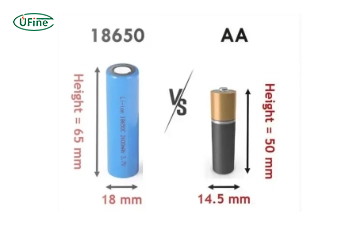
18650 Battery vs AA: Which Is Better for Your Device?
Compare 18650 vs AA batteries in capacity, voltage, rechargeability, and applications. Learn which battery type fits high-drain or everyday devices.
2026/02/28 Ufine
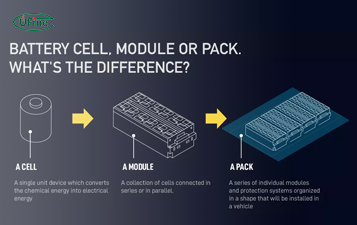
What is the Difference Between Battery Cell, Battery Control Module, and Battery Pack?
Compare battery cells, modules, and packs. Learn functions, design differences, control modules, and selection tips for EV, ESS, and industrial use.
2026/02/28 Ufine

How to Prevent LiPo Battery Explosion?
Can LiPo batteries explode or catch fire? Learn key causes of LiPo battery fires and proven charging, storage, and handling tips to reduce explosion risk.
2026/02/28 Ufine
Aluminium Ion Battery vs Lithium-Ion: A Detailed Comparison
Compare aluminium ion battery vs lithium-ion battery in energy density, charging speed, safety, cost, and uses. A practical guide for engineers and buyers.
2026/02/28 Ufine

C vs D vs AA Battery: Size, Voltage, Capacity & Key Differences Explained
Compare AA, C, and D batteries by size, voltage, capacity, and lifespan. Learn the real difference between C and D batteries and which one you should use.
2026/02/28 Ufine
What is a battery MSDS? Learn what a lithium battery MSDS certificate includes, why it’s required for shipping and compliance, and how to read it correctly.
2026/02/27 Ufine

