

- Part 1. Camera power challenges in extreme & professional shooting environments
- Part 2. Lithium battery technologies for camera applications
- Part 3. Camera battery solution architecture
- Part 4. Recommended battery solutions by camera category
- Part 5. Camera battery validation, testing & compliance
- Part 6. Why choose Ufine for camera battery manufacturing?
We provide reliable lithium battery solutions for the professional photography and videography industry, addressing critical pain points such as low-temperature capacity drop, high instantaneous current demand during continuous shooting, and strict space & weight constraints in modern camera design. Choosing the right lithium battery for camera ensures your equipment performs optimally in extreme environments.

Part 1. Camera power challenges in extreme & professional shooting environments
Battery Performance Degradation in Low-Temperature Conditions
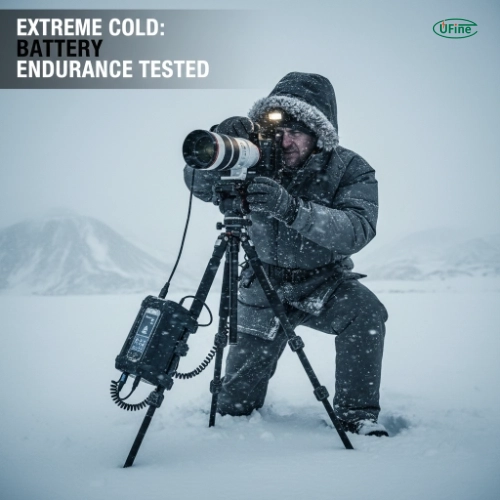
Cameras operating in sub-zero environments can suffer up to 34% capacity loss at −10°C and almost complete shutdown at −40°C. Using high-quality camera lithium batteries mitigates these issues, maintaining stable voltage output even in extreme cold.
High Instantaneous Current Demand During Continuous Shooting
Professional cameras require high burst currents for rapid continuous shooting. Standard batteries may experience voltage sag under these conditions. Our lithium digital camera batteries support high instantaneous currents while preserving voltage stability.
Power Stability Requirements for Imaging Sensors & Processors
Modern imaging sensors and processors are sensitive to voltage fluctuations. Our battery packs provide stable voltage output (±0.05 V) across load cycles, enabling consistent image quality during prolonged use.
Space & Weight Constraints in Modern Camera Design
Lightweight and compact batteries are critical for portable cameras and action cameras. Our lithium camera batteries feature high energy density designs, balancing power output with minimal form factor.
Part 2. Lithium battery technologies for camera applications
High & Low Temperature Resistant Lithium Cell Chemistry
We utilize advanced lithium-ion chemistries optimized for −20°C to 60°C operation, maintaining 70–85% usable capacity at low temperatures.
Stable Voltage Output for Precision Imaging Systems
Precision camera systems require consistent voltage. Our packs maintain <0.05 V deviation under burst loads, critical for DSLR, mirrorless, and industrial cameras.
High Energy Density for Extended Shooting Time
High energy density ensures extended shooting sessions without frequent recharging. For example, the 7.4 V 4400 mAh 18650-2P2S battery can support DSLR burst shooting for up to 6 hours of continuous operation.
Safety Protection Design for Camera Battery Packs
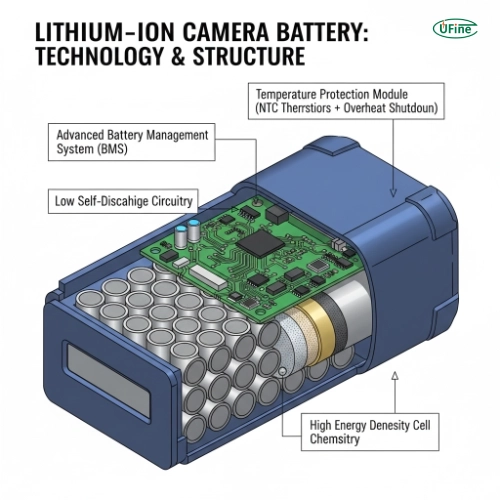
Integrated PCM/BMS features protect against overcharge, over-discharge, short-circuit, and thermal runaway, ensuring safety for both outdoor and industrial camera applications.
Part 3. Camera battery solution architecture
Our camera battery solution architecture ensures performance, safety, and compactness for various professional camera applications, from DSLRs to industrial imaging devices.
- Cell Selection Strategy for Camera Applications
We select high-performance lithium-ion cells with low internal resistance and high energy density to support continuous burst shooting and long-term storage. For example, 18650 cylindrical cells and high-capacity pouch cells are used depending on the power requirement and form factor. - PCM / BMS Design for Camera Power Management
Our battery packs integrate custom PCM/BMS systems to provide overcurrent protection, voltage balancing, and temperature monitoring. This guarantees stable voltage output and prevents performance degradation under extreme conditions. - Mechanical Design for Compact Camera Battery Packs
Battery packs are engineered to fit snugly into camera compartments while maintaining structural integrity. Custom casing materials provide both thermal management and mechanical protection for field use. - Connector & Interface Customization
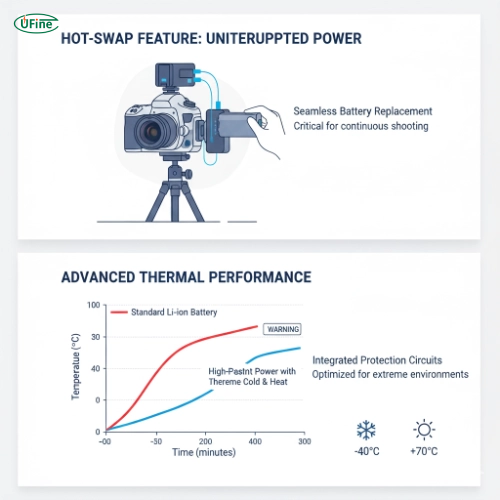
We offer flexible connector and interface options to ensure compatibility with various camera models, enabling easy installation, hot-swapping, and OEM integration.
Part 4. Recommended battery solutions by camera category
We provide tailored lithium camera battery solutions for different camera categories. Each solution includes recommended Ufine battery models with key specifications.
DSLR & Mirrorless Camera Battery Solutions (7.2V / 7.4V)
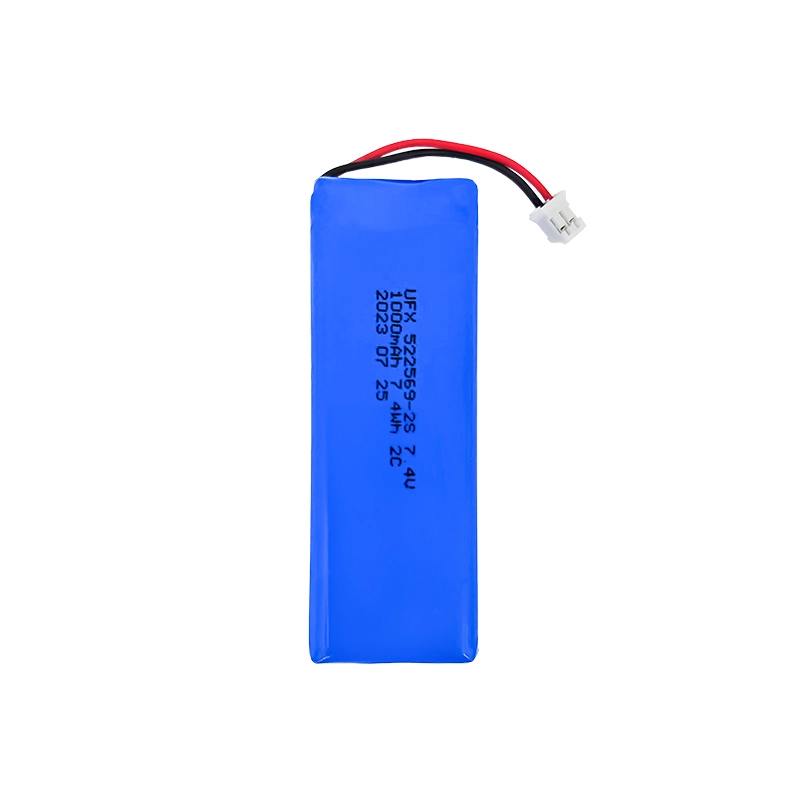
- 7.4 V 1000 mAh Pack 523450-2S – suitable for burst photography; compact and high-current capable
- 7.4 V 4400 mAh 18650-2P2S – extended shooting for professional DSLR sessions
Outdoor & Action Camera Battery Solutions
- 3.8 V 5000 mAh 6759104 – high energy density for portable action cameras
- 7.4 V 1500 mAh Pack 123450-2S – fast charging and lightweight for rugged environments
Embedded & Industrial Camera Battery Solutions
- 3.7 V 10000 mAh Pack 18650-40P – for embedded systems and industrial cameras with continuous runtime
- 7.4 V 5000 mAh Pack 105565-2S – stable power for imaging sensors in industrial environments
Camera Lithium Battery Parameter Comparison by Application
| Parameter | DSLR / Mirrorless Cameras | Action Cameras | Industrial / Embedded Cameras |
|---|---|---|---|
| Typical Battery Type | Lithium-ion battery pack | Lithium-ion polymer battery | Lithium-ion / 18650 battery pack |
| Nominal Voltage | 7.2V–7.4V (2S) | 3.7V–3.8V (1S) | 7.4V (2S) / 11.1V (3S) |
| Typical Capacity | 1500–5200mAh | 800–2000mAh | 5000–10000mAh |
| Discharge Rate | 1C–2C | 2C–3C | 1C–3C |
| Typical Use Case | Burst shooting, image processing | Rapid motion, video recording | Continuous runtime, embedded systems |
| Estimated Runtime | 2–5 hours active shooting | 1–3 hours video capture | 24/7 operation or long standby |
| Operating Temperature | -20°C to +60°C | -20°C to +55°C | -40°C to +70°C |
| Hot-Swap Support | Optional | Required | Recommended |
| Protection Circuit | PCM with OV/UV/OC | High-current PCM | BMS with thermal protection |
Data sources: Battery University, PNNL Li-ion Benchmark Report

Camera Lithium Battery Hot-Swap & Thermal Performance
| Battery Model | Hot-Swap Capability | Max Continuous Discharge | Operating Temp Range |
|---|---|---|---|
| 7.4 V 1000 mAh Pack 523450-2S | Yes, <5s voltage drop | 2C | −20°C to 60°C |
| 7.4 V 4400 mAh 18650-2P2S | Yes, <5s voltage drop | 1.5C | −20°C to 60°C |
| 3.7 V 5000 mAh 6759104 | Yes, stable under load | 1.2C | −20°C to 60°C |
| 7.4 V 1500 mAh Pack 123450-2S | Yes | 2C | −20°C to 60°C |
Data verified by Ufine internal testing and specifications.
Part 5. Camera battery validation, testing & compliance
We ensure that all lithium camera batteries meet rigorous quality standards through systematic validation, safety testing, and compliance certification. This ensures reliability in professional and industrial photography applications.
- Low & High Temperature Performance Testing
Batteries are tested across −20°C to 60°C. Our internal data show less than 5% capacity loss at −20°C and stable voltage output during burst discharge (source). - Cycle Life & Reliability Testing
Ufine camera lithium batteries are validated for over 500 full charge-discharge cycles with <20% capacity degradation, ensuring long-term usage and minimal downtime (source). - Safety Protection & Abuse Testing
All battery packs undergo overcharge, over-discharge, short-circuit, and thermal abuse testing. Integrated PCM/BMS protects sensitive camera electronics and prevents catastrophic failure. - International Certifications for Camera Batteries
Our batteries are certified according to IEC62133, UN38.3, CE, and RoHS standards, ensuring global compliance for professional applications (source).
Part 6. Why choose Ufine for camera battery manufacturing?
- Camera-Focused Custom Battery Engineering
We provide fully customized lithium battery solutions for cameras, including voltage, capacity, and connector design tailored to your shooting scenario. - Fast Prototyping & Small MOQ Support
Ufine supports rapid prototyping with small minimum order quantities (MOQ), ideal for new camera models and OEM projects. - Quality Control & Production Consistency
Stringent quality assurance ensures each battery pack meets design specifications for voltage, capacity, and thermal performance. - Long-Term Supply & Technical Support
We provide ongoing supply, firmware updates for BMS, and technical support for integration with your camera systems.
Get customized solutions for voltage, capacity, and thermal requirements, designed for DSLR, mirrorless, action, and industrial cameras.
Request Your Custom Battery Solution NowHigh Energy Density
It stores large amounts of energy in a smaller and lighter package
Longer Cycle Life
Withstands extensive charge and discharge cycles
Low Self-Discharge
Maintains power longer when not in use
Safety
Minimizes the risk of accidents and ensures safe operation
More Information About Camera Battery
-
Can camera batteries operate reliably below -20°C?
-
How do you ensure stable voltage during burst shooting or continuous recording?
-
What lithium chemistry is best for outdoor and action cameras?
-
How should battery capacity be selected for different camera applications?
-
Can battery size be customized without reducing performance?
Latest Blogs
About Lithium Battery Industry News
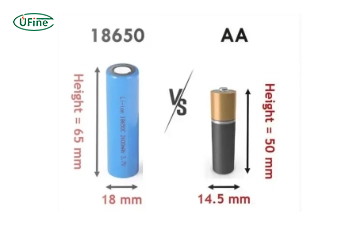
18650 Battery vs AA: Which Is Better for Your Device?
Compare 18650 vs AA batteries in capacity, voltage, rechargeability, and applications. Learn which battery type fits high-drain or everyday devices.
2026/02/28 Ufine
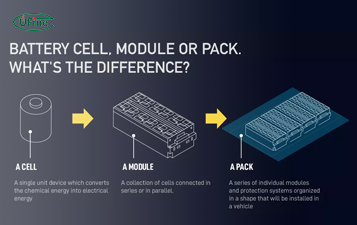
What is the Difference Between Battery Cell, Battery Control Module, and Battery Pack?
Compare battery cells, modules, and packs. Learn functions, design differences, control modules, and selection tips for EV, ESS, and industrial use.
2026/02/28 Ufine

How to Prevent LiPo Battery Explosion?
Can LiPo batteries explode or catch fire? Learn key causes of LiPo battery fires and proven charging, storage, and handling tips to reduce explosion risk.
2026/02/28 Ufine
Aluminium Ion Battery vs Lithium-Ion: A Detailed Comparison
Compare aluminium ion battery vs lithium-ion battery in energy density, charging speed, safety, cost, and uses. A practical guide for engineers and buyers.
2026/02/28 Ufine

C vs D vs AA Battery: Size, Voltage, Capacity & Key Differences Explained
Compare AA, C, and D batteries by size, voltage, capacity, and lifespan. Learn the real difference between C and D batteries and which one you should use.
2026/02/28 Ufine
What is a battery MSDS? Learn what a lithium battery MSDS certificate includes, why it’s required for shipping and compliance, and how to read it correctly.
2026/02/27 Ufine

