
- Key Takeaways
- Part 1. Understanding the vrla battery
- Part 2. How does a vrla battery work?
- Part 3. Advantages of vrla batteries
- Part 4. Limitations of vrla batteries
- Part 5. Can you replace a vrla battery with lithium?
- Part 6. What needs to change when upgrading?
- Part 7. How to safely install a lithium battery
- Part 8. Vrla vs lithium battery comparison
- Part 9. Why most users choose LiFePO₄
- Part 10. Is lithium really more expensive?
- Part 11. When should you continue using vrla?
- Part 12. FAQs about vrla batteries
A VRLA battery (Valve-Regulated Lead-Acid battery) is one of the most widely used sealed lead-acid battery types in solar systems, UPS backups, RV power setups, and telecom applications.
But with lithium batteries becoming more affordable and long-lasting, many users are asking:
- Is a VRLA battery still worth using?
- How long does it really last?
- Can you replace a VRLA battery with lithium?
- Is the upgrade safe and cost-effective?
This guide answers those questions clearly and practically—so you can decide which battery technology fits your system best.
Key Takeaways
- A VRLA battery is a sealed, maintenance-free lead-acid battery.
- Typical lifespan: 2–5 years (300–500 cycles).
- Recommended depth of discharge: 50%.
- Lithium batteries last 6–10x longer and charge faster.
- Most VRLA systems can be upgraded to lithium with proper charger compatibility.
- Mixing VRLA and lithium in the same battery bank is not recommended.
Part 1. Understanding the vrla battery
A VRLA battery is a sealed lead-acid battery designed to operate without regular water refilling. Unlike flooded lead-acid batteries, it uses internal gas recombination and pressure-relief valves to prevent leakage.
There are two primary types:
- AGM (Absorbent Glass Mat) – Electrolyte absorbed in fiberglass mat.
- Gel – Electrolyte suspended in silica gel.
VRLA batteries are commonly used in:
- UPS backup systems
- Off-grid solar storage
- RV and marine power
- Mobility scooters
- Telecom base stations
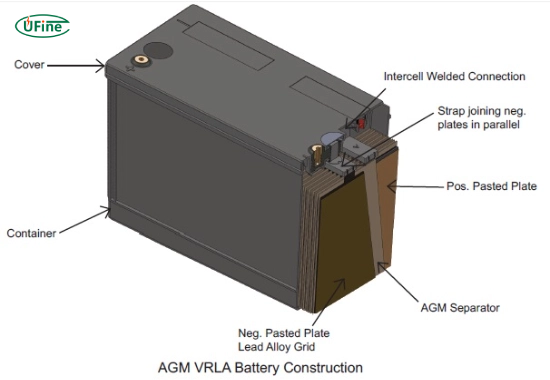
If you’re evaluating whether your current system still meets your needs, understanding basic VRLA battery performance limits is the first step before considering any upgrade.
Part 2. How does a vrla battery work?
A VRLA battery uses:
- Lead dioxide (positive plate)
- Sponge lead (negative plate)
- Sulfuric acid electrolyte
During discharge:
Lead reacts with sulfuric acid to form lead sulfate, releasing energy.
During charging:
The reaction reverses, restoring active material.
Because VRLA batteries are sealed, most hydrogen and oxygen gases recombine internally—making them safer for indoor use than flooded batteries.
Part 3. Advantages of vrla batteries
VRLA batteries remain popular because they offer:
- Maintenance-free operation
- Spill-proof design
- Lower upfront cost
- Safe indoor installation
- Proven reliability
For standby backup systems where deep cycling is limited, they remain a practical solution.
Part 4. Limitations of vrla batteries
However, a VRLA battery has clear limitations:
- Heavy weight
- 2–5 year lifespan
- 300–500 cycle life
- 50% recommended depth of discharge
- Slower charging (6–12 hours)
- Lower efficiency (75–85%)
In solar or RV systems with daily cycling, these limitations significantly impact long-term cost and usability.
This is why many users begin researching a VRLA battery replacement guide when performance starts declining.
Part 5. Can you replace a vrla battery with lithium?
Yes, in most cases, you can replace a VRLA battery with lithium—but it is not always plug-and-play.
Before upgrading, confirm:
- Voltage compatibility (12V / 24V / 48V)
- Charger compatibility
- Solar charge controller settings
- Inverter configuration
- Cable size
- Built-in Battery Management System (BMS)
You should never mix lithium and VRLA batteries in the same bank, as different charging curves can cause imbalance.
Part 6. What needs to change when upgrading?
Switching from a VRLA battery to lithium may require:
- A lithium-compatible charger with the correct lithium battery charging profile
- Solar controller adjustments
- Inverter setting updates
- Higher gauge cables (due to higher discharge rates)
Modern lithium systems simplify installation, but compatibility must be verified first.
Part 7. How to safely install a lithium battery
- Turn off all system power
- Remove the VRLA battery
- Inspect terminals and wiring
- Install lithium battery securely
- Connect positive terminal first
- Verify charging parameters
- Monitor initial charging cycle
Following correct procedures ensures system longevity and safety.
Part 8. Vrla vs lithium battery comparison
| Feature | VRLA | Lithium (LiFePO₄) |
|---|---|---|
| Weight | Heavy | 70% lighter |
| Cycle Life | 300–500 | 3000–6000 |
| DoD | 50% | 80–100% |
| Charging Time | 6–12 hrs | 2–4 hrs |
| Efficiency | 75–85% | 95–98% |
| Lifespan | 2–5 years | 10–15 years |
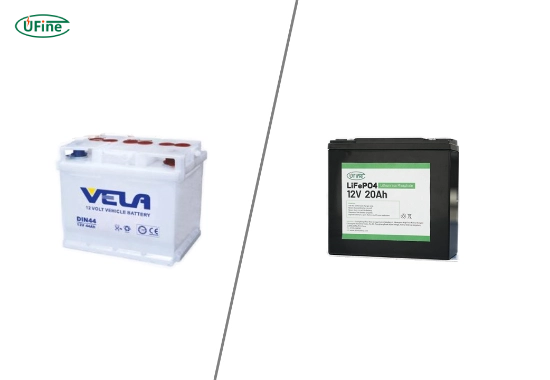
For larger systems such as warehouses or telecom infrastructure, a deeper commercial battery comparison may help evaluate lithium, lead-acid, and VRLA options at scale.
Part 9. Why most users choose LiFePO₄
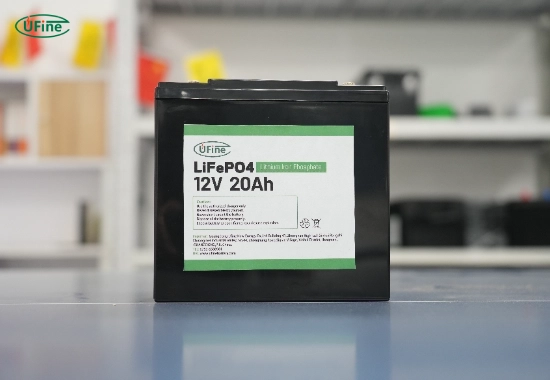
When upgrading, most users select LiFePO₄ lithium batteries because they offer:
- Superior thermal stability
- 4000–6000 cycles
- Consistent voltage output
- No toxic heavy metals
- Lower total cost of ownership
Part 10. Is lithium really more expensive?
Upfront cost: Higher.
Long-term cost: Often lower.
Because lithium offers:
- Longer lifespan
- Higher usable capacity
- Fewer replacements
- Better efficiency
Over 10 years, lithium systems frequently reduce total ownership cost by 30–50%.
Part 11. When should you continue using vrla?
A VRLA battery may still be suitable if:
- Budget is limited
- Usage is backup-only
- Cycling is infrequent
- Project duration is short-term
Part 12. FAQs about vrla batteries
What does VRLA stand for?
Valve-Regulated Lead-Acid.
How long does a VRLA battery last?
Typically 2–5 years depending on usage and temperature.
Can I upgrade to lithium without replacing everything?
Often yes, but charger and controller compatibility must be verified.
Is lithium safer than VRLA?
LiFePO₄ lithium batteries are highly stable when equipped with BMS protection.
Related Tags:

More Articles
Where to Buy 18650 Batteries in Bulk: Reliable Manufacturer & OEM Supplier Guide
Buy 18650 batteries in bulk from a reliable OEM manufacturer. Learn how to choose a B2B supplier for wholesale, custom, and large-scale battery orders.
What Is a Commercial Battery and How Do You Choose the Right One?
Compare commercial batteries—lithium, lead-acid, and VRLA—by lifespan, efficiency, and maintenance to choose the best fit for your business.
LiPo Battery Cell Buying Guide: 2026’s Best Picks
Top 10 LiPo battery cell packs. These top picks offer high performance and efficiency ideal for drones, RC vehicles, power tools, and more.
What Are the Lithium Ion Battery Sizes?
Discover all lithium battery sizes, dimensions, and applications. Find the right li-ion battery for your device and avoid costly mistakes!
Graphite vs. Lead Acid vs. Lithium Batteries: Key Differences Explained
Confused about battery types? Learn how graphite, lithium, and lead acid batteries compare in performance, safety, and long-term value.


