
- Key Takeaways
- Part 1. What is an msds?
- Part 2. Why does a lithium battery need an msds certificate?
- Part 3. What does a lithium battery msds contain?
- Part 4. Msds vs un38.3 vs test reports: what's the difference?
- Part 5. When do buyers request an msds for battery products?
- Part 6. How to verify a valid msds battery certificate
- Part 7. FAQs about lithium battery MSDS
If you are manufacturing, importing, shipping, or integrating battery products, you will eventually be asked for an MSDS battery certificate. But what exactly is a battery MSDS, and why is it critical for compliance and logistics?
This guide explains:
- What a battery MSDS (Material Safety Data Sheet) is
- Why a lithium battery MSDS is required for shipping and workplace compliance
- The standard 16-section MSDS format
- How to read and verify an MSDS for battery products
- Common buyer and freight forwarder questions
Key Takeaways
- A battery MSDS (also called SDS) is a standardized safety document that explains chemical composition, hazards, handling, transport, and disposal requirements.
- A lithium battery MSDS certificate is essential for air, sea, and road transport documentation and workplace compliance.
- Modern MSDS documents follow the 16-section format defined under GHS and OSHA standards.
- MSDS is not the same as UN38.3 or transport test reports — but they are often required together.
- Importers, OEM buyers, and logistics providers must verify that the MSDS matches the exact battery model and chemistry.
Part 1. What is an msds?
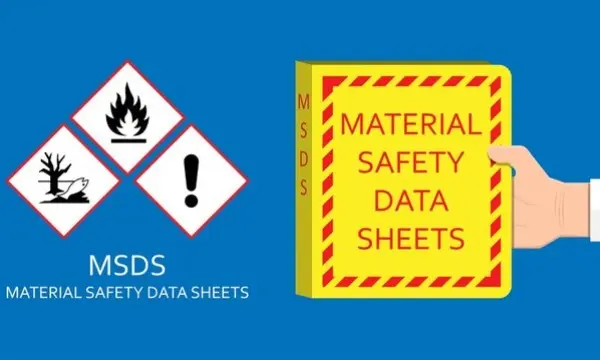
An MSDS (Material Safety Data Sheet) — now officially called an SDS (Safety Data Sheet) under the Globally Harmonized System (GHS) — is a regulatory document that provides detailed safety information about a chemical product.
For batteries, the MSDS includes:
- Chemical composition
- Hazard classification
- Fire and explosion risks
- First aid measures
- Transport classification
- Disposal guidance
In the United States, MSDS/SDS requirements are regulated by OSHA’s Hazard Communication Standard (29 CFR 1910.1200). External reference: Occupational Safety and Health Administration
Part 2. Why does a lithium battery need an msds certificate?
1 Lithium batteries contain regulated materials
Lithium-ion and lithium metal batteries contain:
- Flammable organic electrolytes
- Reactive lithium compounds
- Pressurized internal structures
Under abuse conditions (short circuit, overcharge, mechanical damage), they may experience thermal runaway, leading to fire or explosion.
Because of these hazards, most lithium battery products require a lithium battery MSDS for:
- International shipping
- Customs clearance
- Workplace safety documentation
- B2B procurement qualification
2 Transport authorities require hazard documentation
Transport of lithium batteries is regulated by:
- International Air Transport Association (IATA DGR)
- United Nations (UN Model Regulations)
- IMDG Code (sea freight)
Although the MSDS itself is not a transport certificate, freight forwarders commonly request:
- MSDS for battery
- UN38.3 test report
- Transport classification sheet
Without an accurate MSDS battery certificate, shipments may be delayed or rejected.
Part 3. What does a lithium battery msds contain?
A compliant battery MSDS follows a globally standardized 16-section format. Below is a practical breakdown relevant to engineers, buyers, and compliance teams.
1 Standard 16-section format of an msds battery document
-
Section 1 – Identification
- Product name (must match label and invoice)
- Model number
- Manufacturer details
- Emergency contact information
-
Section 2 – Hazard Identification
- GHS classification
- Signal words (Danger / Warning)
- Hazard statements
- Pictograms (if applicable)
-
Section 3 – Composition / Information on Ingredients
For lithium-ion batteries, this may include:
- Lithium cobalt oxide / NCM / LFP cathode materials
- Graphite anode
- Organic carbonate electrolyte
- Aluminum, copper, separator materials
Concentrations are typically provided in percentage ranges.
-
Section 4 – First Aid Measures
- Eye exposure procedures
- Skin contact treatment
- Inhalation response
- Ingestion instructions
Critical for factory and warehouse safety compliance.
-
Section 5 – Fire-Fighting Measures
- Suitable extinguishing media (e.g., dry powder, CO₂)
- Fire hazards (toxic gas release)
- Special protective equipment
-
Section 6 – Accidental Release Measures
- Spill containment
- Personal protective equipment (PPE)
- Cleanup procedures
-
Section 7 – Handling and Storage
Includes:
- Temperature limits
- Humidity conditions
- Short-circuit prevention
- Stacking and packaging guidance
For lithium-ion batteries, storage temperature is typically recommended between 15–25°C.
-
Section 8 – Exposure Controls / Personal Protection
- Exposure limits
- PPE requirements
- Ventilation requirements
-
Section 9 – Physical and Chemical Properties
May include:
- Appearance
- Odor
- pH (if applicable)
- Flash point (electrolyte reference)
-
Section 10 – Stability and Reactivity
- Conditions to avoid (overheating, crushing, puncture)
- Incompatible materials
- Hazardous decomposition products
-
Section 11 – Toxicological Information
- Acute toxicity
- Chronic effects
- Routes of exposure
-
Section 12 – Ecological Information
- Environmental persistence
- Aquatic toxicity
-
Section 13 – Disposal Considerations
- Recycling guidance
- Hazardous waste classification
- Regulatory disposal references
For industrial battery recycling practices, see our internal guide on lithium battery disposal best practices.
-
Section 14 – Transport Information
Critical for logistics teams. Includes:
- UN number (e.g., UN3480 / UN3481)
- Proper shipping name
- Hazard class
- Packing group
-
Section 15 – Regulatory Information
Lists applicable regional regulations (US, EU, Asia-Pacific).
-
Section 16 – Other Information
- Revision date
- Version number
- Disclaimer
Part 4. Msds vs un38.3 vs test reports: what’s the difference?
| Document | Purpose | Required For |
|---|---|---|
| MSDS Battery | Hazard communication | Workplace & shipping documentation |
| UN38.3 Test Report | Transport safety testing | Air/sea freight approval |
| IEC 62133 | Product safety standard | Consumer electronics compliance |
An MSDS does not replace UN38.3 testing. For lithium-ion shipping, both are typically required.
Part 5. When do buyers request an msds for battery products?
In B2B battery procurement, MSDS is commonly required for:
- Import customs documentation
- Amazon FBA lithium battery approval
- Air freight booking
- OEM qualification
- Workplace safety audits
If you supply customized battery packs, ensure the MSDS reflects:
- Exact cell chemistry
- Final pack configuration
- Correct UN number
For example, customized 18650 packs should match the declared chemistry in technical documentation. (See our internal guide on 18650 lithium-ion battery specifications for pack selection insights.)
Part 6. How to verify a valid msds battery certificate
Before using or submitting a battery MSDS, check:
- Product name matches invoice and label
- UN number is correct (UN3480 vs UN3481)
- Manufacturer information is complete
- Issue date is within recent revision cycle
- Hazard classification aligns with lithium-ion chemistry
Outdated or generic MSDS files are a common cause of customs delays.
Part 7. FAQs about lithium battery MSDS
Is MSDS the same as SDS?
Yes. MSDS (Material Safety Data Sheet) is the older term. SDS (Safety Data Sheet) is the updated terminology under GHS regulations.
Do all batteries require an MSDS?
Most lithium batteries require an MSDS for commercial shipment. Even non-hazardous classifications often still require documentation for logistics providers.
Does MSDS replace UN38.3?
No. MSDS provides hazard communication information. UN38.3 verifies transport safety testing. Both are usually required.
How long is a battery MSDS valid?
There is no fixed expiration date, but it should reflect the current formulation and regulatory status. Most manufacturers update MSDS every 3–5 years or when composition changes.
Who issues a lithium battery MSDS certificate?
The battery manufacturer or authorized supplier prepares and issues the MSDS. It must correspond exactly to the product being sold.
Related Tags:

More Articles
NiMH Battery vs Li-Ion Battery vs NiCad Battery: How are They Different?
Compare NiMH, Li-Ion, and NiCd rechargeable batteries by energy density, lifespan, cost, safety, and applications. Selection guide for engineers and buyers.
Lead Carbon Battery vs. AGM Battery: A Detailed Comparison
Compare lead carbon battery vs AGM battery performance, cycle life, charging speed, cost, and disadvantages for solar, UPS, and backup systems.
Cylindrical VS Prismatic VS Pouch Cells : Which is Better?
Compare prismatic, cylindrical, and pouch cells by energy density, safety, cost, and EV or solar applications. Engineering selection guide.
Do Lithium-ion Batteries Experience a Memory Effect?
Do lithium batteries have memory? Learn why lithium-ion has no true memory effect and how proper charging helps extend battery lifespan.
Best 5 Cheap Lithium Battery Manufacturers in 2026
Discover the cheapest lithium batteries for your devices with top suppliers, safety tips, and cost-saving strategies for 2026.


