- Part 1. What is a battery kill switch?
- Part 2. Do battery kill switches work?
- Part 3. Should a battery kill switch be on the positive or negative terminal?
- Part 4. Will a kill switch stop battery drain?
- Part 5. What are the disadvantages of a battery kill switch?
- Part 6. How to install a battery kill switch (Step-by-step)
- Part 7: Applications of battery kill switches
- Part 8: How to choose the right battery kill switch
- Part 9. Conclusion
- Part 10. FAQs
Part 1. What is a battery kill switch?
A battery kill switch is a mechanical or electronic device installed between a battery and the electrical system. When activated, it disconnects the battery, cutting off power flow completely.
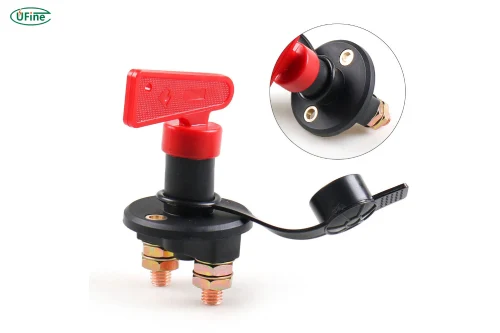
Battery kill switches are commonly used for:
- Preventing battery drain
- Enhancing vehicle theft security
- Protecting equipment during maintenance
- Preventing electrical fires
- Complying with racing or industrial safety standards
There are several types:
- Manual rotary kill switches
- Knife-style disconnect switches
- Remote-controlled kill switches
- Heavy-duty marine kill switches
- Automatic voltage-sensing disconnects
Part 2. Do battery kill switches work?
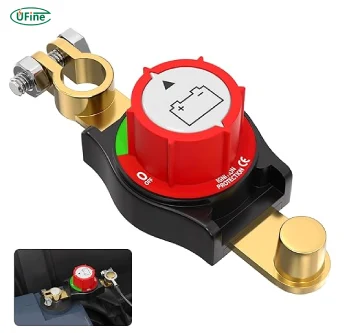
Yes—battery kill switches are effective when used for the right applications.
A high-quality kill switch can:
- Fully cut off electrical power to prevent parasitic drain
- Stop unauthorized engine starting
- Improve safety during repairs
- Protect the battery from long-term idle damage
- Reduce fire risks in vehicles with aging wiring
However, their effectiveness depends on:
- Correct installation
- Proper placement (positive vs negative terminal)
- The switch’s current rating
- Environmental protection (waterproofing for boats/RVs)
Part 3. Should a battery kill switch be on the positive or negative terminal?
This is one of the most debated topics. Here’s the correct answer:
Best Practice: Install the kill switch on the negative terminal.
Why:
- Reduces the risk of accidental short circuits
- Safer for beginners and general vehicle use
- Prevents sparks when removing or installing the switch
- Works reliably for nearly all consumer applications
When to Place It on the Positive Side:
In some advanced systems (marine, racing, large industrial applications), regulations or wiring architecture may require breaking the positive circuit.
Professional installers typically prefer:
- Negative terminal for safety
- Positive terminal for full-circuit isolation when required
How to Tell Positive and Negative Terminals of a Lithium Battery?
For most everyday users, negative terminal installation is recommended.
Part 4. Will a kill switch stop battery drain?
A kill switch can stop most types of parasitic battery drain, including power-consuming systems like:
- Alarm systems
- Infotainment units
- Sensors that stay awake
- Dash cameras
- Faulty wiring
But it won’t stop self-discharge inside the battery itself.
Lithium batteries self-discharge very slowly, while lead-acid batteries self-discharge faster, especially in cold weather.
Conclusion:
A kill switch stops parasitic drain, but not internal battery chemistry processes.
Part 5. What are the disadvantages of a battery kill switch?
While useful, kill switches have limitations:
1. Loss of system memory
Disconnecting power may reset:
- Radio presets
- Clock
- ECU adaptive learning
- Security systems
2. Inconvenience
You may need to manually turn the switch every time the vehicle parks.
3. Not theft-proof
A kill switch helps, but experienced thieves may bypass wiring.
4. Wear and tear
Low-quality switches may cause:
- Voltage drops
- Poor conductivity
- Contact corrosion
5. Weather exposure
In boats or outdoor equipment, a non-waterproof switch may fail early.
Part 6. How to install a battery kill switch (Step-by-step)
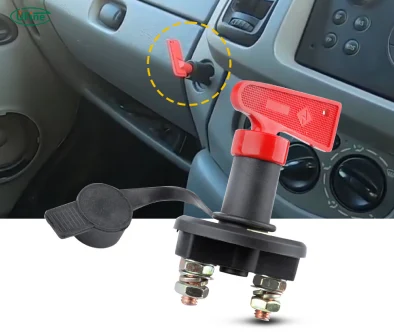
Note: This is general guidance. Always follow product and vehicle manufacturer recommendations.
Tools Needed
- Kill switch (rated for the correct amperage)
- Wrenches
- Battery cable
- Mounting screws
- Heat-shrink tubing or terminal covers
Steps
- Turn off the vehicle and remove the key
- Identify the battery’s negative terminal (recommended install point)
- Disconnect the negative cable
- Install the kill switch inline
- Connect battery → kill switch → vehicle ground
- Mount the switch in an accessible location
- Reconnect the battery and test the switch
- Secure wiring and ensure no metal parts can short out
Important Safety Tips
- Use switches rated for your vehicle’s max current
- Avoid routing cables near moving or hot engine parts
- Always disconnect the battery before installation
Part 7: Applications of battery kill switches
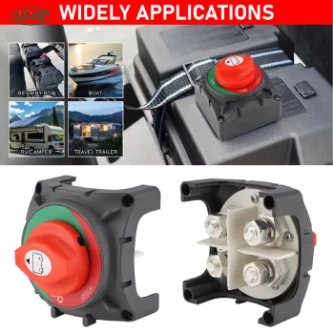
Battery kill switches are used across many industries:
Automotive
- Older cars with parasitic drain
- Classic vehicles in long-term storage
- Anti-theft enhancement
- Race cars (mandatory safety equipment)
Marine & RV
- Prevent fire hazards
- Protect batteries during storage
- Manage multiple battery banks
Industrial Equipment
- Forklifts
- Solar power storage
- Backup generator systems
Part 8: How to choose the right battery kill switch
When selecting a kill switch, consider:
1. Current Rating
Choose a switch rated higher than your vehicle’s maximum starting current.
2. Environmental Protection
For outdoor or marine use, choose:
- Waterproof
- Corrosion-resistant
- Sealed connectors
3. Type of Switch
- Rotary switch → best for daily use
- Knife switch → simple, cheap, visible disconnect
- Remote kill switch → hidden anti-theft function
4. Compatibility
Make sure it’s suitable for:
- 12V or 24V systems
- Lead-acid or lithium batteries
Part 9. Conclusion
A battery kill switch is a simple, affordable device that provides immediate benefits: protection, safety, and energy savings. Whether used to prevent battery drain, disable a vehicle, or improve long-term storage, it is one of the most cost-effective upgrades for any battery-powered system.
Part 10. FAQs
1. Does a kill switch ruin a battery?
No, it usually helps extend battery life.
2. Can I install a kill switch on a lithium battery?
Yes—just ensure the switch can handle the higher instantaneous current.
3. Do I need a kill switch if I have a smart battery system?
Sometimes yes—smart systems can fail, so a manual disconnect still improves safety.
Related Tags:

More Articles

고방전 배터리는 높은 전류와 발열로 배터리수명이 줄어듭니다. 구조적 한계, 사용 패턴, 충전 습관 등 실제 수명 단축 요인을 체계적으로 분석했습니다.
Capacitor vs Battery: What is the Difference?
Capacitor vs battery explained in detail. Learn the difference between capacitor and battery in energy storage, charging speed, lifespan, and real applications.
18650 Battery vs AA: Which Is Better for Your Device?
Compare 18650 vs AA batteries in capacity, voltage, rechargeability, and applications. Learn which battery type fits high-drain or everyday devices.
What is the Difference Between Battery Cell, Battery Control Module, and Battery Pack?
Compare battery cells, modules, and packs. Learn functions, design differences, control modules, and selection tips for EV, ESS, and industrial use.
How to Prevent LiPo Battery Explosion?
Can LiPo batteries explode or catch fire? Learn key causes of LiPo battery fires and proven charging, storage, and handling tips to reduce explosion risk.