- Part 1. What battery does the ring stick up cam use?
- Part 2. How long does the ring stick up cam battery last?
- Part 3. Why does the ring stick up cam battery drain so fast?
- Part 4. How temperature affects ring battery performance
- Part 5. Understanding real-world battery usage
- Part 6. How to make the ring stick up cam battery last longer
- Part 7. Is the ring solar panel worth it?
- Part 8. How long does the battery last before replacement?
- Part 9. Battery vs wired power: which is better?
- Part 10. Common mistakes that reduce battery life
- Part 11. FAQs
If you’re considering a Ring Stick Up Cam, one of the biggest questions is battery life. Ring advertises long-lasting performance, but real-world results often vary depending on installation location, motion activity, temperature, Wi-Fi strength, and camera settings.
In low-traffic areas, a fully charged battery may last for months. In busy locations such as front doors, driveways, or street-facing entrances, the same battery may need charging every few weeks. Understanding why this happens is important if you want better reliability and fewer charging interruptions.
This guide explains how long the Ring Stick Up Cam battery actually lasts, what affects runtime the most, common battery drain problems, and practical ways to extend battery life.
Part 1. What battery does the ring stick up cam use?
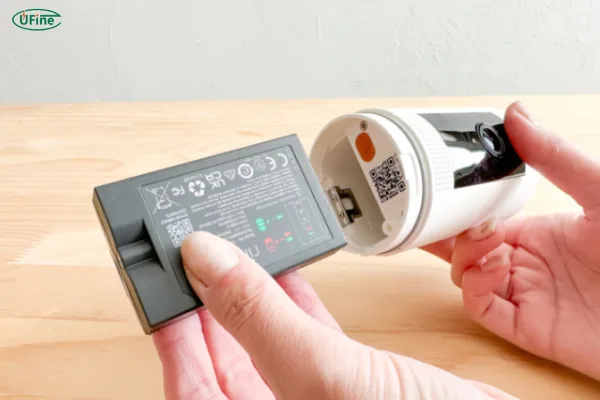
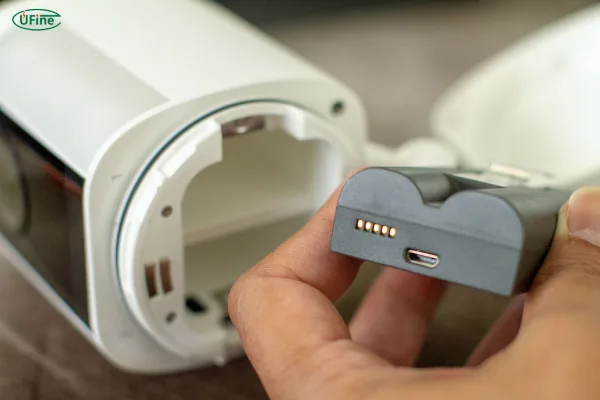
The Ring Stick Up Cam uses a removable rechargeable lithium-ion Quick Release Battery Pack. One advantage of this design is that the battery can be removed and charged separately without taking down the entire camera.
The Ring Stick Up Cam Battery uses a quick-release lithium-ion battery pack. This is the same battery used across many of Ring’s battery-powered devices. The battery is:
- Rechargeable
- Removable
- Designed to be hot-swapped (so you don’t need to uninstall the camera)
Key Battery Specifications:
- Battery type: Lithium-ion
- Capacity: Approximately 6040mAh (typical Ring pack)
- Voltage: 3.65V
- Charging method: Micro-USB cable
- Cycle life: ~300–500 charge cycles
You can use additional Ring Quick Release Battery Packs to swap out a depleted battery with a fully charged one.
Solar Integration
Another option is the Ring Solar Panel accessory. It doesn’t replace the battery but helps keep it charged through sunlight. This is ideal for locations that receive at least 3–4 hours of direct sunlight daily.
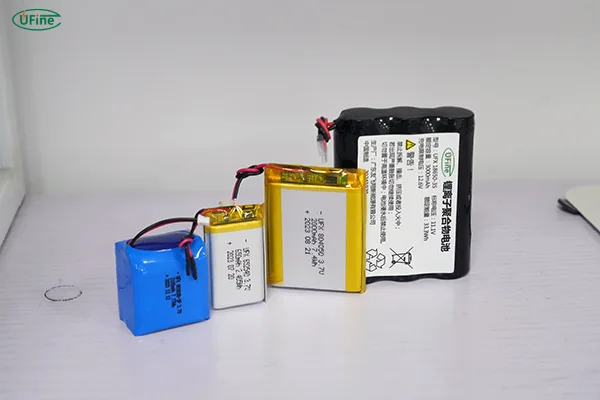
If you’re building or upgrading your own security system and need specialized battery packs, Ufine Battery offers custom battery solutions. Ufine supplies lithium polymer, 18650, LiFePO4, and cylindrical lithium batteries that are ideal for smart cameras, offering high energy density, long cycle life, and wide temperature adaptability.
Contact Ufine Battery today for custom battery inquiries or wholesale partnerships.
Many users purchase a second battery pack so one battery can charge while the other remains in use. This reduces camera downtime and is especially useful for high-traffic installations.
The charging process typically takes several hours through a USB cable. Battery charging time may vary depending on the charger output and battery condition.
Because the camera uses lithium-ion chemistry, battery performance naturally changes over time. After hundreds of charge cycles, the battery capacity gradually decreases, which can shorten runtime between charges.
Part 2. How long does the ring stick up cam battery last?
There is no single answer because battery life depends heavily on usage conditions. Motion-trigger frequency, video recording length, Wi-Fi signal strength, and environmental temperature all affect runtime.
Under ideal conditions with limited motion activity, some users may only charge the battery every few months. However, cameras installed in busy areas usually consume power much faster because they wake frequently to record events and upload video to the cloud.
| Usage Scenario | Estimated Battery Life |
|---|---|
| Quiet backyard or low-traffic area | Several months |
| Average residential front door | 1–3 months |
| Busy driveway or street-facing installation | Several weeks |
| Cold winter conditions | Significantly reduced runtime |
Many users are surprised when their battery lasts far less than official expectations. In reality, battery runtime is directly tied to camera activity rather than simple standby time.
For example, a camera facing a quiet backyard may detect only a few motion events per day. A camera facing a busy sidewalk or street may trigger hundreds of recordings daily, dramatically increasing energy consumption.
Part 3. Why does the ring stick up cam battery drain so fast?
Fast battery drain is one of the most common complaints among Ring camera users. In most cases, the issue is not a defective battery but excessive power demand caused by environmental conditions or camera settings.
Several features consume substantial power because the camera must wake from standby mode, process movement, activate recording hardware, and transmit video over Wi-Fi. Live View sessions and two-way audio also place continuous demand on the battery.
The most common causes of rapid battery drain include:
- Excessive motion alerts from busy areas such as roads, sidewalks, or apartment hallways
- Weak Wi-Fi signals causing repeated reconnect attempts and longer upload times
- Frequent use of Live View and two-way audio features
- Cold weather reducing lithium-ion battery efficiency
Wi-Fi quality is especially important but often overlooked. When the camera receives a poor signal, it may use more transmission power and require longer communication time with Ring servers. This additional workload increases battery consumption.
Users with cameras installed far from the router often experience noticeably shorter runtime compared with cameras located closer to strong Wi-Fi coverage.
Part 4. How temperature affects ring battery performance
Temperature has a major impact on lithium-ion battery behavior. Cold weather slows internal chemical reactions, temporarily reducing available battery capacity and lowering voltage output.
This is why many Ring users notice dramatic battery drops during winter months even when camera settings remain unchanged.
| Temperature Range | Expected Battery Behavior |
|---|---|
| 20–25°C (68–77°F) | Optimal performance |
| Around 0°C (32°F) | Reduced runtime |
| Below freezing | Significant battery loss |
| Extreme heat | Faster long-term battery aging |
In colder climates, cameras may require charging far more frequently during winter than summer. Battery performance usually improves once temperatures rise again.
Heat can also affect long-term battery health. Continuous exposure to high temperatures accelerates lithium battery degradation and may shorten overall lifespan over time.
How Temperature Affects Outdoor Camera Batteries?
Part 5. Understanding real-world battery usage
Many online articles oversimplify Ring battery performance by focusing only on standby estimates. Real-world operation is much more complex because security cameras constantly switch between low-power standby mode and high-power active recording mode.
Battery runtime depends on how often the camera performs energy-intensive tasks such as:
- Motion detection processing
- Video recording and cloud uploading
- Infrared night vision activation
- Live View streaming
- Two-way audio communication
- Snapshot capture updates
The more often these functions activate, the faster the battery drains.
A quiet backyard installation may only trigger a few recordings daily. In contrast, a driveway camera exposed to cars, pedestrians, pets, and passing headlights may activate dozens or even hundreds of times per day.
This explains why two users with the same Ring camera can experience completely different battery life results.
Battery life can generally be understood using this relationship:
Battery Life∝Battery CapacityMotion Events+Video Upload Time+Live View Usage\text{Battery Life} \propto \frac{\text{Battery Capacity}}{\text{Motion Events} + \text{Video Upload Time} + \text{Live View Usage}}Battery Life∝Motion Events+Video Upload Time+Live View UsageBattery Capacity
As motion events and video activity increase, battery runtime decreases.
Part 6. How to make the ring stick up cam battery last longer
Improving battery life usually involves reducing unnecessary camera activity rather than replacing the battery itself.
One of the most effective solutions is adjusting motion zones carefully. Cameras aimed directly at roads, sidewalks, or busy public areas often trigger excessive recordings. Narrowing the detection area can significantly reduce power consumption.
Another important factor is Wi-Fi quality. Moving the router closer to the camera or adding a Wi-Fi extender may improve signal strength and reduce battery drain caused by unstable connections.
Users can also lower snapshot capture frequency, shorten recording lengths, and reduce Live View usage to improve runtime.
Helpful battery optimization methods include:
- Reduce motion sensitivity in busy areas
- Exclude roads and sidewalks from motion zones
- Improve Wi-Fi signal strength near the camera
- Limit unnecessary Live View sessions
Even small adjustments can noticeably extend battery life over time.
Part 7. Is the ring solar panel worth it?
For many users, a solar panel can greatly reduce charging frequency. However, solar charging performance depends heavily on sunlight availability and camera activity levels.
In low-traffic environments with good sunlight exposure, a solar panel may keep the battery charged for extended periods. In heavy-use environments, the solar panel may slow battery drain but still not fully offset energy consumption.
Solar charging is generally most effective for:
- Cameras installed outdoors with direct sunlight
- Areas with moderate motion activity
- Users who want less manual charging maintenance
- Installations difficult to access frequently
Winter weather and cloudy conditions can reduce charging efficiency substantially. Users in colder climates should not expect identical solar performance year-round.
Part 8. How long does the battery last before replacement?
Like all lithium-ion batteries, Ring batteries gradually lose capacity as they age. Most rechargeable lithium batteries begin showing noticeable degradation after several hundred charge cycles.
Aging batteries may display symptoms such as:
- Shorter runtime between charges
- Sudden percentage drops
- Slower charging behavior
- Unexpected shutdowns in cold weather
Battery lifespan depends on temperature exposure, charging habits, and overall usage intensity. Cameras exposed to extreme temperatures or constant heavy recording may experience faster battery aging.
For users relying heavily on battery-powered security cameras, keeping a spare battery available is often more convenient than waiting for charging cycles.
How to replace a stick up cam battery?
Replacing the battery is a straightforward process:
- Purchase a Ring Quick Release Battery Pack.
- Slide out the old battery from the compartment.
- Insert the new one until it clicks in place.
- Open the Ring app to verify power status.
Having at least two batteries in rotation is ideal—one in use, one on standby.
Part 9. Battery vs wired power: which is better?
Battery-powered installation offers flexibility and easier placement, making it ideal for renters or locations without nearby power outlets. However, high-traffic areas may benefit more from wired power because constant recording can drain batteries quickly.
Wired setups are generally better for users who require continuous reliability, frequent recording, or operation in extremely cold environments.
Battery-powered setups work best in quieter locations where motion events remain relatively limited.
Part 10. Common mistakes that reduce battery life
Many battery issues are caused by setup choices rather than hardware problems.
One common mistake is installing the camera facing a busy street. Constant movement from vehicles and pedestrians can trigger excessive recordings throughout the day.
Another mistake is ignoring Wi-Fi quality. Cameras with weak signals often work harder to maintain stable communication, which increases power consumption.
Some users also enable overly frequent snapshot updates or repeatedly use Live View, unintentionally increasing battery usage far beyond normal levels.
Understanding these factors allows users to optimize camera performance more effectively and avoid unnecessary charging frustration.
Part 11. FAQs
1. Can I leave the Ring Stick Up Cam plugged in all the time?
Yes. The camera can operate continuously with wired power instead of relying only on the battery. Many users in high-traffic areas prefer wired power to reduce charging frequency and maintain more stable operation.
2. Does recording at night use more battery power?
Yes. Night recording usually consumes more energy because the camera activates infrared night vision LEDs while simultaneously processing and uploading video footage.
3. Is it normal for battery percentage to drop faster in winter?
Yes. Lithium-ion batteries temporarily lose efficiency in cold temperatures, which can make the battery percentage decrease more quickly during winter months.
4. Can too many notifications drain the battery?
Frequent notifications themselves do not consume much battery, but the motion events triggering those notifications usually increase recording activity and overall power usage.
5. Should I fully drain the Ring battery before charging?
No. Lithium-ion batteries generally perform better when recharged before reaching extremely low battery levels. Frequent deep discharges may contribute to faster long-term degradation.
Related Tags:

More Articles

Best 5 Riding Lawn Mower Battery Manufacturers
Looking for the best riding mower battery? Compare top battery brands by lifespan, maintenance, price, and performance.
All You Need to Know About CB Certification for Lithium Batteries
Learn what CB certification and the IECEE CB Scheme mean for lithium batteries. Explore requirements, testing, benefits, and global market access.
How to Choose the Right 3S LiPo Battery 5000mAh for Your RC Hobby Projects?
Learn how to choose the best 3S LiPo battery 5000mAh for RC cars, drones, boats, and planes. Compare C ratings, runtime, connectors, charging, and safety tips.
Comparing Semi Truck Batteries vs. Truck Batteries
Compare semi truck batteries and truck batteries by size, CCA, lifespan, and battery type. Learn how to choose the right truck battery for your vehicle.
Top 10 Flat Lithium Ion Battery Options for Compact Devices
Explore top flat lithium ion battery options, key specifications, and selection factors for compact electronics, medical devices, and energy storage systems.