
- Part 1. What is a 7.2V NiMH battery and charger system?
- Part 2. What is a 7.2V lithium battery and charger system?
- Part 3. How does 7.2V NiMH vs lithium battery and charger performance compare?
- Part 4. How does 7.2V NiMH vs lithium battery and charger charging speed differ?
- Part 5. How does 7.2V NiMH vs lithium battery and charger lifespan compare?
- Part 6. How does 7.2V NiMH vs lithium battery and charger safety compare?
- Part 7. How does 7.2V NiMH vs lithium battery and charger size and weight compare?
- Part 8. Which 7.2V NiMH vs lithium battery and charger is cheaper in 2026?
- Part 9. Which 7.2V NiMH vs lithium battery and charger should you choose for your device?
- Part 10. How to upgrade from 7.2V NiMH to lithium battery and charger safely?
- Part 11. How to select the right 7.2V lithium battery and charger capacity?
- Part 12. How this NiMH vs lithium decision affects your full 7.2V battery and charger selection?
- Part 13. FAQs – NiMH vs lithium 7.2V battery and charger
If you are searching for a 7.2V battery and charger, sooner or later you will face one core question:
Should you choose NiMH or lithium?
This decision directly affects:
- Runtime and power output
- Device weight and size
- Charging speed
- Battery lifespan
- Long-term replacement cost
In this 2026 buyer-focused comparison, we will walk you through real-world differences between 7.2V NiMH and 7.2V lithium battery and charger systems, so you can make the right choice based on how your device is actually used — not just specs.
Part 1. What is a 7.2V NiMH battery and charger system?
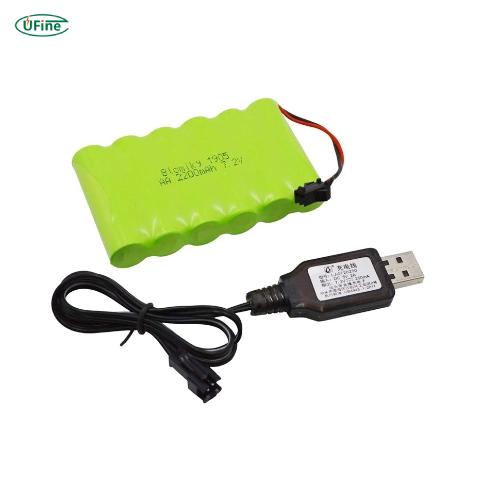
A 7.2V NiMH battery and charger system is built using six 1.2V nickel-metal hydride cells connected in series. This has been the standard power solution for decades in:
- RC cars and trucks
- Older power tools
- Hobby electronics
- Educational robotics kits
✅ Key characteristics of 7.2V NiMH battery and charger
- Nominal voltage: 7.2V
- Chemistry: Nickel-metal hydride
- Charging method: Constant current
- Typical cycle life: 300–500 cycles
- Weight: Heavy compared to lithium
✅ Why NiMH is still used in 2026
Even today, many users still choose NiMH because:
- Chargers are cheap and widely available
- Systems are tolerant of misuse
- No strict protection circuits required
- Safer in high-temperature environments
However, these advantages come with performance limits that become very clear when compared with lithium.
Part 2. What is a 7.2V lithium battery and charger system?
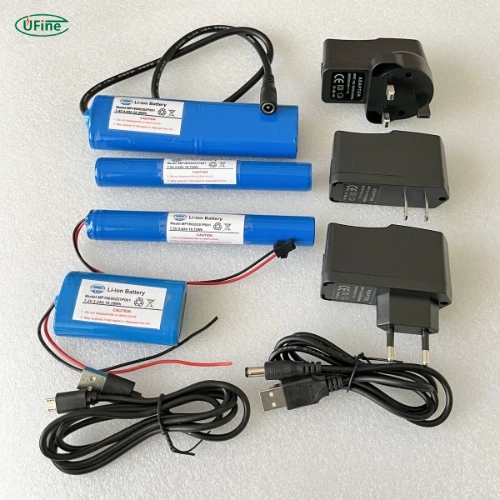
A 7.2V lithium battery and charger normally consists of two 3.6–3.7V lithium cells in series (2S configuration), combined with a protection circuit (BMS).
These systems are now widely used in:
- Professional RC racing
- Portable medical equipment
- Smart tools
- OEM industrial devices
✅ Key characteristics of 7.2V lithium battery and charger
- Nominal voltage: 7.2–7.4V
- Chemistry: Lithium-ion or LiFePO4
- Charging method: CC/CV (constant current + constant voltage)
- Typical cycle life: 800–1500+ cycles
- Weight: 30–50% lighter than NiMH
✅ Why lithium dominates new device designs
- Much higher energy density
- Faster charging
- Stable output voltage
- Smaller size for the same capacity
In modern product design, lithium has become the default chemistry for high-performance 7.2V systems.
Part 3. How does 7.2V NiMH vs lithium battery and charger performance compare?
This is where the real-world differences become impossible to ignore.
⚡ Power output comparison
- NiMH: Voltage drops quickly under heavy load
- Lithium: Delivers stable voltage even at high current
Result: Motors run stronger and more consistently on lithium.
⏱ Runtime comparison
For the same physical size:
- Lithium delivers 40–70% longer runtime
- NiMH drains faster at high load
If runtime matters to your device or customer experience, lithium is clearly superior.
Part 4. How does 7.2V NiMH vs lithium battery and charger charging speed differ?
Charging behavior alone is often enough to push users to upgrade.
| Charging Factor | NiMH | Lithium |
|---|---|---|
| Typical charge time | 4–8 hours | 1–2 hours |
| Overcharge tolerance | High | Low |
| Charger intelligence | Simple | Smart BMS required |
For fleet devices, medical equipment, or professional tools, fast and predictable charging is often non-negotiable — which strongly favors lithium.
Part 5. How does 7.2V NiMH vs lithium battery and charger lifespan compare?
Battery replacement cost is a hidden long-term expense.
- NiMH: 300–500 cycles
- Lithium: 800–1500+ cycles
This means:
One lithium battery often replaces 2–3 NiMH batteries over a product’s lifespan.
For OEMs and B2B buyers, this dramatically changes total cost of ownership.
Part 6. How does 7.2V NiMH vs lithium battery and charger safety compare?
✅ NiMH safety:
- Resistant to physical abuse
- Less sensitive to overcharge
- Lower energy density reduces fire risk
✅ Lithium safety:
- Requires BMS protection
- Sensitive to overcharge and short circuit
- Must use a matched lithium charger
Important reality:
With a high-quality protection circuit and proper charger, modern lithium systems are extremely safe and fully compliant with industrial standards.
Part 7. How does 7.2V NiMH vs lithium battery and charger size and weight compare?
This factor directly affects device ergonomics.
- Lithium is typically 30–50% lighter
- Lithium packs take up significantly less internal space
If your product competes on:
- Portability
- Handheld comfort
- Industrial design thickness
Then lithium becomes the clear mechanical winner.
Part 8. Which 7.2V NiMH vs lithium battery and charger is cheaper in 2026?
💰 Upfront cost:
- NiMH is cheaper at first purchase
- Lithium costs more initially
💰 Long-term cost:
- NiMH requires frequent replacement
- Lithium lasts 2–3× longer
To understand 7.2V battery and charger pricing, including custom cost factors, see this detailed price guide.
For OEMs, lithium is almost always cheaper over the full product lifecycle.
Part 9. Which 7.2V NiMH vs lithium battery and charger should you choose for your device?
Here is the real-world buyer decision logic:
✅ Choose NiMH if:
- You are maintaining old equipment
- Budget is extremely limited
- Charging speed is not important
- Device power demand is low
✅ Choose Lithium if:
- You want long runtime
- You need fast charging
- Weight and size matter
- Device draws high current
- You want long service life
For most new product designs in 2025, lithium is now the default choice.
Part 10. How to upgrade from 7.2V NiMH to lithium battery and charger safely?
Upgrading is common — but must be done correctly:
- Confirm voltage compatibility
- Replace NiMH charger with lithium charger
- Add protection circuit (BMS)
- Verify maximum discharge current
If you’re upgrading from NiMH, this 7.2V lithium conversion guide is essential.
Part 11. How to select the right 7.2V lithium battery and charger capacity?
Even after choosing lithium, capacity selection still matters:
- Too small → short runtime
- Too large → wasted space and cost
Still unsure about 7.2V battery mAh and runtime selection? This capacity guide explains how to match load and runtime correctly.
Part 12. How this NiMH vs lithium decision affects your full 7.2V battery and charger selection?
Once you confirm the chemistry, everything else becomes much easier:
- Charger type
- Connector format
- Pack size
- Protection level
- Custom shape
For a complete device-level selection walkthrough, see the full buyer guide:
How to choose the right 7.2V battery and charger for your device?
Part 13. FAQs – NiMH vs lithium 7.2V battery and charger
Which is better in 2025, a NiMH or lithium 7.2V battery and charger?
In 2025, a lithium 7.2V battery and charger is better for most new devices due to longer runtime, lighter weight, and longer lifespan. NiMH mainly remains in legacy or ultra-low-budget projects.
Is a lithium 7.2V battery and charger safer than NiMH?
With a proper BMS and matched charger, a lithium 7.2V battery and charger is as safe as NiMH and more stable under high load. Most safety issues come from charger mismatch.
Can I replace a NiMH system with a lithium 7.2V battery and charger?
Yes, but the NiMH charger must be replaced with a lithium charger, and the lithium 7.2V battery must have a built-in BMS for protection.
Which lasts longer, NiMH or lithium 7.2V battery and charger?
A lithium 7.2V battery typically lasts 1,000–2,000 cycles, while a NiMH 7.2V battery usually lasts 500–1,000 cycles under proper use.
Is a lithium 7.2V battery and charger cheaper in the long term?
Yes. Although the upfront price is higher, a lithium 7.2V battery and charger is usually cheaper long term due to fewer replacements and higher efficiency.
Related Tags:

More Articles
18650 Battery vs AA: Which Is Better for Your Device?
Compare 18650 vs AA batteries in capacity, voltage, rechargeability, and applications. Learn which battery type fits high-drain or everyday devices.
What is the Difference Between Battery Cell, Battery Control Module, and Battery Pack?
Compare battery cells, modules, and packs. Learn functions, design differences, control modules, and selection tips for EV, ESS, and industrial use.
How to Prevent LiPo Battery Explosion?
Can LiPo batteries explode or catch fire? Learn key causes of LiPo battery fires and proven charging, storage, and handling tips to reduce explosion risk.
Aluminium Ion Battery vs Lithium-Ion: A Detailed Comparison
Compare aluminium ion battery vs lithium-ion battery in energy density, charging speed, safety, cost, and uses. A practical guide for engineers and buyers.
C vs D vs AA Battery: Size, Voltage, Capacity & Key Differences Explained
Compare AA, C, and D batteries by size, voltage, capacity, and lifespan. Learn the real difference between C and D batteries and which one you should use.


