- Key Takeaways
- Part 1. What is a metal air battery?
- Part 2. What is a lithium metal battery?
- Part 3. Metal air battery vs lithium metal battery (core comparison)
- Part 4. Advantages of metal air batteries
- Part 5. Disadvantages of metal air batteries
- Part 6. Advantages of lithium metal batteries
- Part 7. Disadvantages of lithium metal batteries
- Part 8. Applications of metal air batteries
- Part 9. Applications of lithium metal batteries
- Part 10. How to choose: Metal air vs lithium metal battery
- Part 11. Application-based selection table: Metal air battery vs lithium metal battery
- Part 12. FAQs: Metal air battery vs lithium metal battery
In next-generation energy storage, metal air batteries and lithium metal batteries are two of the most discussed technologies. Both promise higher energy density than traditional lithium-ion systems, but their working principles, lifecycle, and real-world applications differ significantly.
This guide explains how each battery works, their pros and cons, and how to choose the right one for your application.
Key Takeaways
- Metal air batteries offer higher theoretical energy density and lower material cost, but suffer from short cycle life and limited rechargeability.
- Lithium metal batteries provide better cycle life and practical performance, but face safety risks such as dendrite formation.
- Metal air systems are ideal for long-duration storage and low-cost applications, while lithium metal suits high-performance and compact devices.
- Iron-air battery disadvantages include low round-trip efficiency and slow response, limiting use in fast-demand scenarios.
- For most commercial applications today, lithium-based systems are more mature, while metal air remains emerging technology.
Part 1. What is a metal air battery?
A metal air battery is an electrochemical system that uses a metal (such as zinc, aluminum, or iron) as the anode and oxygen from ambient air as the cathode reactant.
This design reduces the need for stored cathode material, increasing energy density.
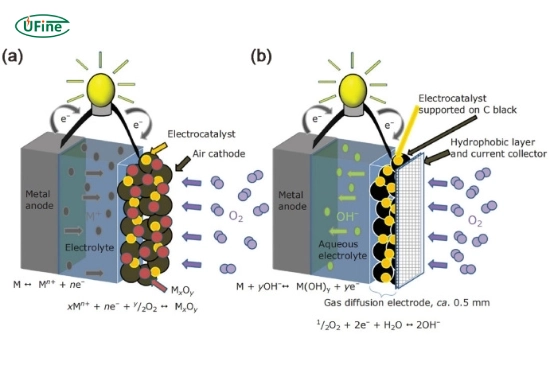
1 How does a metal air battery work?
- Anode: Zinc, aluminum, or iron oxidizes and releases electrons
- Cathode: Oxygen from air reacts with electrons
- Electrolyte: Transfers ions between electrodes
The system generates electricity through oxidation while forming byproducts like hydroxides.
👉 For deeper chemistry fundamentals, see: ScienceDirect Metal Air Battery
Part 2. What is a lithium metal battery?
A lithium metal battery uses pure lithium metal as the anode, unlike lithium-ion batteries that use graphite.
This enables much higher energy density and lower weight.
👉 Internal guide: lithium metal battery explained
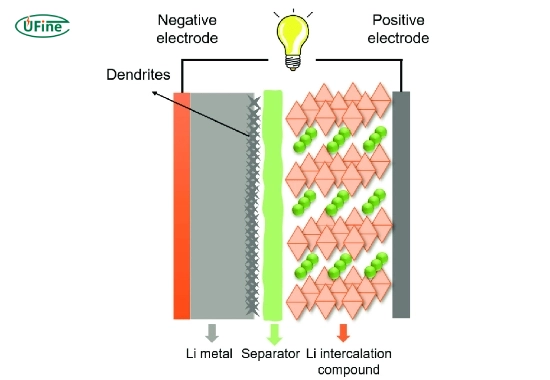
1 How does a lithium metal battery work?
- Anode: Lithium metal releases Li⁺ ions
- Cathode: Typically LFP, NMC, or LCO materials
- Electrolyte: Organic solvent with lithium salt
Electricity is generated as lithium ions move between electrodes.
Part 3. Metal air battery vs lithium metal battery (core comparison)
When comparing metal air battery vs lithium ion / lithium metal systems, the differences are critical for engineering decisions.
| Feature | Metal Air Battery | Lithium Metal Battery |
|---|---|---|
| Energy Density | 300–400 Wh/kg (theoretical higher) | 250–350 Wh/kg |
| Cycle Life | Short (corrosion, degradation) | Moderate to long |
| Rechargeability | Limited (many are primary) | Rechargeable |
| Safety | Stable but sensitive to air/moisture | Dendrite risk |
| Cost | Low (zinc, iron) | Higher (lithium) |
| Maturity | Emerging | Developing but closer to commercialization |
Part 4. Advantages of metal air batteries
- High Energy Density
Uses oxygen from air, reducing internal mass. - Low Material Cost
Zinc and iron are abundant and inexpensive. - Lightweight Design
Fewer internal components reduce weight. - Suitable for Long-Duration Storage
Especially promising in grid-scale systems (e.g., iron-air battery).
Part 5. Disadvantages of metal air batteries
Understanding metal air batteries limitations is critical.
- Short Cycle Life
Electrode degradation reduces lifespan. - Air Management Complexity
Requires controlled airflow and filtration. - Poor Rechargeability
Many designs are primary (non-rechargeable). - Iron-Air Battery Disadvantages
Low round-trip efficiency (~50–60%)
Slow charge/discharge response
Large system footprint
These factors limit use in high-power or fast-response applications.
Part 6. Advantages of lithium metal batteries
- High Practical Energy Density
Closer to real-world deployment than metal air. - Rechargeable with Longer Cycle Life
Improved designs extend lifespan significantly. - Fast Charging Potential
Supports high-performance applications. - Compact System Design
Ideal for portable electronics and EVs.
Part 7. Disadvantages of lithium metal batteries
- Safety Risks
Lithium dendrites can cause internal short circuits. - Higher Cost
Lithium extraction and processing are expensive. - Thermal Management Requirements
Needs advanced battery management systems (BMS).
Part 8. Applications of metal air batteries
Metal air batteries are best suited for:
- Grid energy storage (long duration)
- Backup power systems
- Low-cost off-grid energy solutions
- Experimental EV range extenders
👉 Example trend: Iron-air systems for multi-day renewable storage
Part 9. Applications of lithium metal batteries
Lithium metal batteries are used in:
- Next-generation electric vehicles (EVs)
- Consumer electronics (phones, laptops)
- Aerospace and drones
- High-end portable medical devices
Part 10. How to choose: Metal air vs lithium metal battery
Use this decision framework:
Choose Metal Air Battery if:
- You need low cost per kWh
- Energy is used over long durations (hours to days)
- Size and response speed are less critical
Choose Lithium Metal Battery if:
- You need high performance and compact size
- Rechargeability is required
- Fast charging/discharging is important
Part 11. Application-based selection table: Metal air battery vs lithium metal battery
| Scenario | Recommended Technology | Reason |
|---|---|---|
| Grid storage (renewables) | Metal Air (Iron-Air) | Low cost, long duration |
| Electric vehicles | Lithium Metal | High power + rechargeability |
| Consumer electronics | Lithium Metal | Compact + stable |
| Backup power | Metal Air | Cost-effective |
| Aerospace | Lithium Metal | Lightweight + energy density |
Part 12. FAQs: Metal air battery vs lithium metal battery
What is a metal air battery used for?
Metal air batteries are mainly used in grid storage, backup systems, and experimental EV applications due to their high energy density and low cost.
Metal air battery vs lithium ion: which is better?
Lithium-ion and lithium metal batteries are more practical today, while metal air offers future potential for low-cost large-scale storage.
What are iron-air battery disadvantages?
Key disadvantages include low efficiency, slow response time, and large system size, making them unsuitable for fast energy demand.
Are metal air batteries rechargeable?
Some are rechargeable, but many designs are primary batteries with limited cycle life.
Are lithium metal batteries safe?
They can be safe with proper design, but dendrite formation remains a major technical challenge.
Related Tags:

More Articles

Comparative Analysis: 14500 Battery Vs. 18650 Battery
Compare 14500 vs 18650 batteries by size, voltage, capacity, runtime, discharge current, charging, safety, and applications to choose the right cell.
12V Lithium-Ion What Voltage at Fully Charged and Why Your Battery Might Not Reach It
Check the 12V lithium battery voltage chart for 3S Li-ion and 4S LiFePO4. Learn full charge, resting voltage, charger limits, and fault checks.
LiFePO4 Voltage Chart Guide: Everything You Need to Know
Check the LiFePO4 voltage chart for 3.2V, 12V, 24V and 51.2V batteries. Compare SOC, charging voltage, cutoff limits and internal resistance.
Lithium Ion Cell Sizes: A Comprehensive Guide
Compare lithium ion cell sizes with a chart of dimensions, capacity ranges, cell types, applications, and key factors for selecting the right battery.
6 Volt Tractor Battery vs 12 Volt: Which One Fits Your Farm Equipment Best?
Compare 6V and 12V tractor batteries. Learn which voltage fits vintage or modern tractors, which specifications matter, and how to convert safely.