
- Part 1. What is a lithium battery protection noard?
- Part 2. How does a battery protection circuit work?
- Part 3. Key functions of a lithium battery protection PCB
- Part 4. Battery PCB vs PCM vs BMS: What’s the difference?
- Part 5. When is a protection board enough, and when do you need a BMS?
- Part 6. Typical lithium battery protection circuit design
- Part 7. What happens if a lithium battery has no protection board?
- Part 8. Common battery protection board failures and troubleshooting
- Part 9. Future trends of lithium battery protection boards
- Part 10. FAQs
A lithium battery protection board (also called a battery protection board, battery protection circuit, or protection circuit module) is a core safety component used in lithium-ion and LiFePO4 battery packs. From an engineering perspective, it acts as the first line of defense against electrical and thermal abuse, preventing overcharge, over-discharge, overcurrent, short circuits, and overheating.
In practice, many lithium battery failures are not caused by the cells themselves, but by inadequate or poorly matched protection electronics. As lithium batteries are increasingly used in robotics, medical devices, industrial equipment, and energy storage systems, a reliable lithium battery protection circuit directly determines safety, lifespan, and regulatory compliance.
This article explains what a lithium battery protection board is, how it works, how it differs from PCM and battery BMS boards, typical protection circuit designs, and—most importantly—how to choose the right protection solution for real-world applications.
Part 1. What is a lithium battery protection noard?
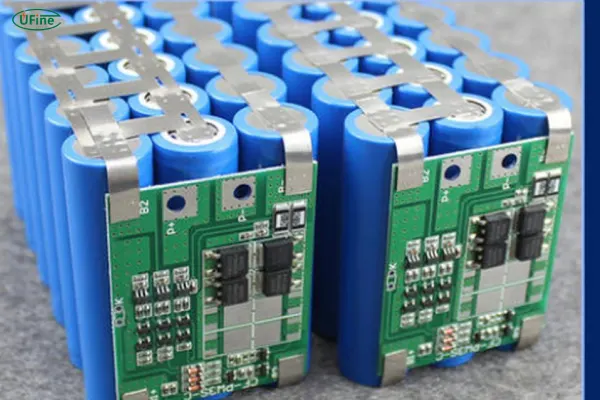
In short, a lithium battery protection board is a dedicated battery PCB board installed inside a battery pack to monitor and control charging and discharging behavior.
It continuously measures key electrical parameters such as voltage, current, and temperature. When abnormal conditions occur—such as overvoltage, deep discharge, excessive current draw, or a short circuit—the battery protection circuit automatically disconnects the battery to prevent cell damage or safety incidents.
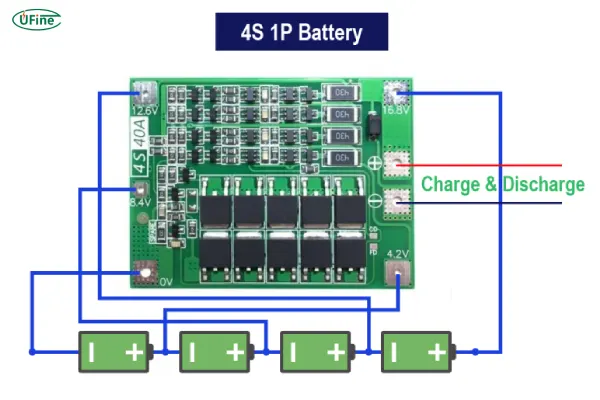
In most small to mid-size lithium battery packs, the protection board provides essential safety protection without the complexity of a full battery management system.
Part 2. How does a battery protection circuit work?
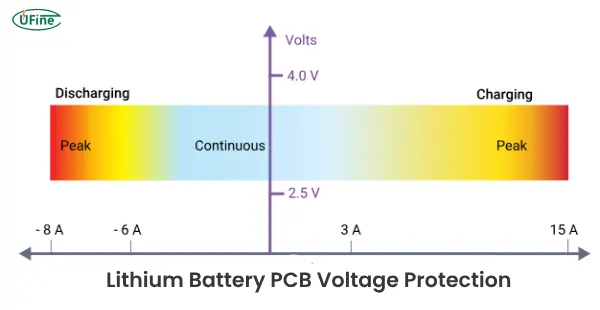
A battery protection circuit is built around a control IC combined with MOSFETs, current-sensing resistors, and temperature sensors. These components work together to compare real-time operating data against predefined safety thresholds.
For example, a typical lithium-ion cell operates safely between 3.0V and 4.2V. If charging voltage exceeds this range—often due to unstable chargers or improper system design—the protection circuit immediately cuts off charging.
From a practical engineering standpoint, this fast and automatic response is what makes a protection circuit module reliable: it does not rely on software or user intervention to maintain safety.
Part 3. Key functions of a lithium battery protection PCB
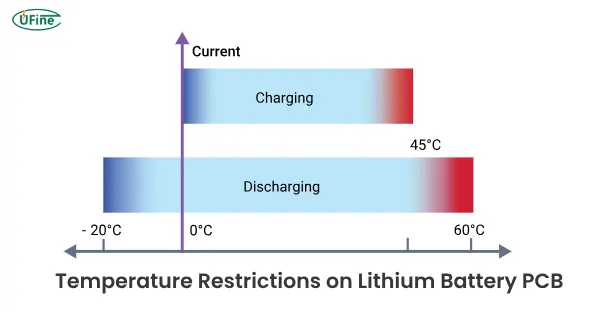
A well-designed battery protection board provides multiple layers of protection, each addressing a specific real-world risk.
1 Overcharge Protection
Prevents cell voltage from exceeding the safe upper limit (typically 4.2V), reducing the risk of overheating, electrolyte breakdown, and fire caused by charger faults.
2 Over-Discharge Protection
Disconnects the load before the cell voltage drops below safe limits (usually 2.5–3.0V), avoiding irreversible capacity loss and cell damage.
3 Overcurrent Protection
Limits excessive current during charging or discharging, which in real applications often occurs during motor startup, short-term overloads, or wiring faults.
4 Short Circuit Protection
Detects sudden current spikes caused by short circuits and isolates the battery within milliseconds, preventing catastrophic failure.
5 Temperature Protection
Many lithium battery protection boards integrate NTC sensors. If abnormal heating is detected, the circuit disables operation to avoid thermal runaway.
Battery overheating is one of the most common lithium battery failure risks—in our detailed guide on lithium battery overheating, we explain the causes, warning signs, and prevention methods in real-world applications.
Why Lithium Batteries Get Hot — Causes, Risks, and Safety Tips
Part 4. Battery PCB vs PCM vs BMS: What’s the difference?
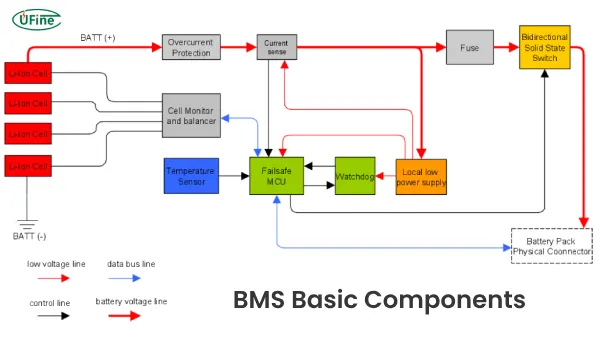
In battery design discussions, PCB, PCM, and BMS are often mentioned interchangeably—but from an engineering perspective, they serve different roles.
| Component | Typical Use Case | Protection Level | Key Characteristics |
|---|---|---|---|
| Battery Protection PCB | Small–mid battery packs | Basic safety protection | Voltage, current, temperature cutoff |
| Protection Circuit Module (PCM) | Single-cell batteries | Simplified protection | Compact, low complexity |
| Battery BMS Board | Multi-cell, high-power packs | System-level management | Cell balancing, communication, diagnostics |
A battery protection PCB focuses on essential safety limits. A PCM is essentially a simplified lithium battery protection board for single-cell applications. A battery BMS board, on the other hand, is designed for complex packs where balancing, monitoring, and communication are required.
Part 5. When is a protection board enough, and when do you need a BMS?
This is one of the most common—and most critical—questions in real battery pack design.
| Application Scenario | Recommended Solution | Reasoning |
|---|---|---|
| Single-cell devices | PCM / Protection board | Simple voltage and current limits are sufficient |
| Low-power consumer electronics | Protection PCB | Cost-effective and reliable safety |
| Medical devices | Protection PCB + external monitoring | High safety with controlled complexity |
| Robotics and industrial equipment | Battery BMS board | High current, multiple cells, dynamic loads |
| EV and energy storage systems | Advanced BMS | Cell balancing, diagnostics, communication |
In most cases, a lithium battery protection board is sufficient for basic safety. However, as cell count, current demand, or system complexity increases, a BMS becomes necessary.
Part 6. Typical lithium battery protection circuit design
A typical lithium battery protection circuit includes:
- Overvoltage and undervoltage detection ICs
- MOSFET switches for charge and discharge control
- Precision current-sensing resistors
- Temperature sensors for thermal protection
These components are integrated onto a compact circuit board battery design that fits inside the battery enclosure while maintaining electrical reliability and thermal stability.
In custom battery projects, protection board selection is one of the most overlooked but critical design decisions. Ufine Battery provides custom lithium battery protection boards and battery BMS board solutions optimized for Li-ion, LiFePO4, and 18650 battery packs used in industrial, medical, and robotic applications.
Contact Us NowPart 7. What happens if a lithium battery has no protection board?
Without a battery protection board, a lithium battery becomes highly vulnerable to misuse and environmental stress.
In real-world applications, overcharging often results from unstable power supplies, while deep discharge may occur due to improper system shutdown. Without a lithium battery protection circuit, these conditions can lead to rapid degradation, swelling, leakage, or in extreme cases, thermal runaway and fire.
For this reason, protection boards are not optional components—they are fundamental to safe battery operation.
Part 8. Common battery protection board failures and troubleshooting
Although designed for reliability, battery protection PCBs can fail under harsh conditions such as excessive heat, moisture exposure, or repeated electrical abuse.
Common warning signs include:
- Frequent battery overheating
- Unstable charging or discharging behavior
- Battery swelling or leakage
- Unexpected shutdowns or short-circuit warnings
Basic troubleshooting typically involves visual inspection, voltage measurement with a multimeter, and continuity checks. In most cases, replacing the protection board is safer and more cost-effective than repairing individual components.
Part 9. Future trends of lithium battery protection boards
Lithium battery protection boards continue to evolve alongside battery technology:
- Higher integration: Smaller, lighter, and more reliable PCB designs
- Multifunctionality: Added features such as basic balancing and power estimation
- Intelligence: Smarter monitoring and limited data output
- Enhanced safety: Faster detection and more accurate cutoff thresholds
- Eco-friendly materials: Supporting sustainable battery manufacturing
These trends are shaping safer and more efficient lithium battery systems across industries.
Part 10. FAQs
What is the main function of a lithium battery protection board?
It provides basic safety protection by preventing overcharge, over-discharge, overcurrent, short circuits, and overheating.
Is a battery protection board the same as a BMS?
No. A protection board handles basic safety, while a battery BMS board manages multi-cell packs with balancing and diagnostics.
Can a lithium battery operate without a protection circuit?
Technically yes, but it is unsafe and strongly discouraged due to serious failure and fire risks.
How long does a battery protection PCB last?
Under normal conditions, it typically lasts as long as the battery itself.
Related Tags:

More Articles
Dead Battery or Device Failure? How to Find the Cause
Think your device is broken? Learn how to tell if the problem comes from battery aging or hardware failure before replacing your electronics.
Why iPhone Duo Uses Two Batteries: The Engineering Behind Foldable Phone Power
Why do foldable phones need two batteries? Explore the engineering challenges behind iPhone Duo’s dual-battery architecture and future battery trends.
Solid-State Batteries: 3 Myths You Need to Know
Solid-state batteries promise safer EVs and longer range, but the reality is more complex. Discover the challenges behind this next-gen technology.
Battery Capacity vs Discharge Rate: The Choice Engineers Face
Higher capacity or higher discharge rate? Learn how to choose the right LiPo battery for longer runtime, stable power output, and better device performance.
Battery Cable Size Guide: Choose the Right Wire Fast
Not sure what battery cable size you need? Learn how to select the right wire gauge, terminal size, and cable for safer, more efficient battery systems.


