
- Key Takeaways
- Part 1. What is a commercial battery?
- Part 2. Main types of commercial batteries
- Part 3. Commercial battery applications
- Part 4. Lifespan and cost comparison
- Part 5. Can you replace a lead-acid commercial battery with lithium?
- Part 6. How to choose the right commercial battery
- Part 7. FAQ – Commercial battery selection & upgrade
Commercial batteries are high-capacity energy storage systems designed for business, industrial, and institutional use.
They power equipment that runs longer, works harder, and demands higher reliability than consumer devices. From forklifts and solar storage systems to telecom backup and marine equipment, the right commercial battery directly impacts uptime, maintenance costs, and long-term ROI.
Understanding battery types, lifespan differences, and upgrade options is essential before making a purchase decision.
Key Takeaways
- Commercial batteries are built for heavy-duty, long-cycle applications
- The main types include lead-acid (Flooded, AGM, Gel) and lithium (LiFePO4)
- Lithium batteries offer longer cycle life and lower maintenance
- Upgrading from lead-acid to lithium can reduce total ownership cost
- Battery selection should consider usage pattern, environment, and charging system
Part 1. What is a commercial battery?
A commercial battery is a large-capacity rechargeable battery designed for professional or industrial environments.
Compared to residential batteries, commercial batteries:
- Deliver higher current output
- Support deeper discharge cycles
- Operate under demanding temperature conditions
- Are built for daily use over several years
Common applications include:
- Forklifts
- Golf carts
- Solar energy storage systems
- UPS backup power
- Telecom base stations
- Marine systems
Part 2. Main types of commercial batteries
1 Lead-acid commercial batteries
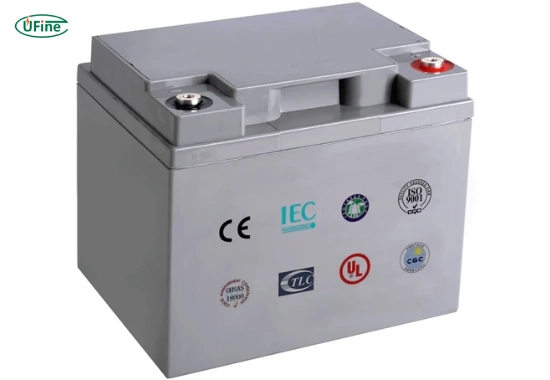
Lead-acid batteries are the traditional choice in commercial systems due to their lower upfront cost.
They include:
- Flooded lead-acid
- AGM (Absorbent Glass Mat)
- Gel batteries
AGM and Gel are commonly categorized as VRLA batteries (Valve-Regulated Lead-Acid).
If you need a deeper explanation of how they work and their lifespan differences, see our guide on VRLA battery lifespan and replacement options.
Advantages
- Lower initial investment
- Mature and widely supported technology
- Suitable for budget-sensitive projects
Limitations
- Heavy weight
- Shorter cycle life
- Voltage drop under heavy load
- Maintenance required (for flooded types)
2 Lithium commercial batteries (LiFePO4)
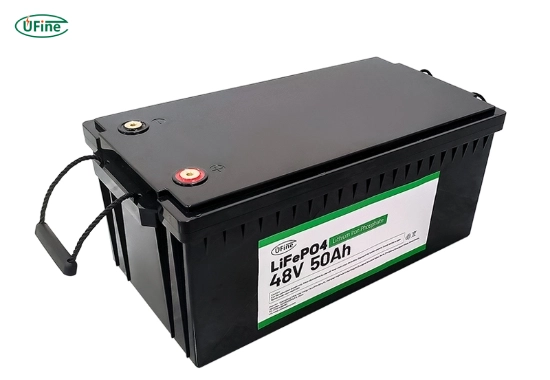
Lithium batteries, especially LiFePO4 (Lithium Iron Phosphate), are increasingly preferred in commercial environments.
They offer:
- 3–5× longer cycle life
- Faster charging
- Higher usable capacity
- Stable voltage output
- Maintenance-free operation
For a technical breakdown, read our comparison of LiFePO4 vs lead-acid batteries.
Part 3. Commercial battery applications
Forklifts
Lithium batteries enable opportunity charging and reduce downtime between shifts.
Solar storage systems
Lithium improves usable capacity and extends system lifespan in off-grid and hybrid systems.
If you are evaluating solar setups, you may also explore our guide on 12V 100Ah lithium batteries for solar systems.
Golf carts
Switching to lithium improves acceleration, range, and overall performance consistency.
Telecom & backup power
Lithium batteries maintain stable voltage and reduce maintenance visits.
Part 4. Lifespan and cost comparison
| Battery Type | Typical Cycle Life | Maintenance | Weight | Long-Term Cost |
|---|---|---|---|---|
| Flooded Lead-Acid | 300–500 cycles | High | Heavy | Medium |
| AGM/Gel (VRLA) | 500–800 cycles | Low | Heavy | Medium |
| Lithium (LiFePO4) | 2000–5000 cycles | None | Light | Lowest long-term |
Although lithium batteries require higher upfront investment, their extended lifespan significantly reduces replacement frequency and maintenance costs.
Part 5. Can you replace a lead-acid commercial battery with lithium?
In most commercial applications, yes.
However, you should confirm:
- Voltage compatibility
- Charging system compatibility
- Space constraints
- Current requirements
- BMS integration
For a step-by-step upgrade explanation, see our detailed guide on replacing lead-acid batteries with lithium. (👉 内链到替换文章)
Upgrading often results in:
- Reduced maintenance labor
- Improved operational efficiency
- Lower long-term energy costs
- Better performance under load
Part 6. How to choose the right commercial battery
When selecting a commercial battery, evaluate:
- Required voltage and amp-hour capacity
- Depth of discharge in daily operation
- Operating temperature range
- Charging infrastructure
- Budget vs long-term ROI
Quick Recommendation Logic
- Heavy daily cycling → Lithium
- Budget-sensitive short-term project → Lead-acid
- Weight-sensitive equipment → Lithium
- Minimal maintenance desired → Lithium
Part 7. FAQ – Commercial battery selection & upgrade
What is considered a commercial battery?
A commercial battery is a high-capacity rechargeable battery designed for business, industrial, or institutional applications requiring continuous or heavy-duty operation.
How long does a commercial battery last?
Lead-acid batteries typically last 2–5 years depending on usage, while lithium batteries can last 5–10 years or more due to higher cycle life.
Is lithium better than lead-acid for commercial use?
Lithium offers longer lifespan, lighter weight, and lower maintenance. However, lead-acid may be suitable for lower upfront budget projects.
Can I directly replace a lead-acid commercial battery with lithium?
In most cases, yes — but you must ensure charger compatibility and voltage matching.
Are commercial lithium batteries safe?
Yes. LiFePO4 batteries are known for high thermal stability and built-in Battery Management Systems (BMS) that protect against overcharge, over-discharge, and short circuits.
Related Tags:

More Articles
Where to Buy 18650 Batteries in Bulk: Reliable Manufacturer & OEM Supplier Guide
Buy 18650 batteries in bulk from a reliable OEM manufacturer. Learn how to choose a B2B supplier for wholesale, custom, and large-scale battery orders.
What Is a VRLA Battery and Should You Upgrade to Lithium?
Learn what a VRLA battery is, how it works, its lifespan and pros, and whether you can replace it with lithium. Comparison, upgrade tips, and cost insights.
LiPo Battery Cell Buying Guide: 2026’s Best Picks
Top 10 LiPo battery cell packs. These top picks offer high performance and efficiency ideal for drones, RC vehicles, power tools, and more.
What Are the Lithium Ion Battery Sizes?
Discover all lithium battery sizes, dimensions, and applications. Find the right li-ion battery for your device and avoid costly mistakes!
Graphite vs. Lead Acid vs. Lithium Batteries: Key Differences Explained
Confused about battery types? Learn how graphite, lithium, and lead acid batteries compare in performance, safety, and long-term value.


