
- Part 1. Who this guide is for
- Part 2. Quick specification decision table
- Part 3. Real-world range: original data table
- Part 4. What actually makes a “Best” bike battery?
- Part 5. Safety standards and certifications
- Part 6. Usage & maintenance tips
- Part 7. Buyer checklist
- Part 8. Cost vs lifespan comparison
- Part 9. Conclusion
- Part 10. FAQ
Quikly Answer For a 250W commuter e-bike, the best all-around battery is a 48V 15Ah (≈720Wh) Li-ion pack because it delivers the strongest balance of range, weight, lifespan, and cost.
Most riders can expect 40–60 km of real-world range with stable performance across 600–800 cycles.
Part 1. Who this guide is for
This guide is designed for daily urban riders who:
- Commute 10–40 km per day
- Use a 250W motor
- Need reliable range without excess weight
- Are comparing 48V 10Ah vs 48V 15Ah vs 48V 20Ah battery options
Ufine Battery supports custom e-bike battery packs for exactly these use cases, offering tailored voltage, Ah, cell brands, discharge rates, and BMS configurations.
Part 2. Quick specification decision table
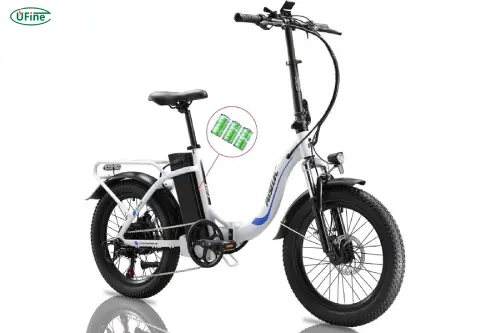
Which battery should you choose?
| Daily Riding Scenario | Recommended Pack | Reason |
|---|---|---|
| Short commute ≤30 km/day | 48V 10Ah (480Wh) | Light, affordable, sufficient for casual riders |
| Typical commute 30–50 km/day | 48V 15Ah (720Wh) | Best balance of range, weight, and lifespan |
| Long range >50 km/day | 48V 20Ah (960Wh) | Maximum range, heavier and more expensive |
Part 3. Real-world range: original data table
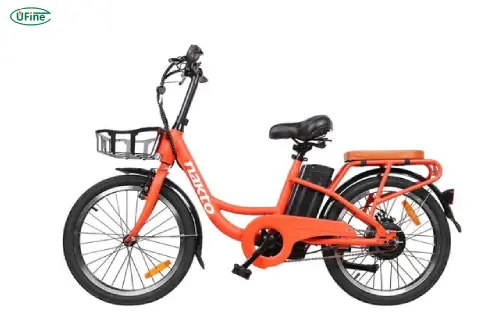
Actual range depends on terrain, rider weight, assist level, and motor efficiency.
Below is realistic consumption data at 12 / 15 / 20 Wh/km (light → average → heavy load):
| Pack Size | Total Energy (Wh) | 12 Wh/km | 15 Wh/km | 20 Wh/km |
|---|---|---|---|---|
| 48V 10Ah | 480 | 40 km | 32 km | 24 km |
| 48V 15Ah | 720 | 60 km | 48 km | 36 km |
| 48V 20Ah | 960 | 80 km | 64 km | 48 km |
Practical formula:
Estimated Range (km) = Battery Wh ÷ Avg. Consumption (Wh/km)
Part 4. What actually makes a “Best” bike battery?
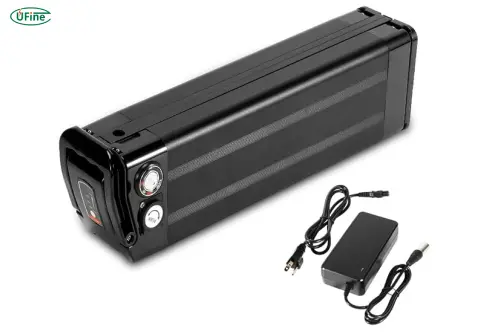
1 Chemistry (NMC vs NCA vs LiFePO4)
- NMC — high energy density, balanced performance (most common).
- NCA — slightly higher density, premium pricing.
- LiFePO4 — longest lifespan & safest but heavier/bulkier.
2 Cell Quality & Internal Resistance
Lower internal resistance means stronger acceleration, better hill climbing, and less heat.
3 BMS Quality
Critical protections include:
- Over-charge / over-discharge
- Short-circuit protection
- Thermal cut-off
- Cell balancing
4 Mechanical Design
Look for:
- Strong welds or robust cell holders
- Good thermal management
- IP-rated water resistance
- Secure connectors / terminals
Part 5. Safety standards and certifications
The best e-bike batteries comply with:
- UN38.3 (transport safety)
- IEC 62133 (global battery safety)
- UL 2271 / UL 2849 (e-bike electrical safety)
- CE / RoHS
These ensure the pack has passed shock, vibration, thermal, altitude, and short-circuit testing.
Part 6. Usage & maintenance tips
1 Charging Strategy
- Daily use: charge to 80–90% when possible
- Avoid deep discharge (<10%)
- Long storage: keep at 40–60%
2 Temperature Guidelines
- Charge at: 10–30°C
- Store at: 15–25°C
- Avoid leaving the bike in hot cars or freezing garages
3 Fast Charging
Occasional use is fine, but frequent fast charging accelerates cell aging.
4 Monitor Battery Health
Watch for:
- Noticeably reduced range
- Higher operating temperatures
- Voltage sag under load
Part 7. Buyer checklist
Use this list when comparing packs:
- Voltage and Ah match your motor/controller
- A-grade cell brands (Samsung / LG / Panasonic or equivalent)
- BMS continuous & peak current ratings
- Verified cycle life + test report
- Certifications (UN38.3, IEC62133, UL where applicable)
- Warranty terms
- Lead time & after-sales support
Part 8. Cost vs lifespan comparison
Below is a realistic cost-of-ownership model for commuters riding 10,000 km/year:
| Pack | Typical Price | Lifespan | Total km over lifespan | Cost per km |
|---|---|---|---|---|
| 48V 10Ah | $200–350 | 2–3 yrs | 12,000–20,000 km | $0.01–0.02 |
| 48V 15Ah | $300–500 | 3–4 yrs | 18,000–30,000 km | $0.01–0.02 (best value) |
| 48V 20Ah | $450–700 | 3–5 yrs | 20,000–35,000 km | $0.013–0.022 |
The 48V 15Ah pack provides the best long-term economic value for a 250W commuter.
Part 9. Conclusion
A 48V 15Ah Li-ion pack is the most practical “best battery” choice for a 250W commuter bike, offering the ideal balance of cost, range, durability, and everyday usability.
For OEM projects, prototypes, or custom e-bike packs, Ufine Battery provides tailored 48V solutions with A-grade cells, flexible BMS options, verification testing, and export-ready certifications.
Part 10. FAQ
1. What voltage is best for a 250W motor?
48V is the most efficient and common choice for commuting performance.
2. Does higher Ah always mean better?
Not necessarily—higher Ah increases weight and cost. Choose based on daily distance.
3. Is LiFePO4 better than NMC?
Safer and longer-lasting but heavier. NMC fits commuter bikes better.
4. How do I know my battery is wearing out?
Shorter range, heat during charging, and strong voltage sag.
5. Can I use a higher voltage battery?
Only if your controller is designed for it; otherwise, you risk damage.
Related Tags:

More Articles

고방전 배터리는 높은 전류와 발열로 배터리수명이 줄어듭니다. 구조적 한계, 사용 패턴, 충전 습관 등 실제 수명 단축 요인을 체계적으로 분석했습니다.
Capacitor vs Battery: What is the Difference?
Capacitor vs battery explained in detail. Learn the difference between capacitor and battery in energy storage, charging speed, lifespan, and real applications.
18650 Battery vs AA: Which Is Better for Your Device?
Compare 18650 vs AA batteries in capacity, voltage, rechargeability, and applications. Learn which battery type fits high-drain or everyday devices.
What is the Difference Between Battery Cell, Battery Control Module, and Battery Pack?
Compare battery cells, modules, and packs. Learn functions, design differences, control modules, and selection tips for EV, ESS, and industrial use.
How to Prevent LiPo Battery Explosion?
Can LiPo batteries explode or catch fire? Learn key causes of LiPo battery fires and proven charging, storage, and handling tips to reduce explosion risk.


