
- Part 1. Why AED battery quality can determine survival
- Part 2. AED battery types
- Part 3. How long do AED batteries last?
- Part 4. AED battery regulations and standards
- Part 5. What makes an AED battery different from ordinary batteries?
- Part 6. Does your AED need a backup battery?
- Part 7. AED battery disposal — Safe and legal methods
- Part 8. How to choose the right AED battery (Simple checklist)
- Part 9. Common myths & mistakes about AED batteries
- Part 10. Ufine Battery AED solutions (OEM/ODM)
- Part 11. Conclusion
Part 1. Why AED battery quality can determine survival
AEDs (Automated External Defibrillators) are life-saving devices, and their reliability depends heavily on a single component: the battery.
Studies show that over 60% of AED failures are caused by battery issues, not hardware defects. A dead or weak AED battery means the device cannot deliver the shock energy required to restart the heart — resulting in preventable fatalities.
This guide gives you a complete understanding of AED batteries from both a user perspective and an engineering perspective:
Part 2. AED battery types
AED batteries are not regular consumer lithium batteries. They are engineered for long standby life, high safety, and instant high-pulse discharge.
1 Lithium Manganese Dioxide (Li-MnO₂) — Most Common
- Non-rechargeable, long shelf life (4–7 years)
- Very low self-discharge
- Excellent cold-temperature performance
- Often used in public AEDs
2 LiFePO4 Rechargeable Packs — For Professional Use
- Widely used in EMS, ambulances, hospitals
- High cycle life
- Excellent thermal stability
- High discharge capability
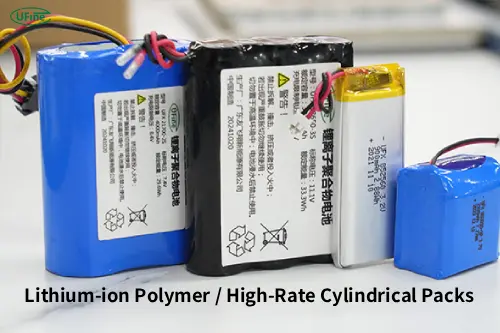
3 Lithium-ion Polymer / High-Rate Cylindrical Packs
- Used in compact AED modules or portable AED concepts
- Flexible form factors
- High discharge rate options available
Engineering Trade-offs:
| Type | Standby Life | Pulse Performance | Rechargeable | Safety | Cost |
|---|---|---|---|---|---|
| Li-MnO₂ | ★★★★★ | ★★★ | No | ★★★★★ | Medium |
| LiFePO4 | ★★★★ | ★★★★★ | Yes | ★★★★★ | Higher |
| Li-ion/Polymer | ★★★ | ★★★★ | Yes | ★★★★ | Medium |
Part 3. How long do AED batteries last?
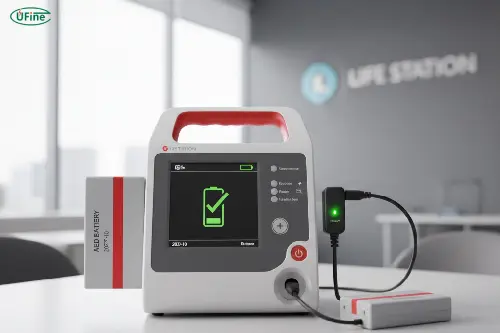
AED manufacturers usually specify two lifetimes:
1 Standby Life (Most Important)
The period an AED can stay installed without being used — typically 4–5 years.
2 Use Life
Based on the number of shocks:
Most AED batteries support 100–300 shocks during actual emergencies.
3 Why AED Batteries Last Longer Than Normal Lithium Batteries
- Optimized for ultra-low self-discharge
- Chemistries designed for predictable long-term stability
- Built-in supervisory circuits and self-test compatibility
- Higher internal safety margins
Signs your AED battery is failing:
- AED shows “low battery” indicator
- Failed self-test
- Shelf life past expiry
- Slow or unstable boot-up
Part 4. AED battery regulations and standards
AED batteries are regulated under medical device standards, not consumer electronics.
Key global standards include:
1 UL1642 / UL2054 – Lithium Battery Safety
Requirements for:
- Overcharge protection
- Thermal stability
- Short-circuit response
- Venting safety
2 IEC62133 – International Safety Standard for Rechargeable Cells
Covers drop tests, thermal abuse, vibration, and mechanical safety.
3 UN38.3 – Mandatory for Shipping
All AED batteries must pass:
- Altitude test
- Thermal cycling
- Vibration
- Shock
- External short-circuit
- Impact and crush
- Overcharge
4 CE / FDA / KC / PSE Compliance
Depending on the market:
- EU: CE
- US: FDA guidelines for AED system safety
- Korea: KC
- Japan: PSE
Why this matters:
Many “compatible AED batteries” online do NOT meet medical standards, leading to dangerous failures — especially during high-pulse discharge.
Part 5. What makes an AED battery different from ordinary batteries?
AEDs require a high-pulse discharge capability that most batteries cannot provide.
What Happens During Defibrillation?
The AED must instantly deliver 120–200 Joules of energy.
This requires:
- Very low internal resistance
- Stable voltage output under high current
- High-rate pulse discharge capability
- Thermal safety during high stress
Why High-Rate Lithium Batteries Are Crucial
Unlike a phone battery, AED batteries must perform perfectly after years of storage and then suddenly deliver a massive burst of current.
This is why AEDs use specialized lithium cells designed for:
- Low impedance
- Consistent discharge curves
- Medical-grade quality
Part 6. Does your AED need a backup battery?
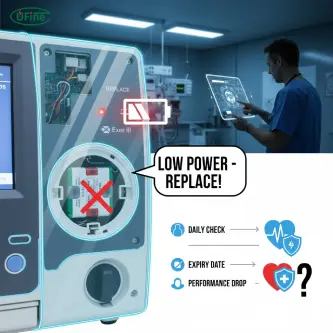
In many cases, yes, especially in professional or high-traffic environments.
When You MUST Have a Backup Battery
✔ Ambulances / EMS units
✔ Hospitals & clinics
✔ Outdoor AED installations
✔ Industrial facilities
✔ Areas with extreme temperatures
✔ AEDs that perform daily/weekly self-tests
Why?
- AED self-tests consume battery gradually
- Low temperatures reduce effective capacity
- AEDs in public areas can be triggered accidentally
- Emergencies may require multiple shocks
A backup battery ensures:
- Zero downtime
- Instant readiness
- Higher reliability in critical environments
Recommendation:
Public facilities should replace or maintain backup AED batteries every 3–4 years, regardless of usage.
Part 7. AED battery disposal — Safe and legal methods
AED batteries contain lithium, which is classified as hazardous waste.
Never do the following:
✘ Do not throw AED batteries in household trash
✘ Do not puncture or crush
✘ Do not expose to fire
✘ Do not store discharged batteries together (risk of short-circuit)
Proper disposal methods:
✔ Return to a certified battery recycling center
✔ Dispose through medical waste facilities
✔ Follow local hazardous waste regulations
✔ Use manufacturer’s recycling program (if available)
For organizations:
- Maintain a battery recycling log
- Use UN-approved disposal containers
Part 8. How to choose the right AED battery (Simple checklist)
When buying a replacement or custom AED battery pack, check:
Checklist
- Voltage & connector compatibility
- Chemistry and discharge capability
- Standby life (4–7 years recommended)
- Shock capacity (number of discharges)
- Compliance: UL, IEC, UN38.3, CE/KC/FDA
- Operating temperature range
- Seller’s medical battery experience
- Long-term supply capability
- Batch consistency documentation
If any of these are missing → don’t buy it.
Part 9. Common myths & mistakes about AED batteries
Myth 1: “If the AED turns on, the battery is OK.”
Wrong — startup requires minimal power; defibrillation requires huge pulse power.
Myth 2: “Rechargeable AED batteries last longer.”
Not always. For standby life, primary lithium batteries last much longer.
Myth 3: “Any compatible battery works the same.”
False — pulse performance varies significantly between suppliers.
Myth 4: “Temperature doesn’t affect AED batteries.”
Extreme heat or cold dramatically impacts performance and shelf life.
Part 10. Ufine Battery AED solutions (OEM/ODM)
Ufine Battery is a custom lithium battery manufacturer in China, providing:
- Lithium Polymer
- LiFePO4 battery packs
- High-rate cylindrical cells (18650, 21700, etc.)
- Ultra-thin batteries
- High/low temperature batteries
- High discharge-rate batteries
- Custom voltage, capacity, connectors, and BMS
AED-Specific Capabilities
- High-pulse discharge lithium packs
- Long standby design (4–7 years)
- UL/IEC/UN38.3 compliance
- Medical-grade manufacturing
- Support small batch prototypes & mass production
If you need a custom AED battery pack, we support complete OEM/ODM projects.
Part 11. Conclusion
AED batteries must stay functional for years and perform perfectly in emergencies.
Choosing a high-quality battery — and replacing it on time — can directly impact survival outcomes.
For AED manufacturers, distributors, or organizations planning to replace or design AED batteries:
👉 Ufine Battery provides custom AED battery solutions, long-term supply, and engineering support.
👉 Contact us for free consultation or to request custom samples.
Related Tags:

More Articles

A Complete Guide to the Best Batteries for Flashlights
Compare the best batteries for flashlights, including AA, AAA, 18650, 21700, CR123A. See which battery offers the best brightness, runtime, and reliability.
How Long Do Rechargeable AA Batteries Last?
How long do rechargeable AA batteries last? Compare NiMH and lithium AA lifespan, recharge cycles, key factors, and performance vs alkaline batteries.
How Much Current Can a 9V Battery Really Supply?
Discover how many amps a 9V battery can supply, its actual current output, discharge rate, and capacity for alkaline, lithium, and rechargeable 9V batteries.
12V STD vs 12V AGM: Meaning, Differences, and Which Is Better
Understand what STD and AGM batteries mean, their key differences, and which 12V battery fits your needs best in 2026.
Battery Reconditioning Explained: A Comprehensive Guide
Learn what battery reconditioning is, how it works, how long it takes, and when reconditioning chargers are used for lead-acid and lithium-ion batteries.


