- Quick comparison
- Part 1. AA vs C vs D battery size: C vs D battery size differences explained
- Part 2. AA vs C vs D battery weight: why D batteries last longer than C and AA
- Part 3. Voltage: the same voltage, different capacities
- Part 4. AA vs C vs D battery capacity: which battery lasts the longest?
- Part 5. Shape: consistent cylinder design across all types
- Part 6. Rechargeable
- Part 7. AA vs C vs D battery lifespan: which battery lasts the longest?
- Part 8. Chemistry: the different compositions that power your devices
- Part 9. Applications
- Part 10. Can AA, C, and D batteries be replaced?
- Part 11. How to choose the right battery for your device
- Part 12. FAQs
Batteries are everywhere. From remote controls to large flashlights, they power our everyday devices and help us stay connected in our fast-paced world. Yet, not all batteries are created equal. Have you ever wondered why some devices require AA batteries, while others demand C or D batteries? What’s the difference, and how does it affect your device’s performance?
In this article, we’ll take a detailed look at AA, C, and D batteries, comparing their size, weight, voltage, and more. We’ll explore real-world applications, advantages, and trade-offs, helping you make informed choices the next time you need to power up a device.
Quick comparison
- AA, C, and D batteries all have the same voltage (1.5V for alkaline).
- The main difference between C and D batteries is size and capacity.
- D batteries last much longer than C or AA batteries in high-drain devices.
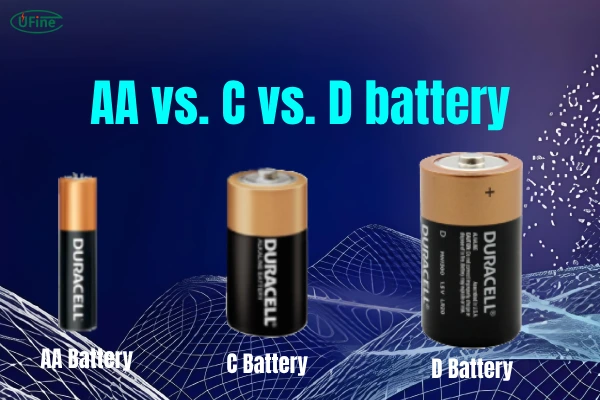
Part 1. AA vs C vs D battery size: C vs D battery size differences explained
In terms of physical size: D batteries > C batteries > AA batteries.
One of the most obvious differences between AA, C, and D batteries is their size. Size plays a critical role in determining a battery’s energy storage, longevity, and compatibility with devices.
-
AA Battery Size: AA batteries are the smallest of the three, measuring about 50.5 mm in length and 14.5 mm in diameter. Their compact size makes them ideal for devices that don’t need a lot of power but are used frequently, such as remote controls, wall clocks, and handheld gaming consoles.
-
C Battery Size: C batteries are significantly larger, at 50 mm in length and 26.2 mm in diameter. These batteries are used in devices that require more power than AA batteries can provide but don’t demand the robust capacity of D batteries, such as medium-sized flashlights or certain toys.
-
D Battery Size: The D battery, with a length of 61.5 mm and a diameter of 34.2 mm, is the largest of the three. These batteries are best for high-drain devices like large flashlights, portable radios, and certain types of medical equipment, where long-lasting power is critical.
As size increases, so does a battery’s capacity to store energy, meaning that larger batteries like D cells are suited for devices that require long periods of continuous use without frequent replacements.
Part 2. AA vs C vs D battery weight: why D batteries last longer than C and AA
When it comes to weight: D batteries > C batteries > AA batteries.
Another key consideration is the weight of each battery type. Generally, the heavier the battery, the longer it lasts, as it can store more energy.
-
AA Battery Weight: AA batteries weigh about 23 grams in their alkaline form. Because they’re so lightweight, they’re ideal for small, portable devices like wireless mice, TV remotes, or digital cameras. However, their lighter weight also means they won’t last as long as larger batteries in power-hungry devices.
-
C Battery Weight: With a weight of around 65 grams, C batteries provide a good balance of size and power. They’re commonly used in devices like radios and medium-sized flashlights, where moderate power consumption requires a sturdier battery.
-
D Battery Weight: D batteries weigh approximately 140 grams, making them the heaviest of the three. While this might seem cumbersome, the trade-off is significant. These batteries are designed to power devices for extended periods, ideal for high-drain applications like boom boxes or large flashlights that require consistent power for hours at a time.
When choosing between these batteries, consider the trade-off between weight and lifespan. A lighter battery might be more portable, but a heavier one will offer longer-lasting power, especially for high-drain devices.
Part 3. Voltage: the same voltage, different capacities
- AA battery voltage: 1.5V (alkaline)
- C battery voltage: 1.5V (alkaline)
- D battery voltage: 1.5V (alkaline)
All three battery types—AA, C, and D—have a standard voltage of 1.5 volts for their alkaline versions. Despite sharing the same voltage, the difference lies in how much power they can store and deliver over time.
-
AA Batteries: The standard AA battery delivers 1.5V, which is perfect for small household electronics. However, their capacity is limited compared to C and D batteries, meaning they may need to be replaced more frequently in high-drain devices.
-
C and D Batteries: Both C and D batteries also provide 1.5 volts of power, but they store significantly more energy than AA batteries. This means they can power devices for much longer without needing to be replaced.
The constant voltage across these battery types ensures compatibility with a wide range of devices, but the capacity determines how long they’ll last in use.
Part 4. AA vs C vs D battery capacity: which battery lasts the longest?
In terms of capacity: D batteries > C batteries > AA batteries.
| Battery Type | Voltage | Typical Capacity | Common Uses |
|---|---|---|---|
| AA Battery | 1.5V | 1,800–2,850 mAh | Remotes, clocks |
| C Battery | 1.5V | 6,000–8,000 mAh | Radios, toys |
| D Battery | 1.5V | 12,000–18,000 mAh | Flashlights, radios |
Battery capacity is measured in milliampere-hours (mAh) and indicates how long a battery will last before it needs to be replaced. This is where the differences between AA, C, and D batteries become most apparent.
-
AA Batteries: Typically, AA batteries have a capacity ranging from 1,800 to 2,850 mAh. In low-drain devices like remotes, this is more than enough, but in higher-drain devices, such as digital cameras or portable fans, they can drain quickly.
-
C Batteries: C batteries have a much higher capacity, around 6,000 to 8,000 mAh. This makes them ideal for medium-drain devices like radios and some children’s toys, offering longer-lasting power compared to AA batteries.
-
D Batteries: D batteries are the powerhouse of the group, with a capacity ranging from 12,000 to 18,000 mAh. They are designed for high-drain devices that require consistent power over long periods, like large flashlights or industrial equipment.
The higher the capacity, the longer the battery will last, making D batteries the go-to choice for devices that need continuous power over extended periods.
Part 5. Shape: consistent cylinder design across all types
Despite their differences in size, all three batteries—AA, C, and D—share a cylindrical shape. This design is standard across most household batteries, allowing them to fit easily into battery compartments. However, the larger the battery, the more energy it can store, which directly impacts its performance in various applications.
Part 6. Rechargeable
All three types of batteries are available in rechargeable versions, typically using Nickel-Metal Hydride (NiMH) chemistry. Rechargeable batteries offer both economic and environmental benefits, as they reduce waste and can be reused multiple times.
-
AA Rechargeable Batteries: AA rechargeable batteries are the most common and can be recharged up to 1,000 cycles. They are ideal for frequently used devices like wireless controllers or digital cameras, offering a significant cost-saving over time.
-
C Rechargeable Batteries: These rechargeable batteries provide a higher capacity than AA rechargeables, making them suitable for medium-drain devices. They have a longer charge life, which is useful for toys, flashlights, and radios.
-
D Rechargeable Batteries: D rechargeable batteries are perfect for high-drain devices. Although they may have a slightly lower initial capacity compared to their alkaline counterparts, their ability to be recharged makes them a cost-effective and eco-friendly choice in the long run.
Rechargeable batteries are a smart option for those who use battery-powered devices frequently, helping save money while reducing waste.
Part 7. AA vs C vs D battery lifespan: which battery lasts the longest?
In terms of real-world lifespan: D batteries > C batteries > AA batteries.
The lifespan of a battery refers to how long it can power a device before needing replacement.
-
AA Batteries: AA batteries in low-drain devices like clocks or remotes can last several months. However, in high-drain devices like digital cameras, their lifespan is reduced to a matter of hours or days.
-
C Batteries: C batteries tend to last longer than AA batteries, particularly in medium-drain devices like flashlights or radios. They can provide weeks or even months of power depending on the device.
-
D Batteries: D batteries excel in high-drain devices, often lasting for several months in equipment like portable radios or heavy-duty flashlights. Their long-lasting nature makes them ideal for high-power needs.
Part 8. Chemistry: the different compositions that power your devices
The chemical composition of a battery impacts its performance, durability, and environmental impact. AA, C, and D batteries are typically available in alkaline, lithium, and NiMH (rechargeable) chemistries.
-
Alkaline Batteries: These are the most common and offer good performance for most everyday devices. They are disposable, making them convenient but not the most eco-friendly choice.
-
Lithium Batteries: Lithium batteries are lightweight and perform well in extreme temperatures. They are perfect for outdoor use or high-tech gadgets that need reliable power in any environment.
-
NiMH Batteries: These are the most popular rechargeable batteries and are available in all three sizes—AA, C, and D. They offer a good balance between performance and environmental impact, as they can be recharged many times.
Part 9. Applications
Each battery type is suited for different applications based on its size, capacity, and weight.
-
AA Batteries: Commonly used in low-drain devices like remotes, clocks, and wireless mice. They’re perfect for everyday household items that don’t require a lot of power.
-
C Batteries: Used in flashlights, radios, and certain toys, C batteries provide a good balance between size and power, making them ideal for medium-drain devices.
-
D Batteries: Best suited for high-drain devices like large flashlights, boom boxes, and industrial equipment. D batteries offer long-lasting power for heavy-duty applications.
Part 10. Can AA, C, and D batteries be replaced?
A common question people ask is whether AA, C, and D batteries can be used interchangeably. While it might seem convenient to swap one for the other, size and capacity limitations mean that in most cases, they cannot be directly replaced without an adapter or a significant change in performance. Let’s break it down:
-
Physical Size Matters: One of the key reasons these batteries cannot typically replace each other is their size difference. AA, C, and D batteries all have different diameters and lengths, meaning they won’t physically fit into a device designed for another battery size. For example, trying to fit a D battery into a slot meant for an AA battery is impossible due to the difference in both diameter and length.
-
Adapters for Compatibility: There are battery adapters available that allow you to use a smaller battery, like an AA battery, in a device designed for a larger battery, like a D battery. However, this comes with limitations. While the voltage remains the same (1.5V), the capacity of the battery will be much lower, which means your device will run out of power much faster. For example, using an AA battery in place of a D battery will work for a short time but require frequent replacement due to the significant difference in capacity.
-
Power and Device Compatibility: Even if a smaller battery can be adapted to fit into a larger compartment, the power requirements of the device need to be considered. Devices that require C or D batteries often need the higher capacity and longer run times these larger batteries offer. Swapping in a smaller battery like AA may cause the device to underperform or run out of power much sooner than expected. For example, replacing D batteries in a large flashlight with AA batteries may result in the flashlight dimming quickly and needing new batteries after a much shorter period.
While adapters make some level of interchangeability possible, it’s always best to use the size and type of battery recommended by the device manufacturer for optimal performance and longer-lasting power.
Part 11. How to choose the right battery for your device
Choosing the right battery depends on several factors, including the power requirements of your device, how frequently you use it, and whether portability is important to you. Let’s go over the key considerations to help you make an informed choice between AA, C, and D batteries.
-
Device Power Needs: Start by assessing your device’s power demands. Low-drain devices like TV remotes or wireless mice can easily be powered by AA batteries. However, medium-drain devices like portable radios or toys will benefit from the higher capacity offered by C batteries. For high-drain devices, such as large flashlights, portable speakers, or medical equipment, D batteries are the best choice, providing long-lasting power for extended use.
-
Battery Capacity: If your device needs to run for long periods without interruption, battery capacity should be a priority. D batteries offer the highest capacity, making them suitable for devices that require prolonged power. C batteries are a good middle ground, while AA batteries, though smaller, are suitable for less demanding applications.
-
Frequency of Use: If you’re using a device regularly, rechargeable batteries can be a more cost-effective and environmentally friendly choice. For devices like gaming controllers, digital cameras, or even radios, rechargeable AA, C, or D batteries can save you money in the long run. Rechargeables also reduce battery waste, making them a more sustainable option.
-
Portability: For small, lightweight devices where portability is key, AA batteries are ideal. They are lightweight and easy to carry, making them perfect for portable electronics like wireless microphones, clocks, or small toys. However, for larger, power-hungry devices that aren’t moved often, C or D batteries provide the long-lasting power needed for continuous use.
-
Cost Considerations: While D and C batteries typically cost more than AA batteries, they also last longer in high-drain devices. If you have a device that requires long run times, investing in C or D batteries may reduce your replacement frequency, ultimately saving you money. For low-drain devices, AA batteries are affordable and readily available, making them a convenient option.
-
Environmental Impact: If you’re concerned about environmental impact, consider using rechargeable NiMH batteries. These are available in AA, C, and D sizes and can be reused hundreds of times, significantly reducing battery waste. Although they may have a higher initial cost, the long-term savings and eco-friendliness make them a worthy investment.
All About AA Rechargeable Batteries
C Battery Explained: Everything You Need to Know
Understanding D Battery: A Quick Guide
Part 12. FAQs
Are D batteries more powerful than AA batteries?
D batteries are not more powerful in voltage, but they can deliver power for a much longer time. This makes them better for high-drain or long-runtime devices.
Are larger batteries safer for high-drain devices?
In many cases, yes. Larger batteries like D cells handle heat and current load better, reducing stress compared to smaller batteries in high-drain applications.
Do C and D batteries discharge more slowly than AA batteries?
Yes. Due to their larger capacity and lower internal resistance, C and D batteries typically discharge more slowly under the same load conditions.
Related Tags:

More Articles

JST vs Molex: The Right Battery Connector Choice
JST or Molex for your battery? Learn how connector selection affects current, voltage drop, reliability, and device performance.
Custom Battery Pricing: Costs Manufacturers Don’t Mention
A low battery quote may not be the final cost. Discover common hidden expenses that affect custom lithium battery projects.
Battery Wire Length: Hidden Cause of Power Loss
A longer battery wire can cause voltage drop, power loss, and unstable operation. Learn how wire length affects battery performance.
How Device Sleep Modes Affect Battery Life
Think sleep mode extends battery life? Learn why devices still drain power and how firmware, hardware, and batteries affect runtime.
LiPo Battery and PCB Design: Clearance, Insulation, and Placement
Learn how to optimize LiPo battery PCB clearance, insulation, placement, wiring, and thermal design—and avoid common integration mistakes.