
- Key Takeaways
- Part 1. What is a lithium thionyl chloride battery?
- Part 2. Key features of lithium thionyl chloride batteries
- Part 3. Typical applications of lithium thionyl chloride batteries
- Part 4. How lithium thionyl chloride batteries work
- Part 5. Advantages and disadvantages of lithium thionyl chloride batteries
- Part 6. Lithium thionyl chloride battery vs Other battery types
- Part 7. Safety considerations for lithium thionyl chloride batteries
- Part 8. How to choose the right lithium thionyl chloride battery
- Part 9. Lithium thionyl chloride battery FAQs
Lithium thionyl chloride batteries (Li-SOCl₂) are high-energy primary lithium batteries known for extremely long shelf life and reliable performance in harsh environments.
Because of their high energy density, very low self-discharge, and wide temperature tolerance, lithium thionyl chloride batteries are widely used in smart meters, industrial sensors, asset tracking devices, and aerospace electronics.
This guide explains how lithium SOCl₂ batteries work, their advantages and limitations, and when they are the best choice for long-life power applications.
Key Takeaways
- Lithium thionyl chloride batteries (Li-SOCl₂) are high-energy primary lithium batteries with extremely low self-discharge (often <1% per year).
- They provide a nominal voltage of about 3.6V, higher than many primary battery chemistries.
- These batteries can operate in extreme environments from about −55 °C to +125 °C, making them suitable for industrial and military equipment.
- Their long shelf life (10–20+ years) makes them ideal for remote or maintenance-free devices.
- Because they are non-rechargeable, they are primarily used in long-term, low-power applications rather than high-drain consumer electronics.
Part 1. What is a lithium thionyl chloride battery?
A lithium thionyl chloride battery, also known as a Li-SOCl₂ battery, is a primary lithium battery that cannot be recharged. It uses:
- Lithium metal as the anode
- Thionyl chloride (SOCl₂) as the electrolyte and cathode material
This unique electrochemical system gives the battery its exceptional energy density and long storage life.
Lithium thionyl chloride batteries are commonly used in devices that must operate reliably for many years without maintenance. Typical examples include industrial meters, remote monitoring sensors, and military electronics.
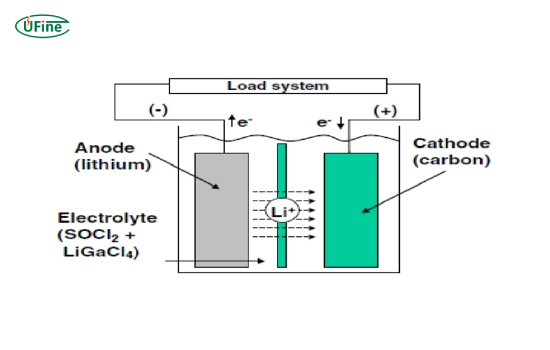
According to battery research published by the ScienceDirect engineering database, Li-SOCl₂ batteries remain one of the highest-energy primary battery systems commercially available.
Part 2. Key features of lithium thionyl chloride batteries
- Extremely High Energy Density
- A lithium thionyl chloride battery can reach energy densities up to ~1280 Wh/L.
- This is significantly higher than alkaline or many rechargeable batteries.
- The high density allows compact batteries to power devices for many years without replacement.
- Ultra-Long Shelf Life
- Lithium SOCl₂ batteries have an extremely low self-discharge rate.
- Typical characteristics:
- Self-discharge: <1% per year
- Storage life: 10–20+ years
- Some specialized models: up to 40 years in low-power systems
- Wide Operating Temperature Range
- Li-SOCl₂ batteries can operate in extreme environments.
- Typical operating range: −55 °C to +125 °C.
- This makes them suitable for oil & gas monitoring, industrial automation, aerospace electronics, and outdoor sensor systems.
- Stable Output Voltage
- These batteries maintain a stable voltage around 3.6 V during most of the discharge cycle.
- Stable voltage improves system stability and device reliability.
Part 3. Typical applications of lithium thionyl chloride batteries
Because of their long lifespan and reliability, lithium thionyl chloride batteries are mainly used in long-term industrial and professional devices.
1 Remote wireless devices
Many IoT and remote monitoring systems rely on lithium SOCl₂ batteries to power sensors for 10–20 years.
Examples: asset tracking, environmental monitoring, smart agriculture sensors
2 Smart metering systems
Utilities often use lithium thionyl chloride batteries in water meters, gas meters, and electricity meters. These systems must operate reliably for a decade or longer without battery replacement.
3 Medical equipment
Certain long-life medical devices use lithium thionyl chloride batteries for dependable power.
Examples include: implantable medical electronics, emergency monitoring devices, portable diagnostic equipment
4 Military and aerospace systems
Due to their reliability and temperature tolerance, thionyl chloride batteries are also used in military communication equipment, missile systems, satellite electronics, and long-duration defense sensors.
Part 4. How lithium thionyl chloride batteries work
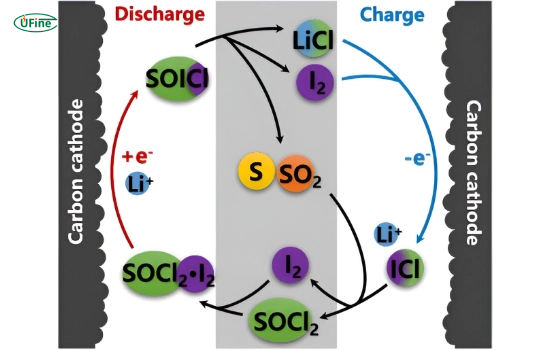
The operation of a lithium thionyl chloride battery is based on a chemical reaction between lithium metal and thionyl chloride.
1 Step-by-step process
Initial State
The battery contains:
- Lithium metal anode
- Thionyl chloride electrolyte
- The electrolyte also acts as the cathode material.
Discharge Reaction
When connected to a device:
- Lithium atoms oxidize at the anode
- Electrons flow through the external circuit
- Electrical energy powers the connected system
Electrochemical Reaction
At the cathode, thionyl chloride undergoes reduction, producing sulfur dioxide (SO₂) and lithium chloride (LiCl). This reaction releases energy used by the device.
Passivation Layer Formation
A thin lithium chloride layer forms on the anode surface. This passivation layer slows unwanted reactions and dramatically reduces self-discharge.
This is a key reason lithium thionyl chloride batteries can be stored for decades.
Part 5. Advantages and disadvantages of lithium thionyl chloride batteries
1 Advantages
- High Nominal Voltage
- Typical voltage: 3.6 V, higher than many primary batteries.
- Exceptional Longevity
- Some systems can operate 20+ years without replacement.
- Excellent Environmental Durability
- They function reliably in extreme cold, high heat, and harsh industrial environments.
- Maintenance-Free Operation
- Because of their long life and stability, devices powered by lithium SOCl₂ batteries rarely require servicing.
2 Disadvantages
- Non-Rechargeable
- A lithium thionyl chloride battery is a primary battery and cannot be recharged.
- For rechargeable solutions, lithium-ion batteries are often used instead. For example, customized packs can be designed using custom lithium-ion battery packs.
- Higher Initial Cost
- These batteries are more expensive than alkaline or standard lithium batteries.
- However, the long service life often reduces total lifecycle cost.
- Safety Considerations
- Thionyl chloride is corrosive and toxic, so batteries must be properly sealed and handled.
- Limited High-Drain Capability
- Standard Li-SOCl₂ batteries are optimized for low-current devices.
- High-pulse applications may require hybrid capacitor designs.
Part 6. Lithium thionyl chloride battery vs Other battery types
Understanding how lithium thionyl chloride batteries compare with other chemistries helps determine when they are the best choice.
| Battery Type | Rechargeable | Energy Density | Shelf Life | Typical Applications |
|---|---|---|---|---|
| Lithium Thionyl Chloride | No | Very High | 10–20+ years | Sensors, meters, defense |
| Alkaline | No | Low | 5–10 years | Consumer electronics |
| Lithium-Ion | Yes | High | 3–5 years | Phones, laptops |
| Lead-Acid | Yes | Low | Short | Automotive, UPS |
| NiCd | Yes | Medium | Moderate | Industrial tools |
In general, Li-SOCl₂ batteries dominate applications requiring extremely long standby power.
Part 7. Safety considerations for lithium thionyl chloride batteries
Proper handling and storage are essential when using thionyl chloride batteries.
Handling
- Avoid damaging or puncturing the battery.
- Do not expose internal electrolyte.
- Use protective equipment in industrial settings.
Storage
- Cool, dry environment
- Away from heat sources
- Avoid direct sunlight
Operation
- Prevent short circuits.
- Do not recharge the battery.
- Use only within the specified temperature range.
Disposal
Follow local battery disposal regulations. Many regions follow international transport and safety standards such as UN 38.3 for lithium batteries.
Reference: UN Manual of Tests and Criteria for Lithium Batteries
Part 8. How to choose the right lithium thionyl chloride battery
When selecting a lithium SOCl₂ battery, engineers should evaluate several critical factors.
- Device Power Consumption: Determine average current, peak current, and required operating time. Low-power devices are the ideal use case.
- Operating Temperature: Ensure the battery can operate safely within your system’s temperature range. Industrial sensors often require wide-temperature Li-SOCl₂ cells.
- Required Service Life: If your device must operate 10–20 years without maintenance, a lithium thionyl chloride battery is often the best solution.
- Physical Size and Capacity: Choose the appropriate format: AA / ER14505, C size / ER26500, D size / ER34615, or custom industrial packs.
For applications requiring customized battery packs, manufacturers like Ufine Battery provide tailored lithium battery solutions for industrial devices.
Part 9. Lithium thionyl chloride battery FAQs
What is a lithium thionyl chloride battery used for?
A lithium thionyl chloride battery is commonly used in smart meters, IoT sensors, asset tracking devices, medical electronics, and military equipment because it provides long service life and reliable performance in harsh environments.
Can lithium thionyl chloride batteries be recharged?
No. A lithium thionyl chloride battery is a primary battery and cannot be safely recharged. Attempting to recharge it may cause overheating or failure.
How long do lithium thionyl chloride batteries last?
Depending on the application and current consumption, lithium SOCl₂ batteries can last 10–20 years or longer. Some specialized systems may operate for decades.
What is the nominal voltage of a Li-SOCl₂ battery?
The nominal voltage of a lithium thionyl chloride battery is typically 3.6 V, which is higher than many other primary battery chemistries.
Are lithium thionyl chloride batteries safe?
Yes, when used properly. These batteries are sealed and designed for safe operation. However, because the electrolyte is corrosive, they must not be punctured, recharged, or exposed to extreme abuse conditions.
Related Tags:

More Articles
Dead Battery or Device Failure? How to Find the Cause
Think your device is broken? Learn how to tell if the problem comes from battery aging or hardware failure before replacing your electronics.
Why iPhone Duo Uses Two Batteries: The Engineering Behind Foldable Phone Power
Why do foldable phones need two batteries? Explore the engineering challenges behind iPhone Duo’s dual-battery architecture and future battery trends.
Solid-State Batteries: 3 Myths You Need to Know
Solid-state batteries promise safer EVs and longer range, but the reality is more complex. Discover the challenges behind this next-gen technology.
Battery Capacity vs Discharge Rate: The Choice Engineers Face
Higher capacity or higher discharge rate? Learn how to choose the right LiPo battery for longer runtime, stable power output, and better device performance.
Battery Cable Size Guide: Choose the Right Wire Fast
Not sure what battery cable size you need? Learn how to select the right wire gauge, terminal size, and cable for safer, more efficient battery systems.


