
- Part 1. Quick answer: what is a 3.7V rechargeable battery?
- Part 2. Key specifications at a glance
- Part 3. Why is it called 3.7V but fully charged to 4.2V?
- Part 4. Types of 3.7V rechargeable batteries
- Part 5. Common sizes of 3.7V batteries
- Part 6. What are 3.7V batteries used for?
- Part 7. Are all 3.7V batteries rechargeable?
- Part 8. Charging a 3.7V rechargeable battery
- Part 9. Can you charge a 3.7V battery with a 5V USB?
- Part 10. When is a 3.7V battery considered dead?
- Part 11. How long does a 3.7V rechargeable battery last?
- Part 12. Temperature effects on 3.7V batteries
- Part 13. How to choose the right 3.7V battery
- Part 14. Storage & recycling
Part 1. Quick answer: what is a 3.7V rechargeable battery?
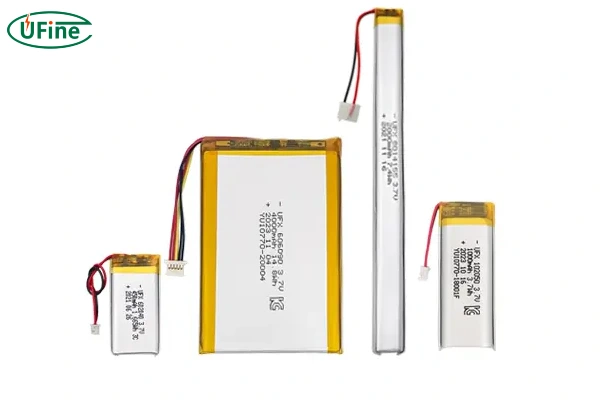
A 3.7V rechargeable battery is a lithium-based battery cell with a nominal voltage of 3.7 volts and a maximum charging voltage of 4.2 volts. It is most commonly based on lithium-ion (Li-ion) or lithium polymer (LiPo) chemistry and is designed to be recharged hundreds of times.
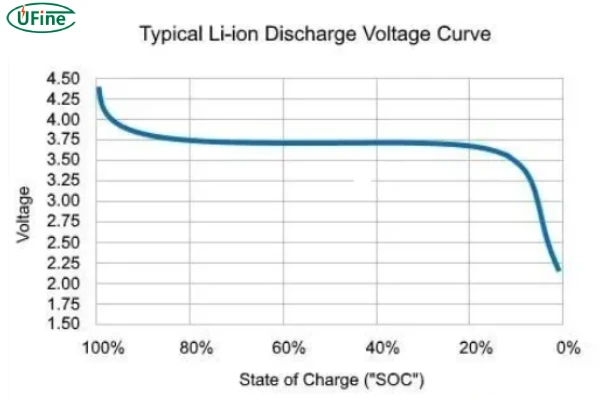
In simple terms, “3.7V” is not a fixed voltage—it’s an average working voltage across the battery’s discharge curve.
Part 2. Key specifications at a glance

| Parameter | Typical Value |
|---|---|
| Nominal Voltage | 3.7V |
| Fully Charged Voltage | 4.2V |
| Cut-off Voltage | 2.75–3.0V |
| Chemistry | Li-ion / LiPo |
| Rechargeable | Yes |
| Typical Cycle Life | 300–500 cycles |
| Energy Density | High |
This voltage profile is exactly why 3.7V cells are so widely used—they offer a strong balance of capacity, safety, and size.
To get a better understanding of how the voltage changes during use, you can check out How to Read Lithium Battery Discharge Curve and Charging Curve— it’s a handy guide for seeing exactly what’s happening inside the battery.
Part 3. Why is it called 3.7V but fully charged to 4.2V?
This is one of the most common sources of confusion.
A 3.7V lithium battery does not stay at 3.7 volts all the time. Instead:
- At full charge, it reaches 4.2V
- During normal use, it operates around 3.6–3.7V
- Near empty, it drops to about 3.0V
The term nominal voltage simply represents the average voltage during discharge, not the maximum. This naming convention is standard across the battery industry and is defined by electrochemical behavior—not marketing.
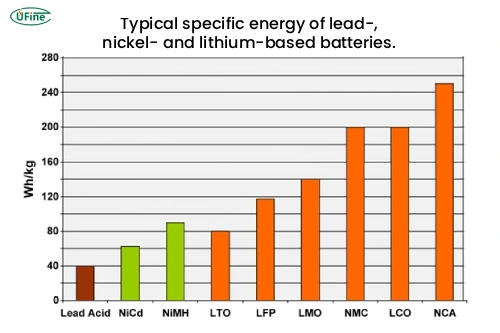
If you want to see how 3.7V cells compare across charge levels and learn more about voltage behavior, check out The Complete Guide About Lithium Ion Battery Voltage Chart — it’s a great reference for visualizing charge and discharge patterns.
Part 4. Types of 3.7V rechargeable batteries
Although they share the same nominal voltage, 3.7V batteries come in two main forms. The difference lies in structure, not voltage.
1 3.7V Lithium-Ion (Li-ion) Batteries
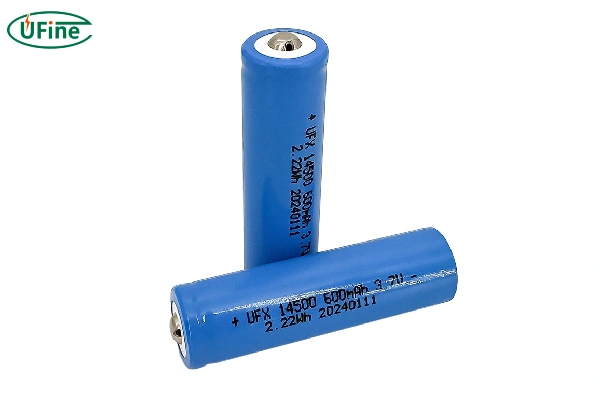
Li-ion batteries are usually cylindrical and follow standardized sizes.
Key advantages:
- High energy density
- Stable structure
- Easy to replace and standardize
Common applications: flashlights, battery packs, laptops, industrial devices
2 3.7V Lithium Polymer (LiPo) Batteries
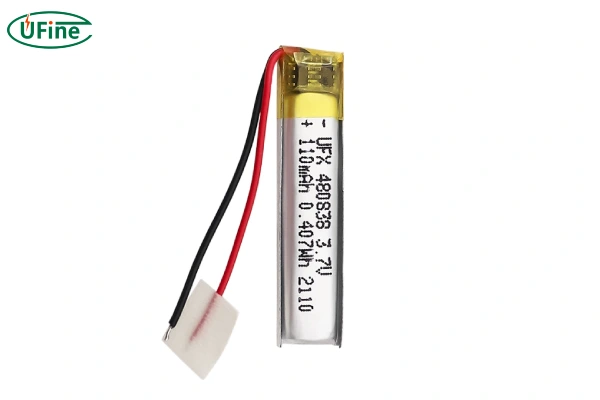
LiPo batteries use a pouch structure, which allows much more flexibility in shape and thickness.
Key advantages:
- Lightweight
- Ultra-thin designs
- Customizable dimensions
Common applications: drones, wearables, medical devices, embedded electronics
In practice, Li-ion is preferred for standardized products, while LiPo dominates custom or space-limited designs.
Part 5. Common sizes of 3.7V batteries
1 Cylindrical Li-ion Sizes (Standardized)
| Model | Dimensions | Typical Use |
|---|---|---|
| 18650 | 18 × 65 mm | Laptops, packs, EV modules |
| 26650 | 26 × 65 mm | High-drain tools |
| 14500 | 14 × 50 mm | AA-sized devices (voltage caution) |
Important: A 14500 battery is not a direct AA replacement. It fits physically, but the voltage is much higher and may damage devices.
2 LiPo Battery Sizes (Non-standard)
LiPo batteries do not have fixed sizes. Capacity, thickness, and shape are often customized based on product design.
Typical examples:
- 500mAh — ~30 × 20 × 5 mm
- 1000mAh — ~35 × 25 × 10 mm
- 2200mAh — ~60 × 34 × 10 mm
This flexibility is why LiPo batteries are widely used in modern electronics.
Ufine Battery can customize capacity, voltage, curvature, and dimensions to meet your specifications — whether for prototype testing or volume production.
Find A Solution NowPart 6. What are 3.7V batteries used for?
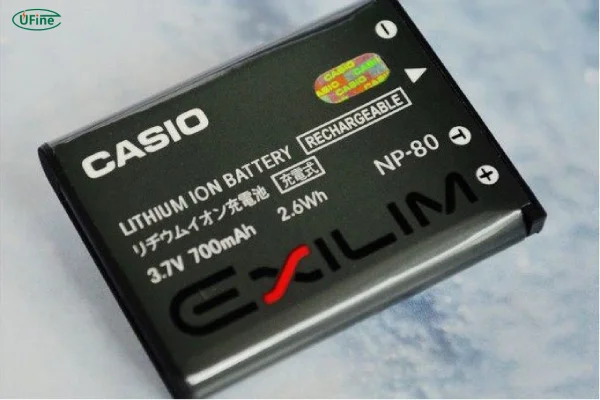
Because of their balance between voltage and capacity, 3.7V batteries are extremely versatile:
- Consumer electronics: smartphones, cameras, Bluetooth devices
- IoT & embedded systems: sensors, trackers, smart meters
- Hobby & RC: drones, RC cars, FPV equipment
- Medical devices: portable diagnostic tools
- Battery packs: multi-cell configurations for higher voltages
In multi-cell packs, several 3.7V cells are connected in series or parallel to reach 7.4V, 11.1V, or higher.
Part 7. Are all 3.7V batteries rechargeable?
No—but most are.
The vast majority of 3.7V batteries on the market are rechargeable lithium cells. However, some primary lithium batteries may share similar voltage labels but are not designed to be recharged.
Always check:
- Battery chemistry
- Manufacturer labeling
- Presence of protection circuits
When in doubt, do not attempt to recharge.
Part 8. Charging a 3.7V rechargeable battery
Standard Charging Method: CC–CV
3.7V lithium batteries use a Constant Current – Constant Voltage (CC–CV) charging profile:
- Constant Current (CC):
- The charger applies a steady current while voltage rises.
- Constant Voltage (CV):
- At 4.2V, voltage is held constant while current gradually decreases.
Once the current drops to a preset level, charging stops automatically.
Exceeding 4.2V can permanently damage the battery and create safety risks.
For a more in-depth look at how different lithium batteries behave during charge and discharge, check out Professional Comparison of 12 Lithium Battery Charge and Discharge Curves— it’s especially useful if you want to understand how 3.7V cells compare under real-world conditions.
Part 9. Can you charge a 3.7V battery with a 5V USB?
Yes—but only with a proper charging circuit.
USB power provides 5V, which is too high for a lithium cell directly. A dedicated charger module regulates voltage and current safely.
This is why almost all consumer devices include battery management ICs.
For safety standards and lithium battery handling guidelines, Wikipedia offers a solid overview:
Part 10. When is a 3.7V battery considered dead?
A 3.7V battery is generally considered “empty” at around 3.0V.
Below this point:
- Capacity drops rapidly
- Internal resistance increases
- Long-term damage may occur
Repeated deep discharge is one of the fastest ways to shorten battery lifespan.
Part 11. How long does a 3.7V rechargeable battery last?
Typical lifespan depends on chemistry and usage:
- Li-ion: 300–500 full charge cycles
- LiPo: 200–300 full charge cycles
Partial charging, temperature control, and proper storage can significantly extend real-world lifespan.
Part 12. Temperature effects on 3.7V batteries
Temperature plays a bigger role than many people expect:
- High heat: accelerates chemical aging
- Low temperatures: reduce capacity and output
- Optimal range: 20–25°C
Consistent exposure to extreme conditions will shorten battery life, even if the battery is rarely used.
Part 13. How to choose the right 3.7V battery
When selecting a battery, consider more than just voltage:
- Required capacity (mAh)
- Discharge current
- Physical size constraints
- Operating temperature
- Safety certifications
- Protection circuitry
For professional or OEM applications, these factors matter far more than headline capacity numbers.
Part 14. Storage & recycling
For long-term storage:
- Store at 40–60% charge
- Keep in a cool, dry environment
- Avoid fully charged or fully depleted states
Recycling is equally important. Lithium batteries contain valuable materials and should never be disposed of in regular trash. Many regions provide dedicated recycling programs to handle them safely.
Related Tags:

More Articles
Dead Battery or Device Failure? How to Find the Cause
Think your device is broken? Learn how to tell if the problem comes from battery aging or hardware failure before replacing your electronics.
Why iPhone Duo Uses Two Batteries: The Engineering Behind Foldable Phone Power
Why do foldable phones need two batteries? Explore the engineering challenges behind iPhone Duo’s dual-battery architecture and future battery trends.
Solid-State Batteries: 3 Myths You Need to Know
Solid-state batteries promise safer EVs and longer range, but the reality is more complex. Discover the challenges behind this next-gen technology.
Battery Capacity vs Discharge Rate: The Choice Engineers Face
Higher capacity or higher discharge rate? Learn how to choose the right LiPo battery for longer runtime, stable power output, and better device performance.
Battery Cable Size Guide: Choose the Right Wire Fast
Not sure what battery cable size you need? Learn how to select the right wire gauge, terminal size, and cable for safer, more efficient battery systems.


