- Is lithium a metal?
- Part 1. What is a lithium metal battery?
- Part 2. Lithium metal battery advantages
- Part 3. Lithium metal battery limitations
- Part 4. What is a lithium-ion battery?
- Part 5. Lithium-ion battery advantages
- Part 6. Lithium-ion battery limitations
- Part 7. Which should you choose: Lithium metal or lithium-ion?
- Part 8. Battery selection in real applications
- Part 9. Difference between lithium-ion battery and lithium metal battery
- Part 10. FAQs about lithium metal vs lithium ion
Regarding batteries, two prominent technologies often come into focus: lithium metal batteries and lithium-ion batteries. Although their names sound similar, they differ significantly in structure, safety, lifespan, and real-world applications. Understanding the difference between lithium metal and lithium-ion batteries is essential when choosing the right power solution for modern devices.
Quick Answer: The main difference between lithium metal and lithium-ion batteries lies in the anode material. Lithium metal batteries use pure lithium metal, offering higher energy density but lower safety and shorter cycle life. Lithium-ion batteries use graphite anodes, providing better safety, longer lifespan, and wider commercial adoption.
Is lithium a metal?
Yes. Lithium is a soft, silvery-white alkali metal. In battery technology, lithium can exist in two forms: as lithium ions (Li⁺) in lithium-ion batteries, or as metallic lithium in lithium metal batteries. This distinction is the root cause of the performance, safety, and lifespan differences between the two battery types.
Part 1. What is a lithium metal battery?
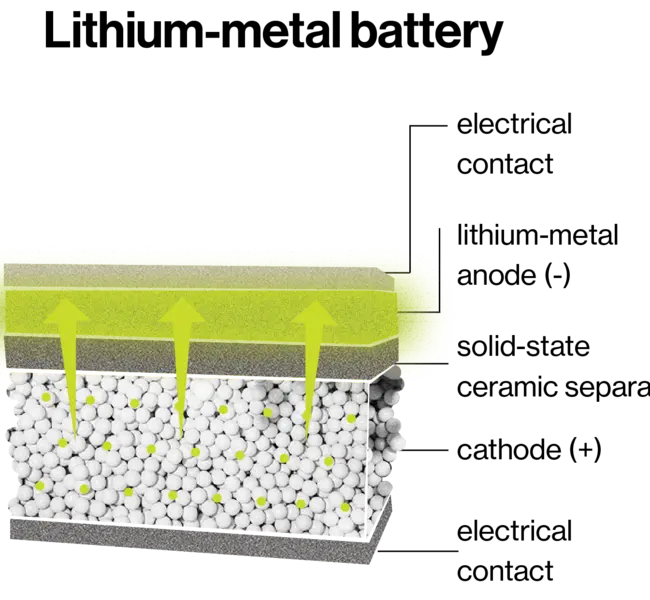
A lithium metal battery uses metallic lithium as its anode instead of a carbon-based material. During discharge, lithium atoms release electrons and form lithium ions, generating electrical energy. During charging, lithium ions return and deposit back onto the anode as metallic lithium.
Because metallic lithium stores more energy per unit weight than graphite, lithium metal batteries are known for their extremely high energy density and long shelf life.
Typical use cases: Lithium metal batteries are commonly used in medical devices, aerospace systems, military electronics, memory backup, and IoT devices where long shelf life and maximum energy density are more important than rechargeability.
Part 2. Lithium metal battery advantages
- Higher energy density: Lithium metal batteries store more energy than lithium-ion batteries, enabling longer operating time in compact devices.
- Lightweight design: The use of metallic lithium significantly reduces battery weight, which is critical for aerospace and medical applications.
- Long shelf life: These batteries exhibit extremely low self-discharge, making them ideal for backup and emergency systems.
- Wide operating temperature range: Lithium metal batteries maintain stable performance in both high and low temperature environments.
- High voltage stability: They deliver consistent voltage throughout most of their discharge cycle.
Part 3. Lithium metal battery limitations
- Safety risks: Lithium dendrite formation can cause internal short circuits, increasing the risk of fire or thermal runaway.
- Limited cycle life: Rechargeable lithium metal batteries degrade faster than lithium-ion batteries due to repeated lithium plating and stripping.
- Sensitive charging requirements: Overcharging or deep discharging can permanently damage the battery.
- Higher production cost: Manufacturing lithium metal batteries requires strict safety controls, increasing cost.
- Transportation regulations: Lithium metal batteries face stricter shipping and handling regulations worldwide.
Part 4. What is a lithium-ion battery?
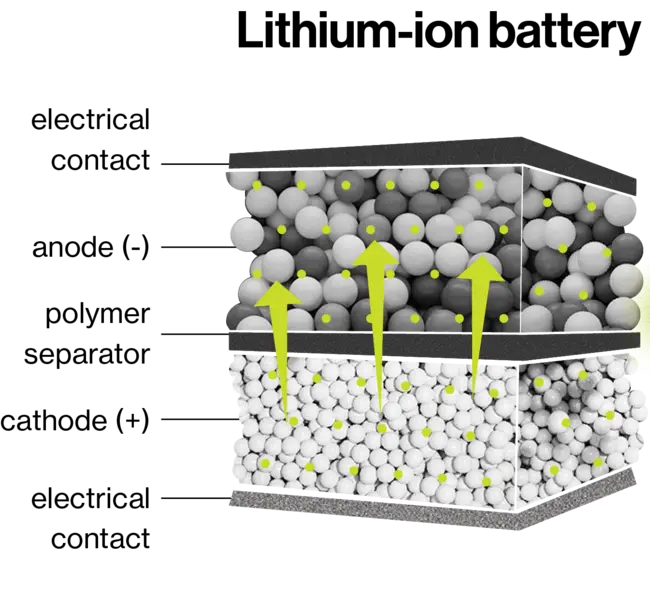
Lithium-ion batteries do not use metallic lithium as the anode. Instead, they rely on carbon-based materials such as graphite to store lithium ions through an intercalation process. This design greatly improves safety and cycle life.
During charging, lithium ions move from the cathode to the graphite anode and are stored within its layered structure. During discharge, lithium ions return to the cathode, releasing electrical energy to power devices.
Typical use cases: Lithium-ion batteries are widely used in smartphones, laptops, electric vehicles, power tools, energy storage systems, and most rechargeable consumer electronics.
Part 5. Lithium-ion battery advantages
- Long cycle life: Lithium-ion batteries can last hundreds to thousands of charge-discharge cycles with proper management.
- Improved safety: The absence of metallic lithium significantly reduces the risk of dendrite-related short circuits.
- High energy density: While lower than lithium metal batteries, lithium-ion batteries still offer excellent energy-to-weight performance.
- Fast charging capability: Advanced lithium-ion chemistries support rapid charging with controlled heat generation.
- Low self-discharge: They retain charge well during storage and idle periods.
- Commercial maturity: Lithium-ion technology benefits from established manufacturing, supply chains, and safety standards.
Part 6. Lithium-ion battery limitations
- Capacity degradation over time: Repeated cycling gradually reduces available capacity.
- Thermal sensitivity: High temperatures accelerate aging and increase safety risks.
- Lower energy density than lithium metal: Graphite anodes limit maximum theoretical energy density.
- Requires battery management systems: Protection circuits are necessary to prevent overcharge and over-discharge.
- Material dependency: Some lithium-ion chemistries rely on cobalt or nickel, raising cost and sustainability concerns.
Part 7. Which should you choose: Lithium metal or lithium-ion?
- Choose lithium metal batteries if your application requires maximum energy density, long shelf life, and minimal self-discharge, such as medical implants, military equipment, or remote IoT backup power.
- Choose lithium-ion batteries if you need rechargeability, long cycle life, proven safety, and wide availability, such as consumer electronics, electric vehicles, and renewable energy storage systems.
Key takeaway: Lithium metal batteries prioritize energy density and storage longevity, while lithium-ion batteries prioritize safety, durability, and daily rechargeability.
Part 8. Battery selection in real applications
In real-world projects, choosing between lithium metal and lithium-ion batteries is rarely a purely theoretical decision. Engineers must balance energy density, safety requirements, operating environment, lifespan expectations, and regulatory constraints.
For example, applications such as medical devices, industrial sensors, or remote monitoring systems often prioritize long shelf life and low self-discharge. In these cases, lithium metal batteries may be considered. In contrast, consumer electronics, energy storage systems, and electric mobility solutions typically require frequent recharging, long cycle life, and proven safety, making lithium-ion batteries the preferred choice.
Battery manufacturers with experience in both lithium metal and lithium-ion technologies can help optimize cell chemistry, form factor, protection design, and compliance standards based on specific use scenarios. This application-driven approach reduces development risk and ensures the battery performs reliably throughout its intended service life.
Key insight: The optimal battery solution is not determined by chemistry alone, but by how well the battery design aligns with the product’s real operating conditions.
Manufacturers such as Ufine Battery, with experience across both lithium metal and lithium-ion chemistries, typically approach battery selection from an application and reliability perspective rather than a one-size-fits-all specification.
Part 9. Difference between lithium-ion battery and lithium metal battery
Summary: Lithium metal batteries deliver higher energy density and longer shelf life, while lithium-ion batteries offer better safety, longer cycle life, and broader commercial adoption.
1. Chemical Composition
- Lithium-ion batteries: Use graphite or carbon-based anodes that store lithium ions through intercalation.
- Lithium metal batteries: Use pure metallic lithium as the anode, where lithium is plated and stripped during operation.
2. Energy Density
- Lithium metal batteries offer higher theoretical and practical energy density, enabling longer runtime in compact devices.
- Lithium-ion batteries provide moderate to high energy density with greater stability.
3. Safety Profile
- Lithium metal batteries face higher safety risks due to lithium dendrite formation, which can cause internal short circuits.
- Lithium-ion batteries have a more mature safety profile with established protection mechanisms.
4. Cycle Life
- Lithium-ion batteries typically exceed 1,000 charge cycles.
- Lithium metal batteries usually achieve fewer cycles due to electrode degradation.
5. Charging Characteristics
- Lithium metal batteries can support fast charging but require precise control to prevent dendrites.
- Lithium-ion batteries balance charging speed with long-term stability.
6. Commercial Availability
- Lithium-ion batteries are fully commercialized across consumer, automotive, and industrial markets.
- Lithium metal batteries remain more limited and regulated in commercial applications.
| Feature | Lithium-ion Battery | Lithium Metal Battery |
|---|---|---|
| Energy Density | High | Very High |
| Safety | High (mature protection) | Lower (dendrite risk) |
| Cycle Life | Long (1000+ cycles) | Shorter (300–500 cycles) |
| Rechargeable | Yes | Limited / application-specific |
| Cost | Lower | Higher |
Part 10. FAQs about lithium metal vs lithium ion
Are lithium metal batteries better than lithium-ion?
No. Lithium metal batteries offer higher energy density, but lithium-ion batteries are safer, last longer, and are better suited for rechargeable applications.
How long do lithium metal batteries last?
About 5–10 years or 300–500 cycles. Lithium metal batteries degrade faster due to lithium plating and dendrite formation during repeated charging.
Which lithium battery lasts the longest?
Lithium-ion batteries. Their stable anode structure supports thousands of charge cycles with proper battery management.
What battery is replacing lithium-ion?
None yet. Technologies like solid-state, lithium-sulfur, and sodium-ion batteries are emerging, but lithium-ion remains dominant today.
What are the environmental impacts of lithium metal and lithium-ion batteries?
Both require responsible recycling. Improper disposal can release hazardous materials, while certified recycling reduces environmental risk.
What metal can replace lithium in batteries?
Sodium, magnesium, and aluminum. These alternatives offer lower cost or better abundance, but currently lag behind lithium in performance.
Related Tags:

More Articles
LiFePO4 Voltage Chart Guide: Everything You Need to Know
Check the LiFePO4 voltage chart for 3.2V, 12V, 24V and 51.2V batteries. Compare SOC, charging voltage, cutoff limits and internal resistance.
Lithium Ion Cell Sizes: A Comprehensive Guide
Compare lithium ion cell sizes with a chart of dimensions, capacity ranges, cell types, applications, and key factors for selecting the right battery.
6 Volt Tractor Battery vs 12 Volt: Which One Fits Your Farm Equipment Best?
Compare 6V and 12V tractor batteries. Learn which voltage fits vintage or modern tractors, which specifications matter, and how to convert safely.
The Ultimate Guide to a Molten Salt Battery
Learn how a molten salt battery works, its main types, advantages, disadvantages, operating temperature, safety, and grid energy storage uses.
2000mAh Battery Runtime: How Long Will It Last in Real Devices?
Learn how to calculate 2000mAh battery runtime and backup time. See real device examples, power-loss factors, and battery replacement checks.