
- Key Takeaways
- Part 1. What makes LFP batteries so attractive in the first place?
- Part 2. Government backing: a decade of strategic investment
- Part 3. Supply chain domination: from mines to megafactories
- Part 4. Breakthrough innovations: how China out-invented the competition
- Part 5. The cost war: how china crushed competitors on price
- Part 6. The home market advantage: 9 million EVs and counting
- Part 7. Safety & sustainability: The hidden reasons LFP is winning
- Part 8. The future: sodium, global factories, and beyond
- Part 9. Conclusion: Can anyone catch China?
- Part 10. FAQs
Over the past decade, lithium iron phosphate (LFP) batteries have quietly taken over the global energy storage and electric vehicle (EV) markets. Unlike the flashier nickel-cobalt batteries that dominated early EVs, LFP batteries offer something even better: affordability, safety, and longevity. And when it comes to producing these game-changing batteries, one country stands head and shoulders above the rest—China.
Today, China controls over 80% of global LFP battery production, supplying everyone from Tesla to Ford to Volkswagen. But how did China achieve this dominance? The answer involves government strategy, manufacturing mastery, relentless innovation, and a massive home market—all working together to create an unstoppable battery powerhouse.
What Is Lifepo4 Battery? Why It Is a Good Choice
In this deep dive, we’ll explore exactly how China built its LFP empire, why competitors are struggling to keep up, and what the future holds for this critical technology.
Key Takeaways
- China controls the core of the global LFP battery supply chain, not just final assembly
- The LFP battery market share in Chinese car manufacturing directly shapes global pricing
- Innovation, scale, and safety—not subsidies alone—drive China’s advantage
Part 1. What makes LFP batteries so attractive in the first place?
Lithium iron phosphate (LFP or LiFePO₄) batteries didn’t win because they were flashy. They won because they solved real-world problems.
If you care about total cost of ownership, safety, and lifespan, LFP is hard to beat. Compared with nickel-based chemistries, LFP batteries offer:
- Exceptional thermal stability (minimal fire risk)
- Long cycle life, often exceeding 4,000 cycles
- Lower and more predictable material costs
- Easier compliance with environmental regulations
That combination explains why LFP battery adoption in China surged first—and why the rest of the world is now following.
Part 2. Government backing: a decade of strategic investment
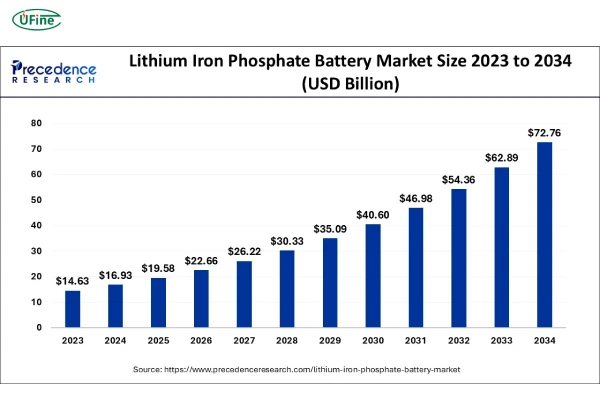
China’s battery dominance didn’t happen by accident—it was the result of long-term planning and aggressive policy support.
Key Government Moves:
-
2009 “Ten Cities, Thousand Vehicles” Program: Subsidized early EV adoption, creating demand for batteries.
-
2015 “Made in China 2025” Plan: Listed batteries as a national priority, pouring billions into R&D.
-
2020 “Dual Carbon” Goals: Pledged to peak emissions by 2030 and go carbon-neutral by 2060, turbocharging green tech investments.
The Subsidy Effect:
-
Between 2016-2022, China spent $57 billion on EV subsidies.
-
LFP batteries got extra incentives due to their safety and lower cost.
-
Result? By 2023, 60% of China’s EVs used LFP batteries vs. just 30% in the U.S.
While Western automakers chased high-performance (but expensive and flammable) nickel-cobalt batteries, China bet big on practical, scalable LFP tech—a decision that now looks brilliant.
Part 3. Supply chain domination: from mines to megafactories
Why China Leads the Lithium Iron Phosphate Battery Market
China’s dominance didn’t come from a single advantage. It came from alignment—policy, industry, and market demand moving in the same direction for years.
1 A Supply Chain That Actually Works End-to-End
When people say “China dominates LFP,” they often underestimate what that really means.
China doesn’t just assemble cells. It controls:
- Supply Chain Stage China’s Position
- Lithium refining ~70% of global capacity
- Phosphate processing ~80%+
- Anode graphite Global leader
- LFP cathode materials Over 70% share
- Cell & pack manufacturing Unmatched scale
This is why lithium iron phosphate battery China pricing remains structurally lower—not temporarily cheaper.
If you want a clearer picture of how LFP cells are actually made at scale, this overview of the battery production process breaks down each key step from materials to finished packs.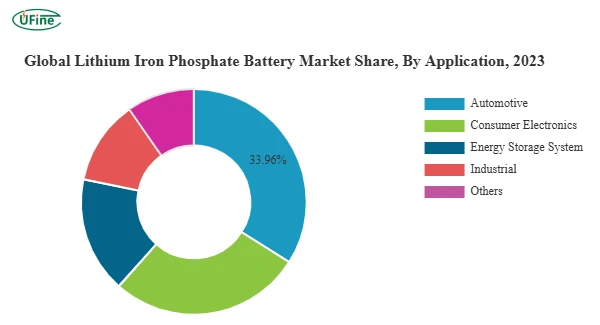
What truly sets China apart is its complete control over the battery supply chain—something no other country has matched.
For deeper context on global battery supply chains, see the Global Supply Chains of EV Batteries’ analysis.
2 Manufacturing Monopoly
-
Cathode Production: Firms like Hunan Yuneng & Dynanonic supply 70% of global LFP cathode materials.
-
Cell Production: CATL and BYD operate mega-factories with 200+ GWh annual capacity (enough for 3 million EVs).
-
Cost Advantage: Chinese LFP cells cost 100+ in the U.S./Europe.
While the U.S. and EU struggle to build battery supply chains, China’s is already built, optimized, and scaling faster every year.
Part 4. Breakthrough innovations: how China out-invented the competition
China didn’t just copy LFP tech—it reinvented it, filing over 60% of global LFP patents since 2015.
Game-Changing Advances:
| Innovation | Company | Impact |
|---|---|---|
| CTP (Cell-to-Pack) | CATL | Boosts energy density 50% by eliminating modules |
| Blade Battery | BYD | Makes batteries 30% thinner, safer, and cheaper |
| M3P Chemistry | CATL | Adds manganese to increase range 15% |
Energy Density Leap:
-
2015 LFP: ~120 Wh/kg (too weak for most cars)
-
2024 LFP: 200+ Wh/kg (now used in Tesla Model 3, Ford Mustang Mach-E)
These innovations closed the performance gap with nickel batteries—without the cost or fire risks.
Part 5. The cost war: how china crushed competitors on price
Innovation Didn’t Stop — It Compounded
A common misconception is that China “wins on cost but lags on technology.” In LFP, the opposite is true.
Companies like CATL and BYD didn’t just scale LFP—they re-engineered it.
When discussing safety-oriented innovation in China, it helps to look at a real-world example like the BYD Blade Battery, which shows how structural design reshaped LFP performance.
Instead of chasing exotic chemistries, they focused on manufacturable breakthroughs: structural pack designs, simplified architecture, and material optimization. The result? Modern LFP cells now exceed 200 Wh/kg, making them viable for mainstream EVs worldwide—including models sold by Tesla.
For buyers, this means today’s China LFP battery is not the same product it was five years ago.
LFP batteries are inherently cheaper (no cobalt/nickel), but China’s scale and efficiency made them dirt-cheap.
Cost Breakdown (2024):
| Component | China Cost | U.S./EU Cost |
|---|---|---|
| Cathode (LFP) | $12/kg | $18+ |
| Cell Production | $70/kWh | $100+ |
| Pack Assembly | $85/kWh | $120+ |
How China Does It:
-
Vertical Integration: Companies like CATL control everything from mines to finished batteries.
-
Gigafactories: A single CATL plant produces 80 GWh/year (equal to ALL U.S. battery output).
-
Labor & Energy Costs: China’s manufacturing ecosystem is 40% cheaper than the West.
A 25,000BYDEV withLFPbatteriesis 25,000BYDEV withLFPbatteriesis 10,000+ cheaper than comparable Western models.
Part 6. The home market advantage: 9 million EVs and counting
China’s massive domestic demand gives its battery makers an unbeatable edge.
By the Numbers:
- EV Sales (2023): 9.5 million (vs. 1.4M in U.S., 2.6M in Europe)
- Battery Demand: 400+ GWh/year (growing 30% annually)
- Energy Storage Boom: 180 GWh deployed in 2023 (90% LFP)
Tesla’s Pivot:
- In 2021, Tesla started using CATL’s LFP batteries in half its global cars.
- Why? 20% cost savings and zero fire recalls.
The Lesson: When your home market is 10x bigger, you can scale faster and innovate cheaper.
Scale Creates Cost — And Then Reinforces It
Once China’s EV market crossed critical mass, everything accelerated.
In 2023 alone, China sold over 9 million electric vehicles. Most of them used LFP batteries.
That matters because the lfp battery share in Chinese car manufacturing directly feeds:
- Higher production yields
- Faster learning curves
- Lower defect rates
- Continuous cost reduction
When your domestic market absorbs hundreds of gigawatt-hours annually, optimization becomes inevitable.
Part 7. Safety & sustainability: The hidden reasons LFP is winning
While nickel batteries grab headlines for fires and recalls, LFP batteries offer rock-solid safety—and greener credentials.
Safety Edge:
-
Thermal Runaway Risk: Near zero (vs. 1 in 10 million for nickel batteries)
-
Real-World Test: BYD’s Blade Battery doesn’t catch fire even when nailed or crushed.
Eco-Advantages:
-
No Cobalt/Nickel: Avoids child labor and toxic mining issues.
-
Recycling: Simpler and 50% cheaper than nickel batteries.
-
EU Compliance: Meets strict 2027 battery recycling laws effortlessly.
Why Automakers Care: After Chevy Bolt fires and Ford recalls, brands like VW are switching to LFP for risk-free EVs.
For a deeper technical explanation of why LFP chemistry is inherently safer, this analysis of LiFePO4 thermal runaway explains the causes, risks, and mitigation strategies in detail.
Part 8. The future: sodium, global factories, and beyond
The Bottom Line: China’s lead isn’t shrinking—it’s accelerating.
China’s position in the global LFP battery market is not static—it’s expanding outward.
Manufacturers are building factories in Europe, Southeast Asia, and South America, exporting not just cells but manufacturing logic. Even as production localizes, technology, materials, and process know-how remain rooted in China.
What’s Coming:
-
Sodium-Ion Batteries:
-
30% cheaper than LFP
-
CATL plans mass production by 2025
-
-
Global Expansion:
-
CATL building $7B factory in Hungary
-
BYD plants in Brazil, Thailand, Europe
-
-
Performance Gains:
-
250 Wh/kg LFP by 2026 (matching today’s nickel batteries)
-
For you, this creates a clear reality:
If you work with LFP batteries today—or plan to—you are already operating within an ecosystem shaped by China.
The smart question is no longer “Why China?”
It’s “How do I work with this supply chain strategically?”
Part 9. Conclusion: Can anyone catch China?
China’s LFP dominance stems from a 20-year strategy combining:
✅ Government vision
✅ Supply chain control
✅ Relentless innovation
✅ Unmatched scale
For the U.S. and Europe to compete, they’ll need decades of investment in mines, refineries, and gigafactories. Until then? The battery of the future is made in China—and the world is buying it.
The LFP story proves that in clean tech, scale and execution beat flashy breakthroughs. And right now, no one executes like China.
Part 10. FAQs
Why are LFP batteries more popular in China than in other regions?
China prioritizes affordability, safety, and large-scale deployment. LFP batteries align well with these goals, especially for mass-market EVs and energy storage systems.
Are China-made LFP batteries suitable for international standards?
Yes. Most Chinese LFP batteries exported today are designed to meet or exceed IEC, UL, and EU battery regulations, especially for EV and ESS applications.
How does China’s EV market influence global LFP battery pricing?
China’s massive domestic EV demand allows manufacturers to operate at scale, lowering per-unit costs and stabilizing global LFP battery prices.
Is the LFP battery market still growing, or already saturated?
The LFP battery market is still expanding, driven by entry-level EVs, commercial vehicles, and grid-scale energy storage rather than premium passenger cars.
What applications benefit most from China LFP batteries?
LFP batteries from China are widely used in electric cars, buses, forklifts, solar storage systems, and backup power due to their long cycle life and safety.
Does choosing LFP batteries mean sacrificing performance?
Not anymore. Advances in cell design and pack architecture have significantly narrowed the energy density gap between LFP and nickel-based batteries.
Related Tags:

More Articles
Learn LiHv battery voltage range, minimum voltage, charging limits and LiHv vs LiPo differences. A practical guide for drones, RC, and high-performance devices.
Gravity Battery vs. Traditional Battery: A Comparative Analysis
2026 comparison of gravity batteries and traditional batteries. Learn efficiency, lifespan, cost per kWh, and best applications for grid energy storage.
What Are 6V Batteries? A Complete Guide to Their Types and Uses
Learn what a 6V battery is, common 6 volt battery types, real-world uses, selection tips, and FAQs to choose the right 6V battery.
How to Choose the Perfect Battery Box for Any Battery
Learn which battery box suits your battery type, size, and application. Keep your battery safe, organized, and long-lasting.
What Does C Mean in Batteries? (Battery C Rating Explained for Engineers & Buyers)
Learn what C rating means in batteries, how to calculate battery C rate, C rating charts, examples, and how to choose the right C rating for your application.


