- Key Takeaways
- Part 1. What is a high voltage battery?
- Part 2. How high voltage batteries work
- Part 3. Types of high voltage battery cells
- Part 4. High voltage battery technical comparison
- Part 5. Applications of high voltage batteries
- Part 6. How to choose the right high voltage battery
- Part 7. High voltage battery maintenance
- Part 8. Future trends in high voltage battery technology
- Part 9. FAQs about high voltage batteries
High voltage batteries are the backbone of many modern power systems. They power electric vehicles, renewable energy storage, robotics, industrial equipment, and aerospace technologies.
Compared with traditional 12V or 48V batteries, high voltage battery systems deliver more power with higher efficiency and lower current loss. This makes them essential for applications that require large energy output, long runtime, and fast charging.
In this guide, you will learn:
- What a high voltage battery is and how it works
- The main high voltage battery cell chemistries used today
- Key applications such as EVs and energy storage systems
- Important selection factors, safety practices, and maintenance tips
Key Takeaways
- A high voltage battery usually refers to systems above 48V, while EV and grid storage systems typically operate between 400V and 800V.
- High voltage battery systems reduce current and improve efficiency, which is critical for electric vehicles and large energy storage installations.
- The most common high voltage battery cell types include Li-ion, LiFePO4, NCM, and NCA, each optimized for different performance priorities.
- Proper BMS design, thermal management, and protection circuits are essential to ensure safety and long battery life.
- Applications range from electric vehicles and renewable energy storage to industrial power systems and aerospace technologies.
Part 1. What is a high voltage battery?
A high voltage battery is a rechargeable energy storage system that operates at voltages above 48V, typically ranging from 100V to 800V in modern designs.
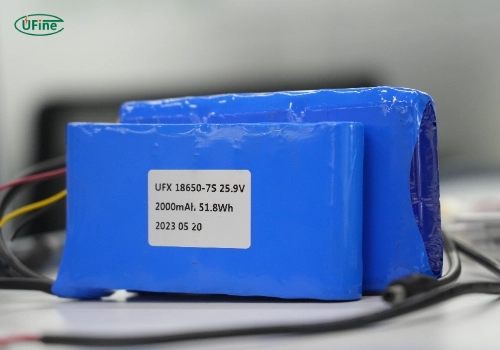
These systems are built by connecting many high voltage battery cells in series to increase the overall voltage.
For example:
| Cells in Series | Voltage per Cell | Total Voltage |
|---|---|---|
| 12 cells | 3.7V | 44.4V |
| 100 cells | 3.7V | 370V |
| 200 cells | 3.7V | 740V |
This architecture allows high voltage batteries to deliver large power output while reducing current, which improves efficiency and lowers heat generation.
Typical high voltage battery systems include:
- Electric vehicle battery packs (300V–800V)
- Solar energy storage systems (200V–1500V)
- Industrial power systems
- Grid-scale energy storage
1 Advantages and limitations of high voltage batteries
Advantages
- Higher System Efficiency
High voltage systems use lower current to deliver the same power, reducing electrical losses in cables and components. - Faster Charging Capability
Many modern EV platforms use 800V high voltage batteries, which enable ultra-fast charging with reduced heat generation. - Higher Power Output
A battery high voltage system can deliver large bursts of power, which is essential for:- EV acceleration
- Industrial machines
- Aerospace systems
- Compact System Design
Higher voltage allows designers to reduce conductor size and improve energy density, making systems lighter and more compact.
Limitations
- Higher System Complexity
High voltage batteries require:- Advanced battery management systems (BMS)
- Thermal management
- Safety isolation
- Higher Initial Cost
High voltage battery systems involve more engineering, specialized components, and safety features. - Strict Safety Requirements
Because of the higher voltage levels, systems must follow safety standards such as:- IEC battery safety standards
- UL battery certification
- transportation testing like UN 38.3
You can learn more about voltage differences in this guide: High Voltage Battery vs Low Voltage Battery
Part 2. How high voltage batteries work
A high voltage battery system stores and releases energy through electrochemical reactions inside battery cells.
The core components include:
- Battery Cells
Each high voltage battery cell produces a small voltage (typically 3.2V–3.7V). Cells are connected in series to create higher system voltage. - Electrodes
Anode (negative electrode) stores lithium ions during charging. Cathode (positive electrode) releases ions during discharge. The movement of ions generates electrical current. - Electrolyte
The electrolyte allows lithium ions to move between electrodes, enabling the charge and discharge process. - Battery Management System (BMS)
A BMS monitors:- Voltage
- Temperature
- Charge state
- Cell balancing
- Battery Pack Architecture
High voltage battery systems also include:- Thermal cooling systems
- High-voltage connectors
- Safety contactors
- Insulation monitoring devices
Part 3. Types of high voltage battery cells
Different battery chemistries offer different balances between energy density, safety, lifespan, and cost.
1 Lithium-ion (Li-ion)
Voltage per cell: 3.6–3.8V
Energy density: 250–300 Wh/kg
Cycle life: 500–1500 cycles
Li-ion batteries are widely used in:
- consumer electronics
- drones
- electric vehicles
They offer high energy density and lightweight design but require careful thermal management.
2 Lithium iron phosphate (LiFePO4)
Voltage per cell: 3.2–3.3V
Energy density: 90–160 Wh/kg
Cycle life: 2000–7000 cycles
LiFePO4 batteries are known for:
- excellent safety
- long lifespan
- stable thermal performance
They are widely used in solar storage and industrial high voltage battery systems.
3 Nickel cobalt manganese (NCM)
Voltage per cell: 3.6–3.7V
Energy density: 150–220 Wh/kg
Cycle life: 1000–2000 cycles
NCM batteries offer a balanced mix of:
- high energy density
- reasonable cost
- good power capability
They are common in electric vehicles and high-performance battery packs.
4 Nickel cobalt aluminum (NCA)
NCA batteries provide:
- very high energy density
- strong power output
They are used in some long-range EV battery platforms but require advanced thermal management.
5 Solid-state batteries (emerging)
Expected voltage: 3.8–4.5V per cell
Expected energy density: 300–400 Wh/kg
Solid-state batteries replace liquid electrolytes with solid materials, which may improve:
- safety
- energy density
- fast-charging capability
Large-scale commercialization is expected later this decade.
Part 4. High voltage battery technical comparison
| Battery Type | Voltage per Cell | Energy Density | Cycle Life | Cost per kWh | Best Applications |
|---|---|---|---|---|---|
| Li-ion | 3.6–3.8V | 250–300 Wh/kg | 500–1500 | $120–$150 | EVs, electronics |
| LiFePO4 | 3.2–3.3V | 90–160 Wh/kg | 2000–7000 | $90–$130 | Solar storage, industrial |
| NCM | 3.6–3.7V | 150–220 Wh/kg | 1000–2000 | $110–$140 | EVs, power tools |
| Solid-state* | 3.8–4.5V | 300–400 Wh/kg | 1000+ | $200+ | next-generation EVs |
*Estimated based on prototype systems.
Part 5. Applications of high voltage batteries
High voltage batteries are used across many industries that require large power output and high energy capacity.
1 Electric vehicles (EVs)
Modern EVs typically use 400V or 800V high voltage battery systems to power electric motors and enable fast charging.
Examples include:
- Tesla EV platforms
- Porsche Taycan 800V architecture
These systems improve efficiency and reduce charging time.
2 Renewable energy storage
Solar and wind energy systems often rely on high voltage battery banks to store excess energy for later use.
Typical applications:
- solar farms
- microgrids
- residential solar storage
- grid-scale energy storage
3 Uninterruptible power supply (UPS)
High voltage batteries provide backup power for critical infrastructure, such as:
- hospitals
- data centers
- telecommunications systems
They ensure continuous operation during power outages.
4 Aerospace and defense
High voltage battery systems power:
- satellites
- unmanned aerial vehicles (UAVs)
- advanced aircraft systems
These applications require high energy density and reliability.
For additional technical background on battery technologies, see: How Lithium-ion Batteries Work
Part 6. How to choose the right high voltage battery
Selecting the right battery depends on several engineering factors.
1 Energy and power requirements
Determine:
- required runtime
- peak power demand
- charging speed requirements
This helps determine the appropriate battery capacity and chemistry.
2 Voltage architecture
Different systems require different voltage ranges:
| Application | Typical Voltage |
|---|---|
| E-bikes | 36–72V |
| Industrial equipment | 100–400V |
| Electric vehicles | 400–800V |
| Grid storage | 600–1500V |
3 Cycle life
If the system requires frequent charge and discharge cycles, LiFePO4 batteries may be the best choice.
4 Safety design
Look for batteries with:
- advanced BMS
- thermal protection
- short-circuit protection
- cell balancing systems
5 Total cost of ownership
Consider:
- initial battery cost
- maintenance needs
- replacement cycle
- system integration costs
Part 7. High voltage battery maintenance
Proper maintenance improves safety and extends battery life.
- Use Proper Charging Equipment
Always use chargers designed for the specific battery chemistry and voltage range. - Control Operating Temperature
Most lithium batteries perform best between 15°C and 35°C. - Monitor Cell Balance
Cell voltage differences greater than 0.1V may indicate balancing issues. - Inspect Electrical Connections
Loose or corroded terminals increase resistance and heat generation. - Store Batteries Correctly
For long-term storage: charge to around 40–60%, keep batteries in a cool, dry environment. - Follow Recycling Regulations
Lithium batteries must be recycled through certified facilities.
For recycling guidelines see: Used Lithium-Ion Batteries
Part 8. Future trends in high voltage battery technology
Battery technology continues to evolve rapidly.
Key trends include:
- 800V EV Platforms
More EV manufacturers are adopting 800V architectures to support ultra-fast charging. - Cell-to-Pack Design
New battery pack designs remove modules, improving energy density and reducing cost. - Solid-State Battery Development
Solid electrolytes could significantly improve safety and energy density. - Sodium-Ion Batteries
Lower-cost sodium batteries may be used in large stationary storage systems. - AI-Driven Battery Management
Machine learning algorithms are being used to predict battery health and optimize charging strategies.
Part 9. FAQs about high voltage batteries
What voltage is considered a high voltage battery?
Most industries consider batteries above 48V to be high voltage. Electric vehicles typically use 400V or 800V battery systems.
How long do high voltage EV batteries last?
Most EV high voltage batteries maintain 70–90% capacity after 8–10 years, depending on usage and charging habits.
Are higher voltage batteries more efficient?
Yes. A battery with higher voltage reduces current, which lowers energy losses and improves system efficiency.
What is the highest voltage battery used today?
Some grid-scale battery storage systems exceed 1000V, while many modern EV platforms operate around 800V.
Can LiFePO4 batteries be used in high voltage systems?
Yes. Multiple LiFePO4 battery cells connected in series can create high voltage battery packs used in solar storage, EVs, and industrial equipment.
Related Tags:

More Articles

JST vs Molex: The Right Battery Connector Choice
JST or Molex for your battery? Learn how connector selection affects current, voltage drop, reliability, and device performance.
Custom Battery Pricing: Costs Manufacturers Don’t Mention
A low battery quote may not be the final cost. Discover common hidden expenses that affect custom lithium battery projects.
Battery Wire Length: Hidden Cause of Power Loss
A longer battery wire can cause voltage drop, power loss, and unstable operation. Learn how wire length affects battery performance.
How Device Sleep Modes Affect Battery Life
Think sleep mode extends battery life? Learn why devices still drain power and how firmware, hardware, and batteries affect runtime.
LiPo Battery and PCB Design: Clearance, Insulation, and Placement
Learn how to optimize LiPo battery PCB clearance, insulation, placement, wiring, and thermal design—and avoid common integration mistakes.