- Part 1. What is a 12V lithium deep cycle battery?
- Part 2. 12v Lithium deep cycle batteries advantages
- Part 3. 12V lithium battery lifespan explained
- Part 4. What affects lithium battery lifespan?
- Part 5. Depth of discharge and cycle life
- Part 6. Why real-world lifespan is different from lab ratings
- Part 7. Lithium vs lead-acid lifespan comparison
- Part 8. Temperature and environmental impact
- Part 9. Lithium deep cycle 12v battery charger
- Part 10. How to choose the right 12V lithium battery
- Part 11. FAQs
If you’re considering switching to a 12V lithium deep cycle battery, you’re probably asking one main question: How long will it actually last?
Because unlike traditional lead-acid batteries, lithium batteries aren’t just a small upgrade — they’re a completely different technology. They behave differently, age differently, and perform differently over time.
This guide breaks down what really affects 12V lithium battery lifespan, how long they last in real-world use, and how you can make yours last even longer.
Key takeaways
- A 12V lithium battery lifespan typically ranges from 8 to 15 years depending on usage and conditions
- Cycle life alone doesn’t tell the whole story — calendar life matters too
- Depth of discharge, temperature, and charging habits have the biggest impact on lifespan
- A 12 volt deep cycle lithium battery usually lasts 3–5x longer than lead-acid
- Real-world lifespan varies depending on applications like RV, solar, or marine
- Choosing the right battery size and quality directly affects longevity
Part 1. What is a 12V lithium deep cycle battery?
A 12V lithium deep cycle battery is designed to provide steady power over long periods, rather than short bursts like starter batteries.
This is where the term deep cycle lithium battery comes in. Unlike starter batteries that discharge only 5–10%, deep cycle batteries are built to handle 80%–100% discharge repeatedly without damaging the battery.
That makes them ideal for:
- RV power systems
- Solar energy storage
- Marine electronics
- Off-grid applications
In other words, if you’re running appliances, lights, or electronics for hours — you’re using a deep cycle battery.
And this is exactly where lithium technology shines.
Part 2. 12v Lithium deep cycle batteries advantages
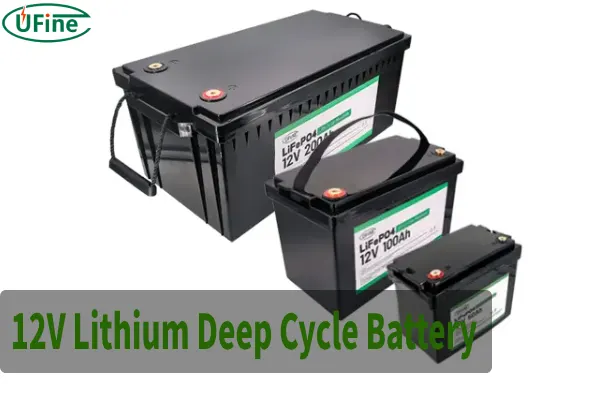
Why choose a 12V lithium deep cycle battery over other types? Here are some compelling reasons:
- Longer Lifespan: These batteries last much longer than traditional options.
- Lightweight: They’re significantly lighter, making them easier to transport and install.
- Higher Efficiency: More efficient in both energy usage and charging.
- Low Maintenance: They require minimal maintenance compared to lead-acid batteries.
- Consistent Power: They deliver steady power output throughout their discharge cycle.
- Fast Charging: They charge quicker, saving you time and energy.
These advantages make 12V lithium deep cycle batteries an excellent choice for anyone looking for reliable and efficient power solutions. Whether you’re out on the open road in an RV or harnessing solar energy, these batteries are built to perform.
Part 3. 12V lithium battery lifespan explained
When people talk about 12V lithium battery lifespan, they’re usually referring to cycle life. But in reality, there are two different lifespan metrics that matter.
Cycle life refers to how many charge and discharge cycles a battery can handle.
Calendar life, on the other hand, refers to how long the battery lasts over time — even if you don’t use it often.
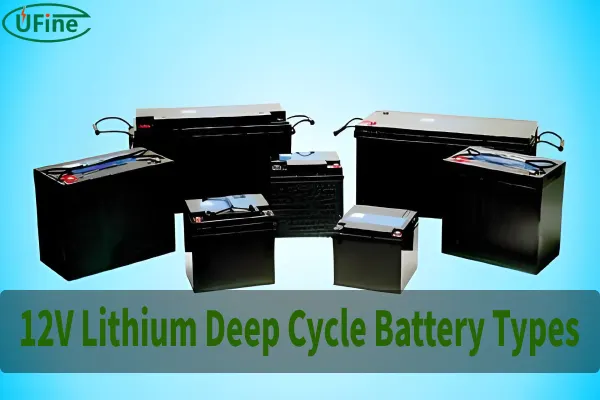
Here’s how they typically compare:
| Battery Type | Cycle Life | Calendar Life |
|---|---|---|
| Lead-acid | 300–500 cycles | 3–5 years |
| AGM | 500–800 cycles | 4–6 years |
| Lithium deep cycle battery | 3,000–6,000 cycles | 8–15 years |
This is why 12 volt lithium batteries are becoming so popular. You’re not just getting more cycles — you’re getting years of extra service life.
And that difference becomes even more noticeable in demanding applications like solar or RV systems.
Part 4. What affects lithium battery lifespan?
Not all lithium batteries last the same amount of time. Even the best battery can degrade faster if used incorrectly.
Several factors play a major role in determining how long your 12V lithium deep cycle battery will last.
First, depth of discharge (DoD) has a huge impact. The deeper you discharge the battery, the more stress you place on the cells.
Second, temperature plays a surprisingly large role. Heat accelerates battery aging, while extreme cold can reduce performance.
Third, charging habits matter more than many people realize. Frequent fast charging and improper chargers can shorten lifespan.
Finally, battery quality and BMS design determine how well the battery protects itself.
These factors work together, which is why real-world lifespan often differs from lab ratings.
You can learn more about how depth of discharge impacts longevity in our guide on battery DoD and battery life.
Part 5. Depth of discharge and cycle life
Depth of discharge is one of the most important — yet often overlooked — factors affecting lithium battery lifespan.
Here’s a simplified comparison:
| Depth of Discharge | Estimated Cycle Life |
|---|---|
| 100% | 2,000–3,000 cycles |
| 80% | 3,000–5,000 cycles |
| 50% | 5,000–7,000 cycles |
What this means is simple:
Using only part of your battery capacity can dramatically extend lifespan.
This is why many solar and RV systems intentionally oversize battery capacity — not just for runtime, but for longevity.
Part 6. Why real-world lifespan is different from lab ratings
Manufacturers test batteries under ideal laboratory conditions:
- Stable temperature
- Controlled charging
- Moderate loads
- Perfect maintenance
But in the real world, things look different.
Your RV may sit in the sun.
Your boat may face saltwater humidity.
Your solar system may run heavy loads daily.
All of these variables influence battery aging.
That’s why it’s more helpful to think in real-world lifespan estimates instead of just cycle numbers.
Part 7. Lithium vs lead-acid lifespan comparison
One of the most common upgrade questions is whether lithium batteries are worth the higher upfront cost.
From a lifespan perspective, the answer is usually yes.
Lead-acid batteries typically last only a few hundred cycles. Lithium batteries often last thousands. Over time, that difference becomes significant.
In addition, lithium batteries offer:
- Higher usable capacity
- Faster charging
- Lower weight
- No maintenance
When you factor in replacement costs, lithium batteries often end up cheaper over the long term.
Part 8. Temperature and environmental impact
Temperature is another critical factor in lithium deep cycle battery lifespan.
High temperatures accelerate chemical aging inside the battery. Over time, this reduces capacity and performance.
Cold temperatures create a different challenge. Charging lithium batteries below freezing can cause lithium plating, which permanently damages the battery.
Most high-quality batteries include a Battery Management System (BMS) to protect against these risks.
A well-designed BMS typically handles:
- Overcharge protection
- Over-discharge protection
- Temperature monitoring
- Cell balancing
This is one of the biggest differences between premium and budget lithium batteries.
For a deeper look at environmental impact, see our article on temperature and battery performance.
Part 9. Lithium deep cycle 12v battery charger
Now, let’s talk about chargers. Using the right charger is crucial for maintaining your 12V lithium deep cycle battery and ensuring it lasts as long as possible. Here’s what you need to know:
- Designed for Lithium Batteries: Make sure you get a charger specifically designed for lithium batteries. Using the wrong type can damage your battery.
- Multi-Stage Charging: A good charger will have multiple stages of charging (like bulk, absorption, and float) to optimize battery performance and longevity.
- Temperature Compensation: Look for chargers that adjust based on temperature. This feature prevents overcharging in warm weather and undercharging in cold weather.
- Automatic Shutoff: This feature stops the charging process once the battery is fully charged, preventing overcharging and potential damage.
Investing in a high-quality charger can make a big difference in how well your battery performs and how long it lasts.
Part 10. How to choose the right 12V lithium battery
Choosing the right battery isn’t just about capacity — it’s about lifespan too.
When selecting a 12V lithium deep cycle battery, you should consider:
- Capacity (Ah)
- Continuous discharge rate
- Temperature protection
- Warranty length
- Brand reliability
For example, RV users often choose 100Ah to 300Ah systems, while solar users may require larger battery banks.
Oversizing slightly can reduce stress and extend battery lifespan.
Part 11. FAQs
1. Can you leave a 12V lithium battery on the charger?
Yes. Most modern lithium batteries include a BMS that prevents overcharging. However, using a charger designed specifically for lithium chemistry is still recommended for optimal lifespan.
2. Can I replace a lead-acid battery with a 12V lithium battery directly?
In many cases, yes. But you should check charger compatibility, charging voltage, and whether your system supports lithium batteries.
3. Do 12 volt lithium batteries require maintenance?
No routine maintenance is required. Unlike lead-acid batteries, you don’t need to add water or perform equalization charging.
4. Are cheaper 12V lithium batteries shorter-lived?
Often yes. Lower-quality batteries may use lower-grade cells or basic BMS protection, which can reduce cycle life and reliability.
5. Can partial charging extend lithium battery lifespan?
Yes. Keeping the battery between roughly 20% and 80% state of charge can reduce stress and help extend overall lifespan.
6. Do larger capacity lithium batteries last longer?
Not necessarily, but they are often discharged less deeply in use, which can indirectly extend their lifespan.
Related Tags:

More Articles

The Ultimate Guide to Small Size Battery
Learn small battery types, sizes, and applications. Compare lithium, alkaline, and coin cells. Find the best small size battery for your device or project.
Lithium Battery Comparison: Soft Pack Vs. Hard Pack
Compare soft pack vs hard pack lithium battery. Understand structure, safety, energy density, and applications to choose the right battery.
What Size are 18650 Batteries?
Learn exact 18650 battery dimensions (18mm × 65mm), tolerances, and pack configurations. Compare 18650 size with 21700 and others for better battery selection.
The Ultimate Guide to Battery Terminal Clamps
Learn battery terminal clamps, including types, materials, installation, and how to choose the right battery clamp for car and industrial use.
What Is a Lithium-Ion Battery Pack?
Learn what a lithium ion battery pack is, how it works, key components, configurations, and real-world applications for industrial and commercial use.