- Part 1. What battery corrosion actually is
- Part 2. What battery corrosion looks like
- Part 3. Lithium battery corrosion vs alkaline battery corrosion
- Part 4. Tools you need before cleaning
- Part 5. How to clean battery corrosion step by step
- Part 6. Can you still use a corroded battery
- Part 7. How to inspect device damage after corrosion
- Part 8. How to prevent battery corrosion during storage
- Part 9. Professional repair vs DIY
- Part 10. How to dispose of a corroded battery
- Part 11. FAQs
Battery corrosion usually starts as something small—a little white powder in a TV remote, a rusty spring in a flashlight, or blue-green buildup on a car battery terminal. At first, it looks harmless. Then suddenly, the device stops working, the battery gets stuck, or worse, the corrosion spreads into the battery compartment and damages the contacts.
In this guide, you will learn how to remove battery corrosion safely, how to tell whether a corroded battery should be cleaned or replaced, and how to prevent the problem from happening again.
Key takeaways
- White powder on household batteries usually comes from alkaline leakage, not “rust”
- Blue-green corrosion on battery terminals is often caused by chemical reactions involving metal contacts
- A battery spring rusted inside a device can sometimes be repaired, but severe damage often means replacement
- Baking soda works best for car battery terminal corrosion, while vinegar is often better for alkaline battery residue
- Swollen lithium batteries, leaking lithium packs, or burned terminals should never be cleaned and reused
- Preventing corrosion is much easier—and cheaper—than repairing damaged electronics later
Part 1. What battery corrosion actually is
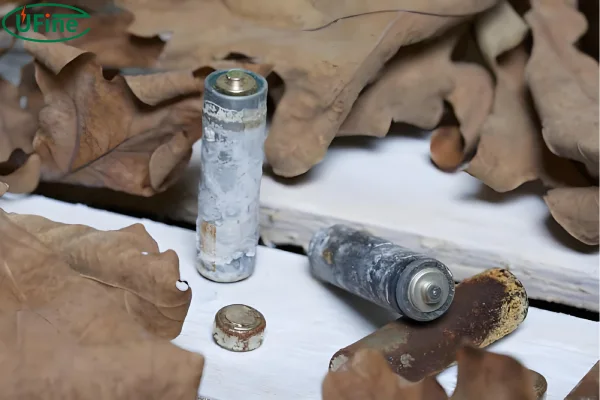
Battery corrosion is not always rust in the traditional sense. In most cases, it is a chemical reaction between battery leakage, moisture, oxygen, and metal contacts.
For example, when alkaline batteries leak, they release potassium hydroxide. After exposure to air, this often turns into a white, crusty powder that people describe as “battery corrosion.”
Car batteries are different. Lead-acid batteries often develop blue, white, or green corrosion around the terminals because sulfuric acid vapors react with copper and surrounding metals.
Lithium battery corrosion is different again. Lithium batteries usually do not create the same white powder seen in AA batteries. Instead, corrosion often appears around terminals, connectors, or external contact points due to moisture, oxidation, or poor storage conditions.
That is why simply searching “how to get rid of battery corrosion” can be misleading—because the right cleaning method depends on what kind of battery you are dealing with.
Part 2. What battery corrosion looks like
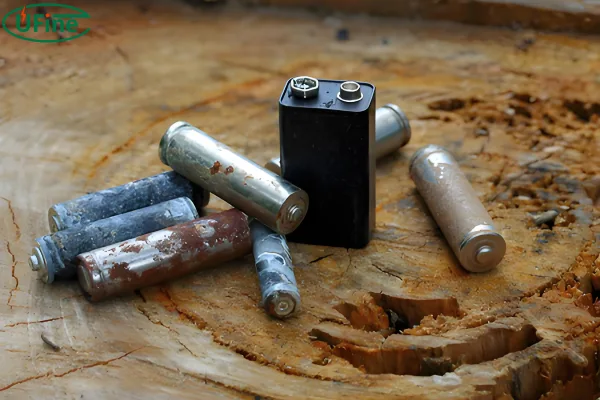
Many people assume corrosion means obvious rust, but early-stage corrosion is often subtle.
You might notice:
| Corrosion appearance | Common cause | Typical battery type |
|---|---|---|
| White powder or crust | Alkaline leakage residue | AA / AAA / household batteries |
| Blue-green buildup | Copper sulfate reaction | Car battery terminals |
| Brown or orange rust | Moisture exposure | Battery springs / metal contacts |
| Black burn marks | Overheating or arcing | Lithium packs / damaged terminals |
| Sticky residue | Electrolyte leakage | Damaged rechargeable batteries |
A battery spring rusted inside a remote or flashlight is especially common. It usually starts with moisture plus battery leakage, and over time, the spring loses conductivity.
Sometimes the battery is fine—the spring is the real problem.
Part 3. Lithium battery corrosion vs alkaline battery corrosion
This is one of the biggest areas of confusion.
People often search “lithium battery corrosion” expecting the same white powder found in old remotes, but lithium batteries behave differently.
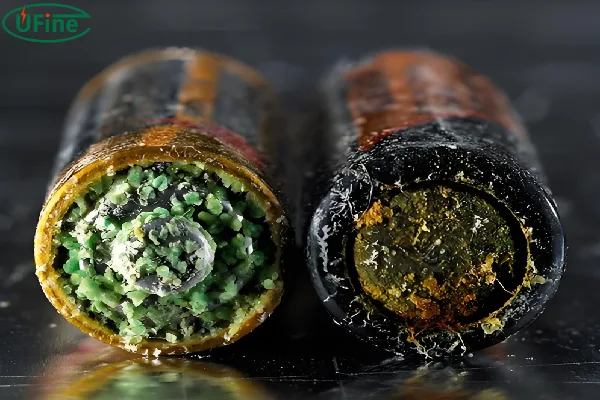
Alkaline batteries leak alkaline electrolyte, which creates visible white deposits. Lithium batteries are less likely to leak that way. Instead, corrosion usually forms on terminals due to oxidation, humidity, damaged seals, or improper charging environments.
If you are dealing with LiFePO4 batteries, RV batteries, marine batteries, or solar storage systems, corrosion is more commonly found on the terminal connections rather than inside the battery itself.
That means cleaning the terminal may solve the issue—but if the battery is swollen, hot, leaking fluid, or smells burnt, cleaning is no longer the solution. Replacement is.
If you’re comparing leakage risks and long-term storage performance, our guide on lithium vs alkaline batteries explains which battery type is less likely to develop corrosion problems.
Part 4. Tools you need before cleaning
Before you remove battery corrosion, prepare properly. Rushing with the wrong tools often causes more damage than the corrosion itself.
You usually need:
- Rubber gloves and safety glasses
- Cotton swabs or microfiber cloth
- Old toothbrush or terminal brush
- White vinegar or baking soda
- Isopropyl alcohol
- Fine sandpaper for battery spring rusted contacts
- Multimeter for testing after cleaning
One mistake people make is using metal screwdrivers to scrape corrosion aggressively. This can damage terminals, especially on lithium battery connectors and delicate electronics.
Gentle cleaning is almost always better.
Cleaning methods compared
Not every cleaner works for every problem.
| Cleaning method | Best for | Avoid when |
|---|---|---|
| White vinegar | Alkaline battery corrosion | Car battery acid corrosion |
| Baking soda | Car battery terminals | Sensitive electronics interiors |
| Isopropyl alcohol | Final moisture removal | Heavy corrosion removal alone |
| Contact cleaner | Electronic terminals | Severe chemical leakage |
| Sandpaper | Rusted battery springs | Delicate lithium connectors |
One important warning: never mix baking soda and vinegar together expecting a stronger cleaner. They neutralize each other and reduce effectiveness.
Part 5. How to clean battery corrosion step by step
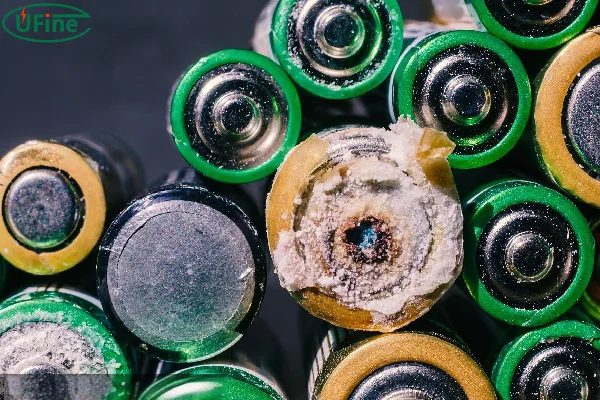
The safest method depends on the battery type.
For household batteries like AA, AAA, remotes, toys, and flashlights, vinegar is often effective because it helps neutralize alkaline residue.
For car battery terminals, baking soda is usually better because it helps neutralize acid-related corrosion.
1 For household batteries
First, remove the batteries carefully. If the battery is stuck because of corrosion, do not force it with excessive pressure.
Dip a cotton swab in white vinegar and gently apply it to the white crust. You may notice fizzing—that is normal.
Let it sit briefly, then use a toothbrush to loosen the residue. Wipe everything dry and follow with a small amount of isopropyl alcohol to remove moisture.
If the battery spring is rusted, use very light sandpaper to restore metal contact.
2 For car battery terminals
Disconnect the battery safely, starting with the negative terminal.
Mix baking soda with a little water to form a paste. Apply it to the corroded terminal and let the reaction work. Use a terminal brush to clean the buildup.
After cleaning, rinse lightly, dry completely, and apply terminal protector spray or dielectric grease to reduce future corrosion.
For terminal maintenance and replacement, understanding different battery terminal connectors can help you identify corrosion points and improve connection reliability.
Part 6. Can you still use a corroded battery
Sometimes yes. Sometimes absolutely not.
If the corrosion is light and only affects the terminal surface, cleaning may restore normal function.
However, if you see swelling, liquid leakage, cracked casing, black burn marks, or melted contacts, the battery should be replaced immediately.
This is especially important for lithium batteries. A swollen lithium battery is not a cleaning project—it is a safety risk.
Think of it this way: if the battery itself is damaged, cleaning the outside does not fix the internal danger.
Part 7. How to inspect device damage after corrosion
Cleaning the battery is only half the job.
After corrosion, inspect the battery compartment itself. Look for damaged springs, loose contacts, darkened PCB areas, or plastic warping.
If your remote still does not work after cleaning, the issue may not be the battery anymore. Corrosion can damage the conductive path permanently.
A simple multimeter test can help confirm whether voltage is reaching the contact points.
This is especially useful for garage door openers, emergency flashlights, cameras, and older electronics where battery leakage often goes unnoticed for months.
Part 8. How to prevent battery corrosion during storage
Honestly, prevention is much easier than repair.
If you store seasonal devices like holiday decorations, camping lights, or emergency radios, remove the batteries before long-term storage.
Store batteries in a cool, dry place—not in hot garages or humid sheds.
For RV batteries, marine batteries, and solar backup systems, inspect terminals every few months and use anti-corrosion protection products.
Humidity speeds up corrosion. Heat accelerates leakage. Long periods of neglect make both worse.
That is why corrosion often shows up at exactly the worst moment—when you finally need the device.
Part 9. Professional repair vs DIY
Some problems are safe for DIY cleaning.
Others are not.
You can usually handle light alkaline battery corrosion, mild terminal buildup, and a battery spring rusted from household use.
But if you see swollen lithium batteries, burning smells, melted terminals, severe leakage, or acid damage near electronics boards, professional repair is the safer choice.
Saving a few dollars is never worth risking fire, toxic exposure, or permanent equipment damage.
Sometimes replacing the battery is the smartest maintenance decision you can make.
Part 10. How to dispose of a corroded battery
Do not throw heavily corroded batteries directly into household trash, especially lithium batteries and lead-acid batteries.
Damaged batteries should be taken to proper recycling or hazardous waste collection points.
Even small AA batteries with serious leakage should be handled carefully.
Safe disposal is not just about protecting your device—it protects your home, your family, and the environment too.
Part 11. FAQs
1. Why does battery corrosion happen even when the battery is not old?
Battery corrosion can happen because of humidity, temperature changes, poor storage conditions, or leaving batteries inside unused devices for too long. Even newer batteries may leak or develop terminal corrosion if stored improperly.
2. Why does my battery keep corroding after I clean it?
Repeated corrosion often means the root cause was not fixed. This could be due to moisture, loose terminal connections, poor ventilation, damaged seals, or using low-quality batteries. In some cases, the battery itself should be replaced.
3. Can battery corrosion spread to other batteries?
Yes, especially in multi-battery devices. Leakage residue and moisture can affect nearby battery contacts and create poor conductivity across the entire battery compartment. Cleaning all contact points is important, not just the visibly damaged one.
4. Should I remove batteries from devices I use only seasonally?
Yes, absolutely. Devices like holiday decorations, camping gear, flashlights, and backup remotes should have batteries removed during long-term storage. This is one of the easiest ways to prevent battery corrosion.
5. Can rechargeable batteries corrode like regular alkaline batteries?
Yes, but the appearance is often different. Rechargeable batteries usually show terminal oxidation or connector corrosion rather than white alkaline powder. Lithium-ion and NiMH batteries are more likely to corrode at contact points than leak visibly.
Related Tags:

More Articles
Buck vs. Boost vs. Buck-Boost Converter: Which Is Best for Battery?
Not sure which converter your battery-powered device needs? Compare Buck, Boost, and Buck-Boost designs and discover what affects voltage stability and runtime.
How to Match 18650 Cells for a Reliable Battery Pack?
Building an 18650 battery pack? Learn how to compare cell capacity, voltage, and internal resistance to avoid mismatches and improve reliability.
Why Do 18650 Battery Packs Get Hot During Discharge?
Is your 18650 battery pack overheating under load? Learn what causes excess heat, how to spot dangerous symptoms, and what to do next.
18650 Battery BMS: How to Get the Specs Right
Learn how to choose a BMS for an 18650 battery pack. Compare voltage, current ratings, protection features, and balancing before you buy.
Why Does My Ring Camera Battery Drain So Fast or Stop Charging?
Is your Ring camera battery draining fast or not charging? Discover common causes, practical fixes, and when to replace the battery.