
- Part 1. What voltage is a lawn mower battery?
- Part 2. Lawn mower battery types
- Part 3. How long does it take to charge a lawn mower battery?
- Part 4. 12V lawn mower battery discharge tips
- Part 5. Can you replace a lead-acid lawn mower battery with lithium?
- Part 6. Signs your lawn mower battery needs replacement
- Part 7. How to choose the best 12V lawn mower battery charger?
- Part 8. Common issues and troubleshooting 12V mower battery
- Part 9. FAQs
Key takeaways
- Most riding lawn mowers use a 12 volt lawn mower battery.
- Charging a lawn mower battery usually takes between 4 and 12 hours depending on the charger and battery condition.
- Lead-acid, AGM, and lithium-ion are the three main lawn mower battery types.
- Lithium batteries charge faster, weigh less, and last significantly longer than traditional lead-acid batteries.
- Battery size, terminal position, and CCA ratings matter just as much as voltage when choosing a replacement battery.
- Improper winter storage is one of the biggest reasons lawn mower batteries fail early.
Part 1. What voltage is a lawn mower battery?
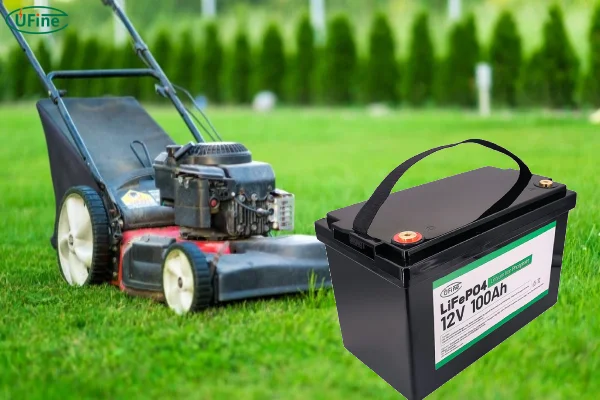
A 12v mower battery is the heart of an electric lawn mower. Because a 12V mower battery performs all the functions. Before we move towards the details of lawn mower battery 12v, we want you to know the basic terms used for batteries.
- Voltage (V): As you know, most batteries consist of 12 volts, which is standard. You will find a 12v riding lawn mower battery-operated, which is ideal for the small and medium garden of the house.
- Battery Capacity (Ah): These terms represent the capacity of battery ampere per hour. It is the indication of how long the battery is going to perform. So if a lawn mower battery 12v has higher Ah, meaning it is going to perform for longer.
- Cold Cranking Amps (CCA): It is a crucial battery rating. Cold-cranking amps indicate a 12v mower battery’s ability to deliver power in cold temperatures, as mowers often have to operate in chilly mornings.
Most modern riding lawn mowers use a 12V lawn mower battery. That includes residential riding mowers, garden tractors, zero-turn mowers, and many commercial machines.
However, not every mower uses the same voltage. Smaller push mowers sometimes use 6V systems, while cordless electric lawn mowers may use much larger lithium battery packs ranging from 20V to 80V.
Here’s a quick overview:
| Lawn mower type | Common battery voltage |
|---|---|
| Small push mower | 6V or 12V |
| Riding lawn mower | 12V |
| Garden tractor | 12V |
| Cordless electric mower | 20V–80V lithium systems |
| Commercial zero-turn mower | 12V or higher lithium systems |
If you are replacing a lawnmower battery, always match the original voltage. Using the wrong voltage can damage the starter system, charging circuit, or electronics.
At the same time, voltage alone is not enough. Many people buy a replacement battery only to discover the terminals are reversed or the battery tray does not fit properly. That’s why physical size and terminal layout are equally important.
Part 2. Lawn mower battery types
Not all lawn mower batteries perform the same way. In fact, the battery chemistry you choose can completely change how often you charge, how long the battery lasts, and even how your mower starts in cold weather.
The three most common lawn mower battery types are lead-acid, AGM, and lithium-ion.
Traditional flooded lead-acid batteries are still the cheapest option. They’ve been used in riding lawn mowers for decades, and they work reasonably well for basic residential use. The downside is that they are heavy, require maintenance, and tend to lose performance over time because of sulfation.
AGM batteries, short for Absorbent Glass Mat batteries, are essentially an upgraded version of lead-acid technology. They are sealed, maintenance-free, and better at handling vibration. That matters more than people realize because lawn mowers operate on uneven terrain where vibration is constant.
Lithium lawn mower batteries, especially LiFePO4 batteries, have become increasingly popular in recent years. They are dramatically lighter, charge faster, and usually last much longer than lead-acid batteries.
Here’s how the three compare:
| Battery type | Average lifespan | Weight | Maintenance | Charging speed |
|---|---|---|---|---|
| Flooded lead-acid | 2–3 years | Heavy | High | Slow |
| AGM | 3–5 years | Medium | Low | Moderate |
| Lithium (LiFePO4) | 5–10 years | Very light | Minimal | Fast |
For homeowners who mow once a week during the summer, a standard AGM battery may be perfectly fine. But if your mower sits for months during winter, or if you simply want fewer battery headaches over time, lithium batteries are usually the better long-term investment.
Graphite vs. Lead Acid vs. Lithium Batteries: Key Differences Explained
Part 3. How long does it take to charge a lawn mower battery?
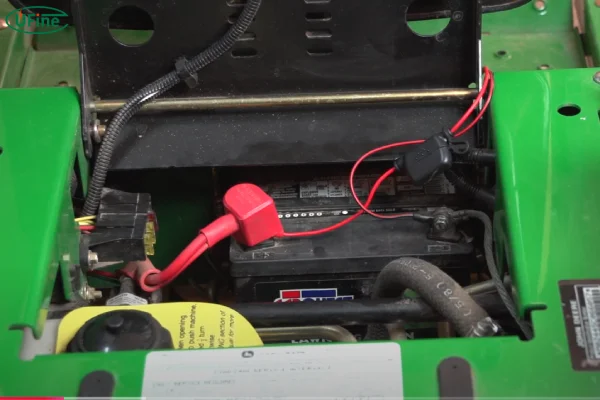
In most cases, a 12 volt lawn mower battery takes between 4 and 12 hours to fully charge.
The exact charging time depends on:
- Battery capacity
- Battery condition
- Charger amperage
- Battery chemistry
- Ambient temperature
A small 1A trickle charger may take overnight to recharge a dead battery, while a smart charger with higher amperage can complete the job much faster.
For example, a weak or sulfated lead-acid battery often charges slower because internal resistance increases over time. Lithium batteries, on the other hand, typically accept charge more efficiently.
Here’s a general estimate:
| Charger type | Estimated charging time |
|---|---|
| 1A trickle charger | 10–12 hours |
| 2A charger | 5–6 hours |
| 10A smart charger | 1–2 hours |
| Lithium smart charger | Often under 2 hours |
If your lawn mower battery becomes hot during charging, stop immediately and inspect the battery. Mild warmth is normal, but excessive heat may indicate overcharging or internal battery damage.
Estimate battery charging time using an online calculator:
Part 4. 12V lawn mower battery discharge tips
Properly managing the discharge of your 12V lawn mower battery is key to ensuring long-term performance. Here are some essential tips:
-
Avoid Deep Discharge:
Try not to let your battery go below 50% before recharging it. Deep discharges (below 20%) can significantly reduce the lifespan of your battery, especially for lead-acid and gel batteries. -
Charge Regularly:
Even if you’re not using your mower frequently, it’s important to charge the battery every 30 days to maintain its health. Lithium-ion batteries are less affected by this, but it’s still a good practice. -
Store in a Cool, Dry Place:
If you won’t be using your mower for an extended period, store the battery in a cool, dry place. Extreme temperatures, especially heat, can degrade the battery and lead to faster self-discharge. -
Avoid Overcharging:
Always use a charger with automatic shut-off features or a maintenance mode to avoid overcharging. Overcharging can cause the battery to overheat, damage the internal cells, and reduce its overall lifespan. -
Perform Regular Inspections:
Periodically inspect the battery for signs of damage, leaks, or corrosion. Keeping the battery terminals clean and ensuring the battery casing remains intact will improve performance and safety.
Part 5. Can you replace a lead-acid lawn mower battery with lithium?
In many cases, yes — and more people are doing it every year.
A lithium lawn mower battery can often replace a traditional lead-acid battery as long as the voltage matches and the mower charging system is compatible.
The biggest advantages are immediately noticeable. The mower becomes lighter, charging time decreases, and battery maintenance nearly disappears.
For homeowners with large properties, this can make mowing noticeably more convenient. Carrying a lightweight lithium battery into the garage for winter storage is far easier than dealing with a heavy lead-acid battery covered in corrosion.
Still, compatibility matters.
Before upgrading, check:
- Voltage compatibility
- Charging system compatibility
- Physical battery size
- Terminal orientation
- Built-in BMS protection
High-quality lithium batteries usually include a Battery Management System (BMS), which protects against overcharging, over-discharging, and overheating.
Cheap lithium batteries without proper protection systems can create charging problems or shorten battery lifespan significantly.
Part 6. Signs your lawn mower battery needs replacement
Sometimes a lawn mower simply cranks slowly because of cold weather. Other times, the battery is reaching the end of its life.
If you notice any of these symptoms repeatedly, replacement may be necessary:
- The mower struggles to start even after charging
- The battery loses charge quickly
- Visible corrosion appears around terminals
- The battery case swells or leaks
- Voltage drops below normal after charging
- The mower clicks but will not crank
Most lead-acid lawn mower batteries last around 2–5 years depending on maintenance and climate conditions.
If your battery is already several years old and showing multiple warning signs, replacement is usually more practical than repeated charging attempts.
Part 7. How to choose the best 12V lawn mower battery charger?
Selecting the right charger for your 12V lawn mower battery is key to extending battery life and ensuring safe charging. Here are some important points to consider:
1. Battery Compatibility
Ensure the charger is designed for your battery type (e.g., lead-acid, lithium-ion, or gel). Using the wrong charger can damage the battery.
2. Correct Voltage and Amperage
The charger should match the 12V rating of your battery. Look for a charger with 2-4 amps for lead-acid batteries, and 1-2 amps for lithium-ion batteries. Too much amperage can overheat the battery.
3. Automatic Shut-Off
Choose a charger with an automatic shut-off feature. This prevents overcharging by stopping the charge once the battery is full.
4. Smart Charging
A charger with smart technology adjusts the charging process to maintain battery health and prevent damage.
5. Safety Features
Look for safety features like overcharge protection, overcurrent protection, and reverse polarity protection. These features ensure safe charging.
6. Durability
Choose a charger with a weather-resistant or rugged design for outdoor use, as lawn mower chargers need to handle the elements.
7. Charging Speed
If you need a quick charge, consider a fast charger. However, slower charging is gentler on the battery and helps extend its lifespan.
8. Brand and Price
Invest in a charger from a reputable brand like NOCO, Schumacher, or Battery Tender. While they may cost a little more, they offer reliable performance and safety.
Part 8. Common issues and troubleshooting 12V mower battery
When you are using an electric lawn mower, there are some issues you can face, specifically with the 12v mower battery.
1. Dead Battery
- Check connections for cleanliness and tightness.
- Test battery voltage should be around 12.6V fully charged.
- Charge the battery if unused for a long time.
- Consider replacing an older battery (2-4 year lifespan).
2. Slow Cranking
- Charge the battery for a full cycle.
- Clean and tighten battery terminal connections.
- Use a battery with a higher CCA rating for better cold starts (if applicable).
3. Mower Runs Erratically
- Loose and corroded battery terminals can cause the issue.
- Replace an older battery with a newer one if issues persist.
- Take the help of a technician for possible non-battery electrical issues.
4. General Tips
- Read the manual in case you have any issues with the machine.
- If you are dealing with the 12v mower battery, use eye protection glass for safety.
- Replace with a new 12V battery matching mower specs if troubleshooting fails.
- Dispose of old batteries at the recycling center.
Part 9. FAQs
Why does my lawn mower battery drain so fast?
Fast battery drain may be caused by sulfation, old battery age, loose connections, charging system problems, or leaving accessories connected while the mower is off.
Can a dead lawn mower battery be restored?
Sometimes. If the battery is only deeply discharged, slow charging may recover it. However, severely sulfated or damaged batteries usually need replacement.
What is the difference between U1 and U1R lawn mower batteries?
Both are common 12V lawn mower battery sizes, but the terminal positions are reversed. Choosing the wrong one may prevent proper cable connection.
Why is my lawn mower clicking but not starting?
A clicking sound often means the battery voltage is too low to engage the starter motor properly. Corroded terminals or loose connections can also cause this issue.
Related Tags:

More Articles
6 Volt Tractor Battery vs 12 Volt: Which One Fits Your Farm Equipment Best?
Compare 6V and 12V tractor batteries. Learn which voltage fits vintage or modern tractors, which specifications matter, and how to convert safely.
The Ultimate Guide to a Molten Salt Battery
Learn how a molten salt battery works, its main types, advantages, disadvantages, operating temperature, safety, and grid energy storage uses.
2000mAh Battery Runtime: How Long Will It Last in Real Devices?
Learn how to calculate 2000mAh battery runtime and backup time. See real device examples, power-loss factors, and battery replacement checks.
White Stuff on Battery Terminals: A Step-by-Step Cleaning and Maintenance Guide
White stuff on a battery may be corrosion or leaked electrolyte. Learn what causes white powder, whether it is dangerous, and how to clean it safely.
Do Lithium Batteries Need to Be Fully Charged Before First Use?
Should you fully charge a lithium battery the first time? Learn what happens if you don't, how long to charge, and the best charging practices.


