
- Key Takeaways
- Part 1. What is an atomic battery?
- Part 2. Who invented the atomic battery?
- Part 3. Comparison of atomic batteries with li-ion, NiMH, and lead batteries
- Part 4. Types of nuclear batteries
- Part 5. Nuclear battery lifespan
- Part 6. Advantages and disadvantages of atomic battery
- Part 7. Applications of nuclear batteries
- Part 8. How has the atomic battery impacted society today?
- Part 9. Current development of the atomic battery
- Part 10. FAQs
Key Takeaways
- Atomic batteries, also called nuclear batteries, generate electricity using radioactive decay instead of chemical reactions, offering decades-long, maintenance-free power.
- Who invented the atomic battery: The concept was first proposed by Henry Moseley in 1913, and practical development accelerated in the 1950s with the U.S. Atomic Energy Commission.
- They provide steady, low-power output, making them ideal for space missions, medical devices, and remote scientific instruments.
- Different types, including RTGs, betavoltaic, and direct charge batteries, serve specialized applications from spacecraft to micro-sensors.
- While extremely durable and compact, atomic batteries are expensive, radioactive, and regulated, limiting their use to niche but critical environments.
Part 1. What is an atomic battery?
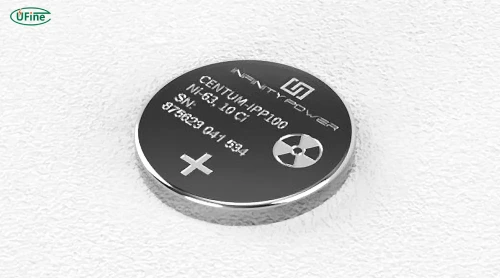
An atomic battery, also known as a nuclear battery or a radioisotope thermoelectric generator (RTG), generates electricity using energy released from the decay of radioactive isotopes. Unlike traditional batteries, which rely on chemical reactions, atomic batteries convert heat produced by the decay process into electricity. This heat is converted using a thermoelectric material, often based on the Seebeck effect, which generates an electric current from a temperature difference.
Atomic batteries are unique in that they can last for many years, even decades, without needing to be replaced or recharged. This longevity makes them invaluable in certain fields where replacing or recharging batteries would be difficult or impossible, such as deep space exploration, remote scientific research stations, or medical implants.
More details about how nuclear batteries work can be found in this article: The Unlikely Revival of Nuclear Batteries
Part 2. Who invented the atomic battery?
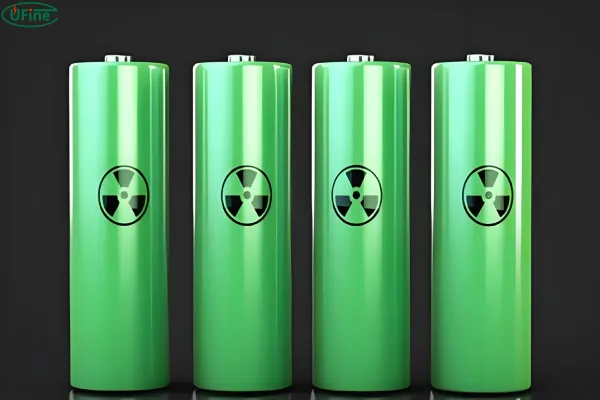
The development of atomic batteries dates back to the early 20th century. In 1913, British physicist Henry Moseley first proposed the idea of converting the energy from radioactive decay into electrical energy. However, it wasn’t until the 1950s that practical atomic batteries began to take shape.
During the Cold War, the United States Atomic Energy Commission (AEC) began to focus on harnessing nuclear energy for more practical, peaceful purposes. The first working atomic batteries were developed in this period to power military equipment and spacecraft. The U.S. Space Program and NASA were particularly interested in atomic batteries for their ability to provide long-term, reliable energy in environments where solar power could not be used.
The most significant breakthrough came with the development of radioisotope thermoelectric generators (RTGs), which became the backbone of many space missions. The Voyager spacecraft, launched in 1977 and still operational today, is one of the most famous examples of a space mission relying on an RTG to power its systems for over four decades.
Who Invented the Lithium-Ion Battery
Part 3. Comparison of atomic batteries with li-ion, NiMH, and lead batteries
To really appreciate what makes atomic batteries special, it helps to compare them with Li-ion, NiMH, and lead-acid batteries:
| Feature | Atomic Batteries | Lithium-Ion | NiMH | Lead-Acid |
|---|---|---|---|---|
| Energy Density | Extremely High | High | Moderate | Low |
| Longevity | Decades | 2–5 years | 2–3 years | 1–3 years |
| Power Output | Low (steady) | High (burst possible) | Moderate | High (surge) |
| Environmental Impact | High (radioactive) | Moderate (recyclable) | Lower | High (toxic lead) |
| Cost | Very High | Moderate | Moderate | Low |
| Applications | Niche | Versatile | Limited | Budget-sensitive |
Atomic batteries are quite different from your typical lithium-ion or lead-acid batteries. The main difference lies in how they generate electricity. While conventional batteries rely on chemical reactions between electrodes and electrolytes, atomic batteries harness the energy released by the radioactive decay of isotopes. This allows them to operate for decades without needing replacement or recharging.
Another key distinction is power output characteristics. Atomic batteries typically provide a low but steady energy output, unlike lithium-ion batteries that can deliver high bursts of energy. This makes them ideal for applications where consistent long-term power is more important than high peak output, such as powering spacecraft, remote sensors, or pacemakers.
Lastly, atomic batteries are maintenance-free and highly durable. Since there are no moving parts and their energy source is natural radioactive decay, they can withstand harsh environments—something chemical batteries often cannot handle.
Key insights:
- Atomic batteries win in energy density and longevity but aren’t suited for high-power, everyday devices.
- Lithium-ion batteries are your go-to for electronics and EVs due to versatility.
- Lead-acid batteries still dominate in budget-sensitive or high-current applications like automotive starters.
A Complete History of Lithium-ion Batteries
Part 4. Types of nuclear batteries
There are several types of nuclear batteries, each designed for specific purposes:
1.Radioisotope Thermoelectric Generators (RTGs)
RTGs convert heat released by radioactive decay into electricity using thermoelectric materials. They are commonly used in space missions like Voyager and Cassini due to their long lifespan and reliability.
2. Betavoltaic Batteries
Betavoltaic devices generate electricity from beta particles emitted by radioactive isotopes. They are smaller and safer than RTGs and are being explored for medical implants, micro-sensors, and other miniature electronics.
3. Direct Charge Nuclear Batteries
These are less common but involve directly capturing charged particles from radioactive decay to generate current. They are used in specialized research and military applications where very small-scale, stable power sources are needed.
Summary Table: Nuclear Battery Types
| Type | Energy Source | Typical Application | Size & Safety |
|---|---|---|---|
| RTG | Heat from decay | Space probes | Large, highly shielded |
| Betavoltaic | Beta particles | Medical devices, sensors | Small, safer |
| Direct Charge | Charged decay particles | Research & military | Very small, specialized |
Part 5. Nuclear battery lifespan
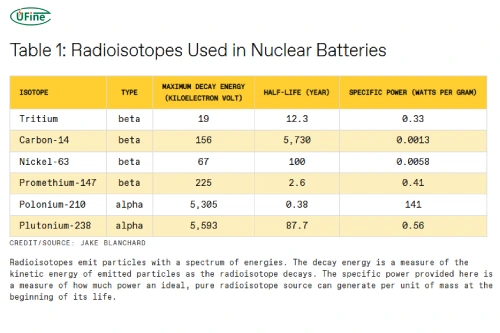
One of the most impressive features of atomic batteries is their lifespan. Depending on the isotope used, these batteries can last anywhere from 10 to over 100 years. For example:
| Isotope | Half-life | Typical Lifespan in Battery | Example Use |
|---|---|---|---|
| Plutonium-238 | 87.7 years | 20–40 years | Voyager spacecraft, Mars rovers |
| Tritium | 12.3 years | 10–15 years | Small betavoltaic devices |
| Strontium-90 | 28.8 years | 15–30 years | Remote sensors, research equipment |
This longevity means that once installed, atomic batteries often outlast the devices they power, making them ideal for inaccessible or long-duration applications.
Part 6. Advantages and disadvantages of atomic battery
Atomic batteries offer several compelling advantages, but they are not without drawbacks. Let’s explore both sides in detail.
Advantages:
- Longevity: One of the primary benefits of atomic batteries is their extremely long lifespan. These batteries can last anywhere from 10 to 100 years, depending on the isotope used. This makes them perfect for long-term applications like space missions or medical devices.
- Consistent Power Output: Unlike chemical batteries, which degrade over time and lose their ability to hold a charge, atomic batteries provide a constant energy output until the radioactive material is fully depleted.
- No Need for Maintenance: Since atomic batteries have no moving parts and rely on natural radioactive decay, they are incredibly durable and require little to no maintenance. This is particularly useful in remote or hard-to-reach locations.
- High Energy Density: Atomic batteries have a much higher energy density compared to traditional batteries, meaning they can store more energy in a smaller space.
- Compact Size: Despite their high energy capacity, atomic batteries are generally small and lightweight, making them ideal for applications where space is limited.
Disadvantages:
- Radioactivity: The use of radioactive materials raises safety concerns. Although atomic batteries are designed to be safe, improper handling or disposal could lead to radiation exposure.
- High Cost: Developing and manufacturing atomic batteries is expensive due to the use of specialized materials and complex technology. This makes them impractical for everyday consumer products.
- Limited Applications: Because of the use of radioactive substances and high costs, atomic batteries are restricted to specialized fields like space exploration, military applications, and certain medical devices.
- Environmental Impact: While atomic batteries are generally safe when used correctly, there are concerns about their long-term environmental impact, especially when it comes to disposing of radioactive materials.
Part 7. Applications of nuclear batteries
The unique properties of atomic batteries make them suitable for niche but critical applications:
- Space Exploration: Powering spacecraft, satellites, and planetary rovers where solar energy is insufficient.
- Medical Devices: Early pacemakers relied on nuclear batteries for long-term, maintenance-free operation.
- Scientific Research: Remote monitoring stations in extreme environments like Antarctica or deep-sea locations use atomic batteries to run sensors for years without maintenance.
- Military and Defense: Remote surveillance, underwater sensors, and compact electronics can leverage atomic batteries for reliable, long-term energy.
Unlike conventional batteries, their use is limited by cost, radioactivity, and regulatory considerations, but where they are used, they provide unmatched longevity and reliability.
Part 8. How has the atomic battery impacted society today?
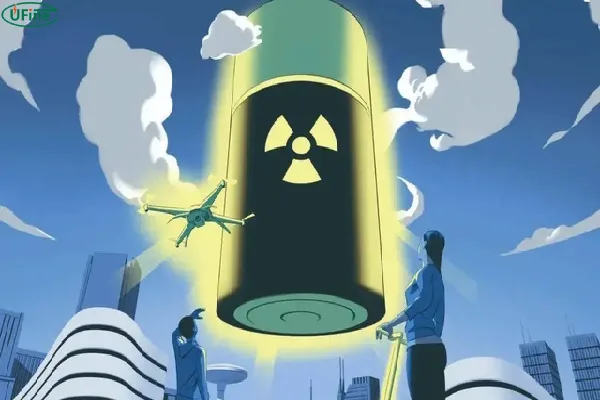
The atomic battery (nuclear battery ) is a specialized energy source that uses radioactive decay to generate electricity. Although not widely used for everyday applications due to its unique characteristics, it has had significant impacts on modern society, particularly in niche sectors. Here’s how it has made a difference:
1. Advancements in Space Exploration
- Reliable Power in Extreme Conditions:
Atomic batteries are a critical component of space exploration. They power spacecraft, rovers, and satellites in environments where solar power is inefficient or unavailable, such as deep space or shadowed regions on the Moon or Mars.- Example: NASA’s Voyager probes, launched in 1977, are still operational today, thanks to radioisotope thermoelectric generators (RTGs).
- Longevity:
Their long lifespan, often exceeding decades, ensures uninterrupted operation of missions far from Earth.
2. Medical Applications
- Pacemakers and Medical Devices:
In the past, atomic batteries were used in heart pacemakers, providing patients with a reliable energy source for years. While modern pacemakers now use rechargeable lithium-ion batteries, the early use of nuclear batteries extended the lifespan and improved the reliability of these devices. - Radiopharmaceuticals Development:
By leveraging similar principles, the development of nuclear energy sources has also contributed indirectly to advancements in diagnostic and therapeutic applications in nuclear medicine.
3. Military and Defense Applications
- Remote Monitoring and Surveillance:
Atomic batteries power remote sensors, underwater detection systems, and monitoring equipment that require long-term, maintenance-free energy solutions. - Miniaturized Electronics:
The technology has spurred innovation in creating compact power sources for critical military applications.
4. Scientific Research
- Remote Scientific Stations:
Atomic batteries power instruments in remote and extreme environments, such as polar research stations or deep-sea exploration devices. - Data Collection:
Their use in monitoring systems, such as seismic sensors, enables long-term environmental and geological data collection.
5. Energy Technology Innovations
- Inspiration for Battery Development:
While atomic batteries themselves are not used in consumer electronics, their development has influenced research into long-lasting and high-efficiency energy storage solutions, particularly for challenging environments. - Potential Future Applications:
With growing interest in sustainable and long-lasting energy sources, atomic batteries may play a role in future renewable energy systems or microgrid applications.
6. Societal Considerations
- Safety Concerns:
The use of radioactive materials raises safety and environmental concerns, limiting the widespread adoption of atomic batteries. - Ethical and Regulatory Challenges:
Stringent regulations govern the use and disposal of radioactive materials, ensuring that these technologies are used responsibly.
Part 9. Current development of the atomic battery
In recent years, the development of atomic batteries has shifted focus toward improving efficiency and reducing safety concerns. Research is ongoing into better thermoelectric materials that can convert heat into electricity more effectively. Additionally, scientists are exploring betavoltaic batteries, which use the energy from beta particles emitted by radioactive decay to generate power. These batteries are expected to be smaller and safer than RTGs, opening up new applications in medical devices, sensors, and other small-scale technologies.
Part 10. FAQs
Can atomic batteries be safely used on Earth?
Yes, but only in specialized, controlled environments due to their radioactive materials. Strict safety protocols are required to prevent exposure or contamination.
What is the smallest atomic battery ever made?
Betavoltaic batteries can be as small as a coin cell, designed to power micro-sensors or medical implants for years without replacement.
Are atomic batteries recyclable?
Recycling is possible but complicated due to radioactive content. Specialized facilities follow strict protocols to safely handle isotopes.
Why don’t consumer electronics use atomic batteries?
High cost, safety concerns, and regulatory hurdles make atomic batteries impractical for phones, laptops, or everyday gadgets.
Can atomic batteries be used underwater or underground?
Absolutely. Their long lifespan and steady power output make them perfect for remote sensors, deep-sea devices, or geological monitoring stations.
Do atomic batteries pose environmental risks if disposed improperly?
Yes. Improper disposal can lead to radioactive contamination. Regulatory agencies strictly control storage, usage, and disposal.
Related Tags:

More Articles

The Ultimate Guide to Small Size Battery
Learn small battery types, sizes, and applications. Compare lithium, alkaline, and coin cells. Find the best small size battery for your device or project.
Lithium Battery Comparison: Soft Pack Vs. Hard Pack
Compare soft pack vs hard pack lithium battery. Understand structure, safety, energy density, and applications to choose the right battery.
What Size are 18650 Batteries?
Learn exact 18650 battery dimensions (18mm × 65mm), tolerances, and pack configurations. Compare 18650 size with 21700 and others for better battery selection.
The Ultimate Guide to Battery Terminal Clamps
Learn battery terminal clamps, including types, materials, installation, and how to choose the right battery clamp for car and industrial use.
What Is a Lithium-Ion Battery Pack?
Learn what a lithium ion battery pack is, how it works, key components, configurations, and real-world applications for industrial and commercial use.


