
- Key takeaways
- Part 1. What is a Group 31 battery?
- Part 2. AGM battery meaning and features
- Part 3. Lithium group 31 battery overview
- Part 4. AGM vs lithium: head-to-head comparison
- Part 5. Group 24 vs 31: size and compatibility
- Part 6. Can AGM and lithium batteries be swapped?
- Part 7. How to choose the right Group 31 battery for you
- Part 8. Real-life applications
- Part 9. FAQ
If you’re shopping for a Group 31 battery, you’ve probably noticed there are quite a few options: AGM, lithium, and even variations in capacity and brand. Choosing the right one isn’t just about price—it’s about how the battery fits your RV, truck, boat, or solar setup. In this article, we’ll break down what a Group 31 battery really is, compare AGM and lithium options, explore real-world scenarios, and help you make a confident choice.
Key takeaways
- A Group 31 battery is a versatile size used in RVs, trucks, boats, and solar systems.
- AGM batteries are cheaper, maintenance-free, and reliable for occasional use.
- Lithium Group 31 batteries are lighter, longer-lasting, and better for high-demand or off-grid applications.
- Consider power needs, lifespan, cost, and installation when choosing your battery—this will save you frustration and money in the long run.
Part 1. What is a Group 31 battery?
A Group 31 battery is a standardized battery size commonly used in RVs, trucks, marine applications, and off-grid systems. It typically measures around 13 inches long, 6.8 inches wide, and 9 inches high, with a weight ranging from 60 to 70 lbs for AGM and around 30-35 lbs for lithium.
Key specifications include:
- Nominal voltage: 12V
- Typical capacity: 75–120Ah (depending on chemistry)
- Terminal type: SAE post
A Group 31 battery fits certain “footprints” in your vehicle or system. Using the wrong size could mean the battery doesn’t fit your tray or the cables don’t reach, which is a hassle you want to avoid.
To get a more complete overview and background, see a complete guide to Group 31 battery.
Part 2. AGM battery meaning and features
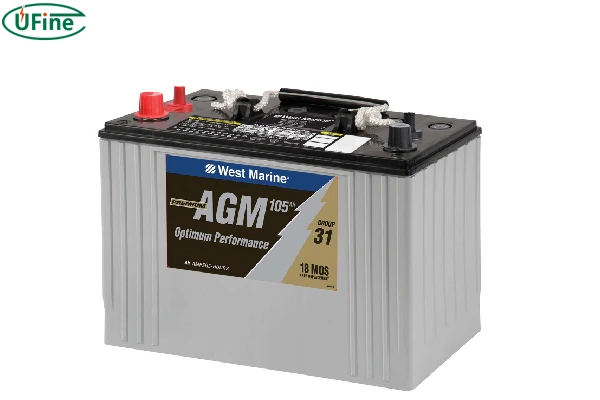
AGM stands for Absorbent Glass Mat, a type of lead-acid battery where the electrolyte is absorbed in glass mats. This design gives you several practical benefits:
- Maintenance-free – no need to add water or check acid levels.
- Vibration-resistant – great for boats, trucks, and off-road vehicles.
- Moderate cost – typically $200–$350.
However, AGM batteries aren’t perfect. They’re heavier, have a shorter lifespan (around 3–5 years), and can struggle under high-discharge scenarios. That said, for many RV owners or occasional boaters, AGM provides reliable and simple power without breaking the bank.
Part 3. Lithium group 31 battery overview
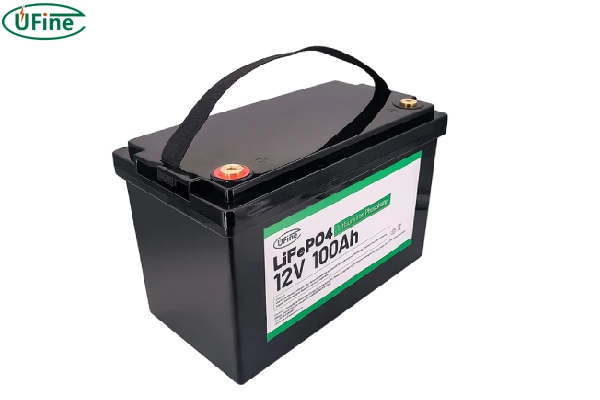
Lithium Group 31 batteries, usually LiFePO4 chemistry, are lighter, longer-lasting, and more efficient. Here’s why they stand out:
- Lightweight – almost half the weight of AGM, making installation and handling easier.
- Long lifespan – 2–3 times the cycles of AGM, often 10–15 years.
- High discharge capability – can handle more power-hungry devices without voltage sag.
The main downside? Initial cost is higher, around $600–$900. But as we’ll see in the cost analysis section, lithium can end up being more economical over time if you consider total cost of ownership.
Curious about how battery group sizes are determined? This article on what battery group size means explains it clearly.
Part 4. AGM vs lithium: head-to-head comparison
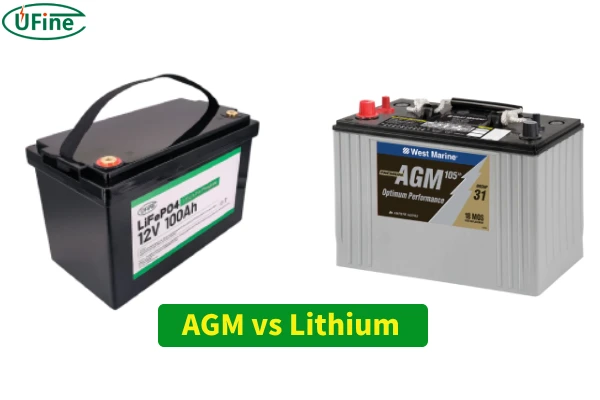
Let’s compare AGM and lithium side by side to see which fits your needs better:
| Feature | Group 31 AGM Batteries | Group 31 Lithium-Ion Batteries |
|---|---|---|
| Lifespan | 4 to 7 years | 10 to 15 years |
| Weight | Heavier (typically around 60-75 pounds) | Lighter (typically around 30-50 pounds) |
| Energy Density | Lower energy density | Higher energy density |
| Maintenance | Maintenance-free but requires periodic checks | Maintenance-free |
| Cost | Lower upfront cost | Higher upfront cost |
| Charge Efficiency | Moderate (85% to 90%) | High (95% to 99%) |
| Depth of Discharge (DoD) | Up to 50% for best longevity | Up to 80%-100% with minimal impact on lifespan |
| Cycle Life | 500 to 1,000 cycles | 2,000 to 5,000 cycles |
| Operating Temperature Range | Wide, but performance can drop in extreme cold | Wide, but better performance in extreme temperatures |
| Safety | Safe, but can spill if damaged | Safe, with Built-in BMS (Battery Management System) to prevent overcharging and overheating |
| Environmental Impact | More recyclable materials | Less recyclable, but fewer replacements needed due to longer lifespan |
Choose a Group 31 AGM Battery If:
- You need a durable and reliable battery for rough conditions: AGM batteries are robust and can handle vibrations and extreme temperatures well.
- You want a maintenance-free option: AGM batteries do not require regular checks or water refilling.
- You are looking for a cost-effective solution: While more expensive than traditional flooded batteries, AGM batteries are cheaper than lithium-ion options.
- Safety is a top priority: AGM batteries are spill-proof and less likely to pose safety hazards.
Choose a Group 31 Lithium-Ion Battery If:
- You prioritize weight and space efficiency: Lithium-ion batteries are much lighter and more compact than AGM batteries.
- You need a long-lasting battery: With a longer lifespan, lithium-ion batteries reduce the frequency of replacements.
- Quick charging is essential: Lithium-ion batteries charge faster, minimizing downtime.
- You are willing to invest upfront for long-term benefits: Despite the higher initial cost, the extended lifespan and efficiency of lithium-ion batteries can offer better value over Time.
Notice how weight and maintenance matter depending on your lifestyle—these aren’t just numbers, they affect how easy your life will be when hauling, installing, or storing your battery.
Part 5. Group 24 vs 31: size and compatibility
You might wonder: “Can I swap a Group 24 for a 31?” While the voltage is the same, Group 24 is smaller in physical dimensions and usually has a lower capacity.
| Attribute | Group 24 | Group 31 |
|---|---|---|
| Dimensions | 10.25 x 6.8 x 8.9 in | 13 x 6.8 x 9 in |
| Typical Capacity | 70–85Ah | 75–120Ah |
| Weight | 50–60 lbs (AGM) | 60–70 lbs (AGM) |
So, size and tray compatibility matter. You don’t want to force a battery into a compartment that’s too tight or too loose.
For detailed dimensions and compatibility tips, check out Group 31 battery box dimensions.
Part 6. Can AGM and lithium batteries be swapped?
You might wonder if you can simply replace an AGM Group 31 battery with a lithium one—or vice versa. The short answer is: not always. While both types deliver 12V power, there are several factors to consider before swapping:
- Charging system compatibility – Lithium batteries require a charger or charging profile designed specifically for lithium chemistry. Using a standard AGM charger can damage the lithium battery or shorten its lifespan.
- Battery management system (BMS) – Most lithium batteries come with an internal BMS that protects against overcharge, over-discharge, and extreme temperatures. AGM batteries don’t have this, so your system may behave differently after the swap.
- Capacity and discharge behavior – Lithium can handle deeper discharges without affecting lifespan, whereas AGM doesn’t. If you replace an AGM with lithium, your system may suddenly deliver more usable capacity than your inverter or appliances expect, which could require adjustments.
- Physical installation – Lithium batteries are lighter, which can change how they’re secured in the tray or mounting system. Conversely, swapping lithium with AGM may require sturdier supports due to the extra weight.
In practice, swapping is feasible if you ensure the charger and system are compatible and the battery fits physically. Many RV and boat owners successfully upgrade to lithium, enjoying longer lifespan and better performance—but jumping straight from lithium back to AGM isn’t usually recommended unless the system was originally designed for both types.
Part 7. How to choose the right Group 31 battery for you
Choosing a battery isn’t just about chemistry; it’s about your real-world needs. Here’s a simple approach:
Calculate your power needs.
Use this formula:
Battery capacity (Ah) = Daily energy consumption (Wh) ÷ System voltage ÷ Depth of discharge
For example, if your RV uses 1200 Wh/day on a 12V system and you don’t want to discharge below 50%, you’ll need roughly 200Ah. That could mean two AGM batteries in parallel or a single lithium battery.
Consider your environment and usage.
Lithium handles extreme temperatures better but may need a compatible charger. AGM is forgiving for occasional users but heavier.
Think about lifespan vs upfront cost.
A lithium battery may cost more now, but over 10+ years it often ends up cheaper per year.
Installation and handling.
If you’re installing alone or frequently moving batteries, weight is a real factor. Lithium’s half-weight advantage is significant.
Part 8. Real-life applications
- RV and camper – lithium lets you run multiple appliances without sag. AGM works for weekend trips.
- Marine/boat – AGM resists vibration, lithium reduces weight for better performance.
- Off-grid solar – lithium stores more energy in less space, ideal for limited compartments.
- Emergency backup – lithium lasts longer and maintains charge better over months.
Part 9. FAQ
Can I replace AGM with lithium in my RV without changing anything?
Not always. You may need a lithium-compatible charger or BMS.
How long does a Group 31 AGM battery last?
3–5 years with moderate use; lifespan shortens if frequently deeply discharged.
What’s the weight difference?
Almost 35 lbs lighter for lithium, which is huge for handling and installation.
What’s the difference between Group 24 and 31?
Mainly physical size and capacity. Check your battery tray before buying.
Can I use a Group 31 battery for solar energy storage?
Absolutely, both AGM and lithium work, but lithium is more efficient for frequent charge/discharge cycles.
How do I know when a Group 31 battery needs replacement?
Signs include rapid voltage drops, reduced runtime, or swelling (for AGM) and declining capacity (for lithium).
Are there safety concerns with shipping Group 31 lithium batteries?
Yes, lithium batteries are considered hazardous for transport. Follow IATA shipping regulations
Related Tags:

More Articles
A Complete Guide to 12V Batteries and Their Types
Learn what a 12V battery is, explore types of 12V batteries, and compare lead-acid vs lithium. Clear guide for selection, applications, and performance.
How to Increase 18650 Battery Life (Practical Guide + Cycle Life Calculation)
Learn how to extend 18650 battery life with proper charging, storage, and usage. Includes 18650 battery life cycle calculation and expert tips.
What Is a Lithium Titanate Battery?
Discover lithium titanate batteries (LTO), including how they work, key benefits, and real-world uses. Compare LTO vs lithium-ion and lead-acid batteries.
How Manufacturers Can Tell You About the Cost of Lithium Batteries
Learn real lithium battery pricing, cost per kWh, and how manufacturers set prices using materials, chemistry, and production scale.
How Long Does A Drone Battery Last?
Learn drone battery flight time, lifespan cycles, and tips to extend performance. Includes drone battery price and Mavic Air battery insights.


